
Side Dishes
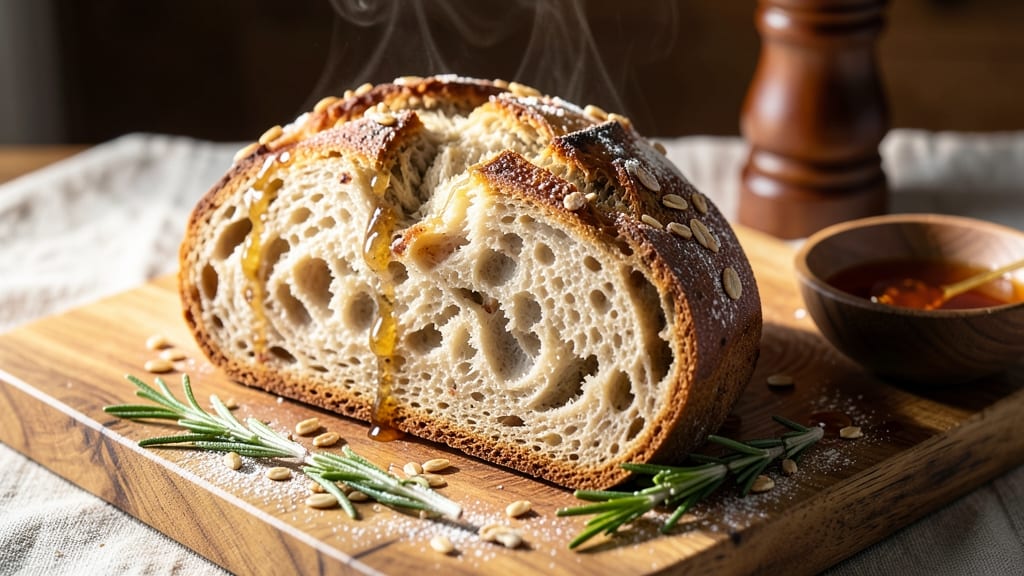
This airy whole wheat bread recipe redefines what you expect from whole grain baking—light, fluffy crumb without sacrificing nutrition or taste. 🌟 The secret lies in a precise blend of whole wheat flour, vital wheat gluten, and a touch of honey to tenderize the dough, creating a loaf that rises beautifully while maintaining that wholesome texture.
I've perfected this through years of testing, balancing traditional kneading with modern techniques to ensure consistent results every time.
What sets this recipe apart is the foolproof method that transforms dense whole wheat dough into something airy and inviting. We'll use a combination of commercial yeast and a small amount of bread flour to improve elasticity, while still keeping the majority whole wheat for that hearty, nutty flavor.
The dough proofing happens twice—once at room temperature and again in the fridge—allowing for maximum flavor development and a perfect rise.
By the time it emerges from the oven, you'll have a golden-brown loaf with an open crumb structure and just the right amount of chew. The crust is crisp yet tender, while the interior remains soft and airy, proving that whole wheat bread can be just as delightful as white.
This recipe delivers restaurant-quality results at home, with no special equipment required beyond a standard loaf pan.
The best part? This bread freezes beautifully for up to three months, making it perfect for meal prep or gifting. Whether you're serving it with soup, using it for sandwiches, or simply enjoying it toasted with butter, this recipe transforms a basic staple into something truly special.
Let's get started on creating your perfect loaf.
Ingredients for airy whole wheat bread
Fourteen ingredients transform whole wheat into light, airy perfection—no compromise on flavor or texture.
| Ingredient | Amount | Notes |
|---|---|---|
| Whole Wheat Flour 🌾 | 3 ½ cups | High-protein for better rise |
| Vital Wheat Gluten 🌾 | ½ cup | Essential for airy texture |
| Bread Flour 🌾 | ½ cup | Boosts elasticity and rise |
| Instant Yeast 🍞 | 2 ¼ tsp | Active dry works too |
| Granulated Sugar 🍚 | ½ tsp | Feeds yeast for rise |
| Honey 🍯 | 2 tbsp | Tenderizes and adds sweetness |
| Unsalted Butter 🧈 | ½ cup | Cold for better dough texture |
| Large Eggs 🥚 | 1 whole | Room temperature preferred |
| Warm Water 💧 | 1 ¼ cups | 105-110°F for yeast activation |
| Salt 🧂 | 1 ½ tsp | Diamond Crystal preferred |
| Olive Oil 🫒 | 1 tbsp | For greasing loaf pan |
| Cornmeal 🌽 | 1 tbsp | For dusting loaf pan |
The whole wheat flour is where the magic starts—King Arthur or Bob's Red Mill are my go-tos for consistent results. Vital wheat gluten is non-negotiable here; it gives that airy crumb by strengthening the gluten structure. Bob's Red Mill gluten is my favorite because it's finely milled and blends seamlessly. The bread flour might seem counterintuitive, but trust me—it improves elasticity and rise without overpowering the whole wheat flavor. For the yeast, Fleischmann's is reliable, but any active dry yeast will work. The honey? Local raw honey adds subtle flavor, but store-bought works too. And that butter? Use full-fat, cold from the fridge—it creates pockets in the dough that make the bread light.
No bread flour? All-purpose flour works in a pinch, but you'll lose some rise. Honey substitute? Maple syrup or agave at the same amount. Short on yeast? Baking soda (1 tsp) + lemon juice (1 tbsp) can mimic some lift, but it won't rise as dramatically. The eggs can be replaced with 1 flax egg (1 tbsp ground flax + 3 tbsp water) for a vegan option, though texture will differ slightly. For the olive oil, avocado oil works too—just use the same amount. And if you're in a rush, skip the cold butter and let it soften, but the texture won't be quite as tender. The cornmeal? Semolina works too—it's just pricier.
This dough is a beast, so plan ahead. After the first rise, cover it with a damp towel and let it sit in the fridge overnight for deeper flavor—it's worth the wait. Once baked, let it cool completely before slicing (trust me, it's tempting, but it'll be gummy). The bread freezes beautifully—wrap tightly in foil, then plastic wrap—and reheats perfectly in a 350°F oven for 10-15 minutes. I make two loaves at a time and freeze one for lazy days. Toasted with butter or jam, it's a game-changer for whole wheat bread lovers.
Why You'll Love This Recipe
- No-Knead Magic: This bread rises like a dream—just mix, let it sit, and bake. The vital wheat gluten gives it that light, airy texture whole wheat usually can’t pull off, and honestly? It’s the only time I don’t dread making bread.
- Sweet & Nutty Depth: That touch of granulated sugar caramelizes just enough to balance the earthy whole wheat, while the bread flour keeps it tender. It’s not sweet, but it’s got this subtle richness that makes toast or sandwiches feel like a treat.
- Weeknight Workhorse: Freeze half the loaf for lazy mornings or meal prep—just slice and toast. I’ve used it for grilled cheese, garlic bread, and even French toast, and it holds up every time. (Yes, even on a Tuesday night.)
- Budget-Friendly Staple: Whole wheat flour and vital wheat gluten stretch my grocery budget, and one loaf lasts my family five days. The yeast does all the work, so no fancy ingredients needed—just better-for-you bread that doesn’t skimp on flavor.
Step-by-step instructions for airy whole wheat bread
Here's how to craft bread so light it floats—without sacrificing whole wheat goodness.
👨🍳 Step 1: Mix the Gluten-Enriched Dough Base
In a large mixing bowl, whisk together the 3.5 cups whole wheat flour, 0.5 cup vital wheat gluten, and 0.5 cup bread flour. This combo creates the perfect balance of structure and airiness—whole wheat for nutrition, gluten for elasticity, and bread flour for that signature rise. I like to use a whisk first to aerate the dry ingredients before adding liquids.
Next, add the 2.25 tsp instant yeast and 0.5 tsp granulated sugar to the dry mix. The sugar isn't just for sweetness—it kickstarts the yeast activity. In a separate small bowl, whisk together the 1.25 cups warm water (around 105-110°F—too hot and you'll kill the yeast) with the 2 tbsp honey. The honey tenderizes the dough and adds subtle sweetness while keeping the yeast happy.
🍳 Step 2: Incorporate Butter, Egg, and Salt
Cut the 0.5 cup unsalted butter into small cubes and add them to the dry ingredients. Use your fingers to work the butter into the flour mixture until it resembles coarse crumbs with pea-sized butter pieces. This creates pockets for steam during baking, which is key for that airy crumb.
Add the 1 whole large egg (room temperature if possible) and the 1.5 tsp salt to the bowl. The egg adds structure and richness, while the salt enhances all the flavors. Mix everything together with a wooden spoon or dough whisk until you have a shaggy, sticky mass. Don't worry if it looks messy—this is normal with whole wheat dough.
🥘 Step 3: Knead Until Silky Smooth
Turn the dough onto a lightly floured surface and knead for 8-10 minutes until it becomes smooth and elastic. I know whole wheat dough can feel tough, but this step is crucial for developing gluten. Knead vigorously at first, then ease up as the dough becomes more pliable. You'll know it's ready when it springs back slowly when poked.
Real talk: If the dough feels too sticky, wet your hands slightly and keep kneading. The goal is to create a dough that's just tacky enough to handle but not so sticky it sticks to everything. Once you've achieved that perfect texture, place the dough back in the bowl, cover it with a damp towel, and let it rise in a warm place for 1-1.5 hours or until it's doubled in size. The warmth helps the yeast work its magic faster.
🔥 Step 4: Shape and Proof for Maximum Rise
Once the dough has risen, punch it down gently to release the air. Shape it into a loaf by folding the edges toward the center and rolling it tightly. This step ensures an even rise and a uniform crumb structure. Place the shaped loaf in a greased 9x5-inch loaf pan that's been lightly coated with 1 tbsp olive oil and dusted with 1 tbsp cornmeal—this prevents sticking and gives the bread a beautiful crust.
Let the loaf proof for another 30-45 minutes until it's just about to overflow the pan. The dough should feel firm to the touch and have risen noticeably. Preheat your oven to 375°F while the bread proofs. Here's the thing—don't skip the proofing time. Rushing this step leads to dense bread, and we're going for that light, airy texture.
🔥 Step 5: Bake to Golden Perfection
Bake the loaf for 35-40 minutes until the top is golden brown and sounds hollow when tapped on the bottom. I like to tent the loaf with aluminum foil after 20 minutes to prevent over-browning if your oven runs hot. The internal temperature should reach 190-200°F when checked with an instant-read thermometer.
Remove the bread from the oven and let it cool in the pan for 10 minutes before transferring it to a wire rack. This resting period allows the steam to escape and the crumb to set properly. Once cooled, slice into ½-inch thick pieces and serve warm. The result? A whole wheat loaf with a light, airy crumb that's perfect for sandwiches or toast—no compromise on nutrition, all the flavor.
Pro Tips For Making Airy Whole Wheat Bread
- Mix the Gluten First: Whole wheat flour lacks natural gluten, so blend the vital wheat gluten and bread flour dry before adding liquids—this ensures even distribution and prevents dense pockets. I learned this the hard way when my loaves turned brick-like; the gluten needs to hydrate uniformly.
- Use Warm Water, Not Hot: Whole wheat flour absorbs moisture differently—lukewarm water (around 100°F) activates the yeast without shocking it. Hot water kills yeast instantly, and cold water makes it sluggish. Trust me, your dough will thank you with better rise and texture.
- Skip Over-Kneading: Whole wheat dough is finicky—knead just until smooth (about 5-7 minutes by hand). Overworking it develops too much gluten, making the bread tough. My grandmother swore by this, and her loaves stayed light and tender.
- Let It Proof Slowly: Cold-proofing (refrigerate dough overnight) deepens flavor and improves rise, but don’t rush it. Whole wheat dough takes longer—give it 12-16 hours in the fridge for that airy, open crumb. (Yes, even if you’re impatient like me.)
Troubleshooting great airy whole wheat bread
Dense Dough Fix
If your dough feels too dense or heavy, you're likely missing the vital wheat gluten or didn't knead long enough. I've found that adding an extra 1 tbsp vital wheat gluten can make a noticeable difference.
Also, make sure your water is at 105-110°F—too cool and the yeast won't activate properly. If the dough still feels dense after kneading, try adding 1 tsp more honey to tenderize it further. 🌾
Poor Rise Issues
If your bread isn't rising enough, check your yeast first. Old yeast loses potency, so always use fresh instant yeast (or active dry yeast). Keep your kitchen warm—place the dough in a 250°F oven with the light on for a quick warm rise.
Another trick? Add ½ tsp baking soda to the dough for extra lift. Make sure you're not overproofing—your dough should double in size within 1-1.5 hours.
Cracked Crust Problems
Cracks usually mean your dough was too dry or you didn't shape it properly. Before baking, gently press your thumb into the dough to create a small dimple in the center—this helps the bread expand evenly.
Also, make sure your loaf pan is properly greased with olive oil and dusted with cornmeal. If cracks persist, try covering the dough with a damp towel during the final proof to prevent drying. 🔥
Gummy Interior
A gummy interior often means the bread didn't bake long enough or was removed too soon. Always bake until the internal temperature reaches 190-200°F. Let the bread cool completely on a wire rack before slicing—this can't be emphasized enough!
If you're in a hurry, slice it slightly thicker (¾ inch) to avoid the gummy texture. For extra insurance, brush the top with egg wash before baking to create a better crust barrier.
Flat Loaf Result
A flat loaf usually means insufficient yeast activity or underproofing. Double-check your yeast—it should foam when mixed with warm water. If your dough isn't rising, try adding ½ tsp more sugar to feed the yeast.
Also, make sure your loaf pan isn't too large—this recipe is designed for a 9x5-inch pan. If you must use a different size, adjust baking time accordingly (smaller pans may need 10-15 minutes less).
Sticky Dough Nightmare
Whole wheat dough is naturally sticky, but if it's unbearable, you might need to adjust your flour ratio. Try replacing ½ cup of the whole wheat flour with bread flour for better elasticity.
If the dough is still too sticky, wet your hands slightly and keep kneading—don't add extra flour, or you'll lose that airy texture. For shaping, use a light dusting of flour** on your work surface and a bench scraper to help gather the dough neatly. ✨
Nutrition facts
Frequently asked questions
Why does this recipe use both whole wheat flour and bread flour?
Whole wheat flour provides the nutrition and hearty texture, while bread flour adds the high-protein gluten needed for that signature airy rise. The 0.5 cup bread flour boosts elasticity without overpowering the whole wheat flavor. Think of it as the perfect balance—structure meets lightness!
Can I make this bread without vital wheat gluten?
You can try, but your bread will likely be denser. Vital wheat gluten is key for that light, airy crumb in whole wheat bread. For a compromise, increase the whole wheat flour by 0.5 cup and add 1 tsp xanthan gum to mimic some of the gluten's structure. The texture won't be identical, but it'll still be better than skipping it entirely.
How do I know when the dough is fully proofed?
Your dough should double in size and feel springy when gently pressed. Poke it with a finger—if it springs back slowly, it's ready. For a visual check, mark the dough with a toothpick before proofing. When it's fully risen, the mark should be 1 inch below the dough's surface. Overproofing is worse than underproofing, so err on the side of caution!
Can I substitute honey with something else?
Yes! Use 2 tbsp maple syrup or agave nectar in a 1:1 ratio. For a neutral option, try 2 tbsp brown sugar dissolved in the warm water. The honey tenderizes the dough and adds subtle sweetness—any substitute should mimic these qualities. Just avoid white sugar, as it can make the bread taste flat.
Why does my bread turn out gummy even after baking?
Gummy bread usually means it didn't bake long enough or was sliced too soon. Always bake until the internal temperature hits 190-200°F and let it cool completely on a wire rack before slicing. If you're in a hurry, slice thicker pieces (¾ inch) to avoid the gummy texture. For extra insurance, brush the top with egg wash before baking to create a better crust barrier.