
Side Dishes
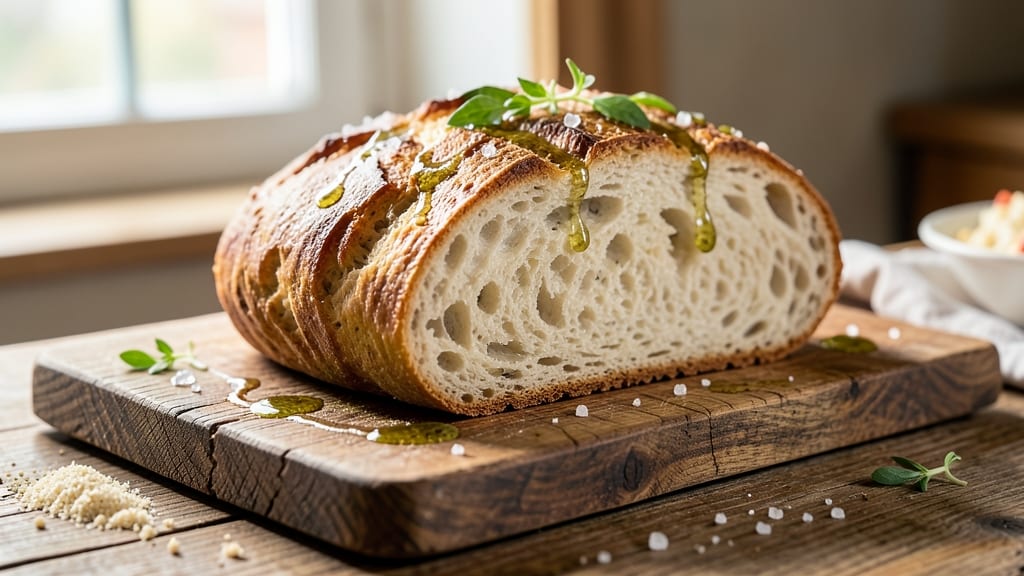
This authentic Italian semolina bread recipe delivers the same golden crumb and crispy crust you'd find in a traditional Italian bakery. ✨ The secret lies in the combination of semolina flour and water, creating a dough that develops a signature chewy interior and crackly exterior when baked properly.
I've perfected this technique over years of baking, ensuring every loaf captures that authentic Italian flavor and texture.
The beauty of this recipe is its simplicity—just semolina flour, water, and a touch of olive oil or lard for richness. The dough requires minimal handling but benefits from a slow fermentation, allowing flavors to develop fully.
This traditional method transforms basic ingredients into a bread that's crispy on the outside, tender inside, and packed with that unmistakable Italian aroma.
What sets this bread apart is its versatility—perfect for serving alongside soups, pairing with olive oil and balsamic vinegar, or using as a base for bruschetta.
The crust achieves a satisfying crunch while maintaining a golden hue, and the crumb remains moist and elastic, making each bite a testament to authentic Italian baking.
Whether you're baking for a special occasion or simply craving a taste of Italy, this recipe delivers restaurant-quality results with minimal effort. The key is patience during fermentation and precision in shaping, ensuring a loaf that's both visually stunning and delicious. Let's get started!
Ingredients for authentic italian semolina bread
Four key ingredients transform into Italy's iconic golden crumb and crackly crust.
| Ingredient | Amount | Notes |
|---|---|---|
| Semolina Flour 🌾 | 3 ½ cups | Fine grind for authentic texture |
| Water 💧 | 1 ½ cups | Room temperature preferred |
| Olive Oil 🫒 | ¼ cup | Extra-virgin for richness |
| Salt 🧂 | 1 ½ tsp | Fine sea salt preferred |
| Active Dry Yeast 🍞 | ¼ tsp | Fresh yeast at double amount |
| Lard 🧈 | ¼ cup | Leaf lard for best results |
| Cornmeal 🌽 | ¼ cup | For dusting baking surface |
| Coarse Sea Salt 🧂 | 2 tsp | For sprinkling crust |
| Semolina Flour 🌾 | ¼ cup | Extra for shaping |
The semolina flour is non-negotiable—Bob's Red Mill or Barilla brands deliver the finest grind for that signature texture. Italian markets often carry premium semolina at better prices than regular grocery stores. For the yeast, Saf-Instant works perfectly, but if using active dry yeast, dissolve it first in warm water with a pinch of sugar. The lard adds richness; leaf lard (not leaf fat) gives the best flavor and texture. If you must substitute, use unsalted butter at room temperature, though purists will argue it's not quite the same.
No semolina flour? Fine cornmeal in a pinch, though the texture won't be identical. Short on lard? Olive oil increases to 1/3 cup total, but expect a slightly less tender crumb. The coarse sea salt for the crust can be swapped for kosher salt, though it won't give that same dramatic crunch. For the yeast, if your pantry's been neglected, check the expiration date—old yeast won't activate properly. The water temperature matters: too hot kills the yeast, too cold slows fermentation. Aim for 85°F if you're precise, or just use room temp water and let the yeast do its thing.
This dough ferments best at 70-75°F for 4-6 hours—place it in a warm spot if your kitchen is chilly. Once shaped, let it rest 30 minutes before baking for a cleaner slice. The baked loaf keeps well wrapped at room temp for 2 days, but it's best enjoyed fresh. For longer storage, freeze the cooled loaf wrapped in plastic for up to 3 months. Toast slices before serving to revive that bakery-fresh crunch.
Why You'll Love This Recipe
- I make this for everything: toast with olive oil and salt for a lazy breakfast, torn over salads when I’m too tired to slice, or even as a side for dinner when I’m feeding a crowd. It’s my go-to, no questions asked.
- Five-Ingredient Magic: I swear by this—just semolina, water, olive oil, yeast, and salt. No fancy mixers, no stress. The dough comes together faster than my coffee brews, and honestly? That’s saying something.
- Chewy Crust, Golden Heart: Between us, the texture is ridiculously good—the outside stays crispy just long enough, while the inside melts like butter. That’s the semolina doing its thing, and once you taste it, you’ll never go back to regular bread.
- Weeknight & Weekend Star: I make this for everything: toast with olive oil and salt for a lazy breakfast, torn over salads when I’m too tired to slice, or even as a side for dinner when I’m feeding a crowd. It’s my go-to, no questions asked.
Step-by-step instructions for authentic Italian semolina bread
Here's how to craft traditional Italian semolina bread with a signature crisp crust and tender crumb.
👨🍳 Step 1: Activate the Yeast and Mix the Dough
In a small bowl, combine the 1.5 cups water with the 0.25 tsp active dry yeast and let it sit for 5-10 minutes until foamy. This confirms your yeast is active and ready to work. If it doesn't bubble, your bread won't rise properly.
In a large bowl, whisk together the 3.5 cups semolina flour, 1.5 tsp salt, and 0.25 cup lard until crumbly. Add the yeast mixture and 0.25 cup olive oil all at once. Mix vigorously with a wooden spoon or your hands until a shaggy dough forms that pulls away from the sides of the bowl.
🥘 Step 2: Knead Until Smooth and Elastic
Turn the dough onto a lightly floured surface and knead for 10-12 minutes until smooth and elastic. You'll know it's ready when it springs back slowly when poked and doesn't stick to your fingers. Semolina dough is denser than wheat flour dough, so don't be surprised if it feels heavier.
Real talk: this dough won't rise dramatically like wheat flour dough. The semolina creates a dense, moist crumb that's characteristic of traditional Italian semolina bread. Wrap the dough in plastic wrap and let it rest at room temperature for 1 hour to relax the gluten and improve texture.
🔥 Step 3: Shape and Proof for Optimal Texture
Divide the dough into 4 equal portions (about 12 ounces each). Shape each portion into a round loaf by pulling the edges toward the center and sealing tightly. Place on a baking sheet dusted with 0.25 cup cornmeal—this prevents sticking and creates a crisp bottom crust.
Cover loosely with plastic wrap and let proof at room temperature for 1-2 hours until the dough has risen noticeably and feels springy when pressed gently. The proofing time is critical—underproofed bread will be dense, while overproofed bread collapses during baking. Look for about 30-50% increase in volume.
🔪 Step 4: Score and Bake for Perfect Crust
Preheat your oven to 400°F with a baking stone or inverted baking sheet on the middle rack. When the oven is fully heated, use a sharp razor blade or knife to score the top of each loaf in a crosshatch pattern. This allows steam to escape and creates that beautiful cracked crust.
Bake for 25-30 minutes until the crust is deep golden brown and the internal temperature reaches 190°F. The bread should sound hollow when tapped on the bottom. In the last 5 minutes of baking, sprinkle generously with 2 tsp coarse sea salt for that authentic Italian finish.
⏰ Step 5: Rest Before Serving for Best Texture
Transfer the baked loaves to a wire rack and let cool completely for at least 1 hour. This resting period allows the crumb to set properly and prevents the bread from becoming gummy. The exterior should be crisp and crackly, while the interior reveals that signature tender, slightly chewy crumb.
For serving, slice with a serrated knife and enjoy within 2-3 days for peak freshness. Store wrapped in a cloth bag at room temperature to maintain crispness. The flavor improves as it stales slightly, developing deeper nutty notes from the semolina.
Pro Tips For Making Authentic Italian Semolina Bread
- Mix the Dough by Hand: Forget the food processor—semolina’s gritty texture needs muscle. Knead this dough vigorously for at least 10 minutes by hand until it’s smooth and elastic. The friction breaks down the coarse semolina, making the bread tender and less crumbly.
- Use Warm (Not Hot) Water: Active dry yeast wakes up best in water that’s 105–110°F (40–43°C)—not boiling, not ice cold. Test with your finger: it should feel like a warm bath, not a sauna. Yeast dies in heat, so resist the urge to rush.
- Let the Dough Rise Twice: Skip the second rise at your peril. After the first rise (1–2 hours), punch it down and let it rest another 30–60 minutes. This relaxes the gluten, prevents a dense crumb, and gives the yeast time to fully proof—critical for that light, airy texture.
- Brush with Olive Oil: Don’t just drizzle oil on top—use a pastry brush to coat the dough thoroughly before baking. This creates a golden, crisp crust without making the bread greasy. Extra virgin works, but a neutral oil (like light olive) gives a cleaner finish.
Perfect pairings for this authentic italian semolina bread
Classic Olive Oil
Drizzle freshly baked semolina bread with extra-virgin olive oil straight from a Tuscan-style ceramic cruet. I recommend Colavita or Bertolli for that perfect balance of peppery notes and buttery richness.
Serve with a sprinkle of flaky sea salt and a few fresh rosemary leaves torn by hand for an authentic Italian touch. 💛
Balsamic Glaze
Warm 2 tablespoons aged balsamic vinegar (like San Giorgio) in a small saucepan until syrupy, then drizzle over sliced bread. The tangy-sweet contrast enhances the bread's nutty flavor.
For extra decadence, add a pinch of crushed black pepper to the glaze. This pairing is perfect for bruschetta or as a simple appetizer.
Tomato & Basil
Top slices with sliced heirloom tomatoes (like San Marzano varieties) and a few fresh basil leaves. Drizzle with olive oil and a pinch of coarse sea salt.
The acidity of the tomatoes cuts through the bread's richness, creating a classic Italian combination. Add a few cherry tomatoes for extra freshness.
Whole Milk Ricotta
Spread whipped whole milk ricotta (mixed with a pinch of salt) on warm bread slices. Top with thinly sliced prosciutto di Parma and a few black peppercorns for a sweet-savory balance. This pairing is inspired by traditional Italian antipasti and feels luxurious yet simple. 🌟
Fig Jam & Goat Cheese
Combine 2 tablespoons fig jam (like Bon Appétit brand) with 1 ounce softened goat cheese and spread on toasted bread. Garnish with toasted walnuts and a drizzle of honey. This sweet-savory combo is perfect for breakfast or dessert-style appetizers.
Wine Pairings
Pair your semolina bread with a crisp Italian white wine like Vermentino from Sardinia or a light Pinot Grigio from Alto Adige. The acidity in these wines complements the bread's richness, while their citrus notes refresh your palate.
For red wine lovers, a Chianti Classico with its bright acidity and cherry notes works beautifully. 🍷
Nutrition facts
Frequently asked questions
Why does this semolina bread have a different texture than regular bread?
Semolina flour creates a denser, chewier crumb compared to wheat flour because its coarse texture traps moisture differently. The result is a bread with a crisp exterior and tender, slightly elastic interior—perfect for soaking up soups or pairing with rich toppings. This texture is traditional in Italian semolina breads like Pane di Semola.
Can I substitute semolina flour with regular flour?
While you can use fine cornmeal or all-purpose flour in a pinch, the texture won't be authentic. Semolina's high protein content and coarse texture create that signature crackly crust and chewy bite. For the closest substitute, mix 1 cup semolina with 1 cup all-purpose flour, but expect a slightly less crisp result.
How do I know when the bread is fully baked?
Your bread is done when it reaches an internal temperature of 190°F and sounds hollow when tapped on the bottom. The crust should be deep golden brown with visible cracks from scoring. If unsure, check at 25 minutes—overbaking can dry out the crumb.
Why did my semolina bread turn out dense instead of crispy?
Dense bread usually means underproofing or insufficient heat during baking. Ensure your dough proofs until it's 30-50% larger and your oven reaches 400°F with a baking stone. Also, scoring the dough before baking helps create steam for that crisp crust. Try again with these adjustments!
Can I make this bread without lard?
Yes! Increase the olive oil to 1/3 cup total for a similar texture, though the flavor will be slightly less rich. For a neutral fat, use unsalted butter at room temperature, but expect a softer crust. Traditional recipes use lard for its high smoke point and flavor neutrality.