
Side Dishes
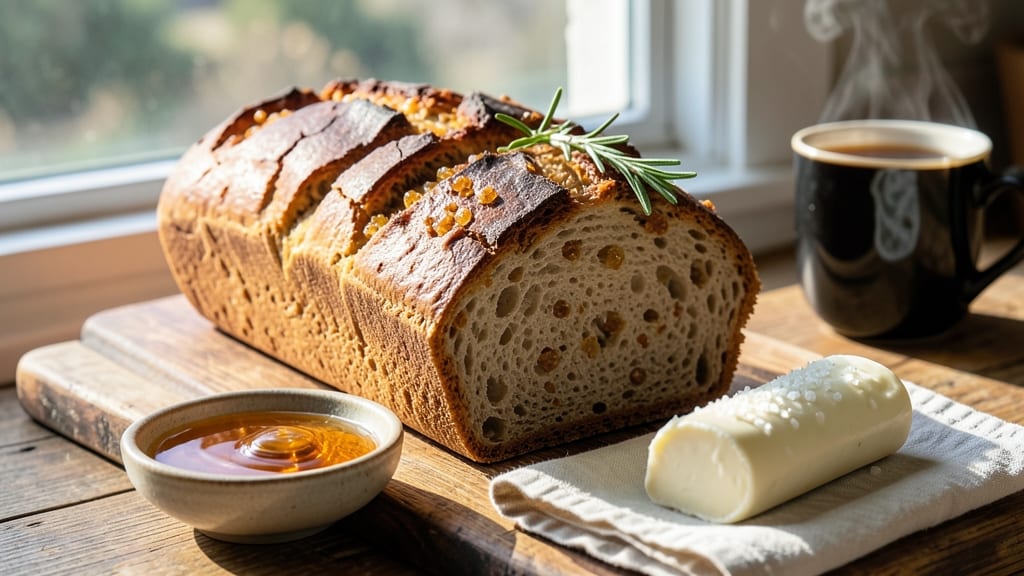
This Aussie bread recipe brings the heart of Australian bush cooking to your kitchen with its golden crust and caramelized sweetness inside. 🌟 Born from the traditions of Damper—a simple, rustic bread made by early settlers—this version captures that same homestyle warmth while delivering a slightly sweeter, more complex flavor profile.
The secret lies in the slow-baked crust and the subtle caramelization that happens as the bread cooks, creating pockets of rich, buttery sweetness throughout.
What makes this recipe special is its simplicity and versatility. With just five core ingredients—flour, sugar, butter, milk, and a pinch of salt—you can create a bread that’s perfect for breakfast, a side for roasts, or even a dessert when served warm with honey.
The dough comes together in minutes, but the magic happens during baking, where the crust develops a beautiful golden hue while the inside stays tender and slightly sweet.
This Aussie bread is more than just a recipe; it’s a taste of history and tradition. The slow-baked method ensures a crispy exterior and a soft, caramelized interior, making every slice worth savoring.
Whether you’re serving it with jam, butter, or as part of a hearty meal, this bread is sure to become a staple in your kitchen.
Ready to bake? This recipe is perfect for beginners and experienced bakers alike, with clear instructions and foolproof techniques. Let’s get started on creating a piece of Aussie tradition in your own home.
Ingredients for aussie bread
Five simple ingredients transform into golden, caramelized Aussie bread with crispy crust and tender interior.
| Ingredient | Amount | Notes |
|---|---|---|
| All-Purpose Flour 🌾 | 4 cups | Sifted for even texture |
| Granulated Sugar 🍚 | ½ cup | White sugar preferred |
| Unsalted Butter 🧈 | 1 cup | Cold, cubed for even melting |
| Whole Milk 🥛 | 1 cup | Room temperature preferred |
| Salt 🧂 | 1 tsp | Diamond Crystal preferred |
| Instant Yeast 🍞 | 1 tsp | Active dry works too |
| Large Egg 🥚 | 1 whole | Room temperature |
| Honey 🍯 | 1 tbsp | For caramelized sweetness |
The butter and honey create that signature caramelized sweetness. European-style butter like Plugrá or Land O'Lakes has higher fat content, which gives a richer crust. For honey, Manuka or clover varieties add depth—avoid the overly processed kinds. Flour matters too: King Arthur or Gold Medal brands have consistent protein levels for reliable texture. If you're in Australia, grab AP Flour from Coles or Woolworths—they're formulated for local baking. Keep your butter cold when cutting it into the flour; this creates more surface area for flavor development.
No butter? Coconut oil or lard works in a pinch, though the flavor won't be identical. Substituting honey? Maple syrup or agave at the same amount, but expect slightly less caramelization. Yeast issues? Proof it first—mix with warm milk and 1 tsp sugar, wait 5-10 minutes for bubbles before using. For a richer dough, add 1 tbsp sour cream or yogurt. The egg binds everything together, so don't skip it unless you're making a vegan version (which would require a flax egg). Salt is non-negotiable—it balances the sweetness and enhances crust development.
This dough keeps for 24 hours in the fridge, covered. For best results, let it rise overnight in the fridge for deeper flavor. The baked loaf stays fresh 3 days at room temperature wrapped in a towel, or 1 week frozen. To reheat, wrap slices in foil and warm in a 350°F oven for 5 minutes. The crust gets crispy again, just like fresh from the oven. For extra crunch, sprinkle coarse sugar on top before baking—it melts into golden crystals during the bake.
Why You'll Love This Recipe
- No Yeast Needed: I’ll admit, I was skeptical too—until I tried it. This bread rises with baking powder, so no waiting around for dough to proof. Just mix, bake, and enjoy while your coffee brews.
- Buttery Sweet Crust: That golden crust? It’s all thanks to the sugar and butter caramelizing. One bite and you’ll swear it’s from a bakery, even though I made it in my Pyrex dish.
- Breakfast or Snack: Honestly, I eat this cold with butter, toasted, or even as a side for dinner. The soft crumb stays fresh for days, so it’s my go-to for lazy mornings or quick bites.
- Pantry Staples Only: Between us, this recipe uses stuff I always have: flour, sugar, butter, milk. No fancy ingredients or last-minute grocery runs. My wallet—and my taste buds—thank me.
Step-by-step instructions for Aussie bread with caramelized sweetness
Here's the method for a perfectly golden crust with that signature caramelized sweetness throughout.
👨🍳 Step 1: Mix the Dough Base
In a large mixing bowl, combine the 4 cups All-Purpose Flour, 1 tsp Salt, and 1 tsp Instant Yeast. Whisk until evenly distributed—this ensures uniform yeast activation throughout the dough. The flour should look like it has a fine, even coating of salt and yeast.
In a separate bowl, melt the 1 cup Unsalted Butter in 1 cup Whole Milk over low heat until fully incorporated. The mixture should reach about 100°F—warm enough to activate the yeast but not hot enough to kill it. Let it cool for 5 minutes until it reaches room temperature.
🍳 Step 2: Combine Wet and Dry Ingredients
Make a well in the center of your dry ingredients and pour in the warm butter-milk mixture. Add the 0.5 cup Granulated Sugar and 1 whole Large Egg, then mix with a wooden spoon until a shaggy dough begins to form. You'll see the dough pull away from the sides of the bowl as the flour absorbs the liquid.
Once the dough comes together, turn it out onto a lightly floured surface and knead for 8-10 minutes until smooth and elastic. The dough should feel firm but not stiff—press your finger into it and it should spring back slowly. This kneading develops gluten, which gives the bread its structure and chewiness.
⏰ Step 3: First Rise and Honey Infusion
Shape the dough into a round loaf and place it in a lightly greased bowl. Cover with a damp kitchen towel and let it rise in a warm place for 1-1.5 hours until it has nearly doubled in size. You'll know it's ready when you poke it gently with your finger and it leaves a slight indentation that doesn't immediately spring back.
While the dough rises, preheat your oven to 350°F. In a small bowl, mix the 1 tbsp Honey with 1 tablespoon water. This honey mixture will create that signature caramelized sweetness inside the bread. Once the dough has risen, punch it down gently to release air bubbles, then shape it into a round loaf again.
🔥 Step 4: Bake to Golden Perfection
Place the shaped dough on a parchment-lined baking sheet. Brush the top generously with the honey mixture, then bake for 25-30 minutes until the crust is deep golden brown and the internal temperature reaches 190°F. The bread should sound hollow when tapped on the bottom.
For extra caramelization, broil for 1-2 minutes at the end of baking time, watching closely to prevent burning. Let the bread cool on a wire rack for at least 10 minutes before slicing—this resting period allows the internal moisture to redistribute, ensuring each slice has that perfect balance of tender crumb and caramelized sweetness.
Pro Tips For Making Aussie Bread
- Melt Butter Slowly: Aussie bread needs that buttery richness, but dumping cold butter into warm milk makes it clump like a sad science experiment. Heat the milk to a gentle simmer first—just until tiny bubbles form at the edges—then whisk in the cubed butter. It’ll melt smoothly, and your dough won’t turn into a greasy mess.
- Weigh Your Flour: Scooping flour from the bag is how you end up with either a dense brick or a crumbly disappointment. Use a kitchen scale for precision—this recipe works best with 450g flour. Pack it lightly into the cup, then level it off. Trust me, your bread’s texture will thank you.
- Skip the Overmixing: I used to punch and fold that dough like I was kneading a grudge. But aussie bread dough just needs a quick, gentle mix—until it comes together. Overwork it, and you’ll end up with tough, chewy bread instead of that tender, pillowy texture. Let the gluten relax, even if it looks messy.
- Proof in a Warm Spot: Your kitchen’s drafty corner isn’t doing your dough any favors. Place the bowl in a turned-off oven with a cup of boiling water running for 10 minutes—this creates a warm, humid proofing environment. The dough will rise faster and more evenly, without collapsing when you shape it. (Yes, even if you’re impatient like me.)
Best sauces and condiments for these flavors
Classic Butter and Honey Glaze
This is the signature topping that makes Aussie bread unforgettable. After baking, brush the warm loaf with a mix of 2 tablespoons melted butter and 1 tablespoon honey, then broil for 1-2 minutes to create a glossy, caramelized crust.
The heat transforms the honey into a sticky, golden glaze that seeps into the bread for every bite. For extra richness, use European-style butter like Plugrá—its higher fat content creates a deeper flavor. 🌟
Spiced Rum Caramel Drizzle
For a boozy twist, make a quick caramel by simmering ½ cup brown sugar, 2 tablespoons butter, and 1 tablespoon spiced rum in a saucepan until thickened. Drizzle over slices of warm bread, then torch briefly with a kitchen blowtorch for a crackly finish.
The rum adds warmth and depth, while the caramel balances the bread’s natural sweetness. Save any leftover caramel for toast or pancakes!
Cinnamon-Sugar Crust
Before baking, sprinkle the shaped loaf with a mix of 1 tablespoon melted butter, 2 tablespoons sugar, and 1 teaspoon cinnamon. The sugar melts into crispy crystals during baking, while the cinnamon infuses the crust with cozy warmth.
This works especially well if you’re serving the bread for breakfast or dessert. For a nutty variation, add 1 tablespoon chopped pecans to the mix.
Garlic-Herb Butter
For savory pairings, whip ½ cup softened butter with 2 minced garlic cloves, 1 tablespoon fresh rosemary, and a pinch of salt. Spread on warm bread slices and broil for 1-2 minutes until golden.
The garlic and herbs cut through the bread’s sweetness, making it perfect for lunch or dinner. Store the herb butter in an airtight container in the fridge for up to 5 days.
Vegan Honey Alternative
Skip the honey entirely and replace it with 1 tablespoon maple syrup or agave nectar in the glaze. For extra richness, add 1 teaspoon coconut oil to the butter-milk mixture during dough prep.
While the flavor won’t be identical, this version keeps the caramelized effect while being plant-based. Pair with vegan butter or almond butter for a fully plant-forward spread. ✨
Jam and Clotted Cream
Serve slices of warm Aussie bread with a dollop of clotted cream (or whipped cream) and a spoonful of raspberry or apricot jam. The cream softens the bread’s crust, while the jam adds fruity acidity.
For a traditional Aussie touch, use Vegemite on buttered bread—it’s a polarizing but iconic pairing that balances the bread’s sweetness with umami depth.
Nutrition facts
Frequently asked questions
What makes this Aussie bread different from regular sourdough?
Aussie bread (like Damper) skips the sourdough starter and relies on commercial yeast for quick rise. The key differences are the honey caramelization inside and the golden crust from the butter-milk mixture. While sourdough develops complex tanginess over days, this bread bakes in under an hour with a sweeter, more approachable flavor. The dough also contains 1 cup butter (vs. ¼ cup in most sourdough), giving it a richer mouthfeel.
Can I make this bread without honey?
Yes! Replace the honey with 1 tablespoon maple syrup or agave for a plant-based version. For caramelization without sweetness, try 1 teaspoon vanilla extract in the dough instead. The crust will still develop color from the butter, though the interior will be less sweet. Traditional Damper often uses no added sweetener—just flour, water, and sometimes milk.
Why does my bread turn out dense instead of light and airy?
Dense bread usually means underproofed yeast or over-kneaded dough. Ensure your yeast is fresh (test it in warm milk first) and let the dough rise until it nearly doubles in size. For texture, knead just until smooth (8-10 minutes), then let it rest 10 minutes before shaping. Overworking the gluten makes the bread tough. Pro tip: Use a kitchen scale for precise measurements—flour varies by cup volume.
How can I make this bread without an oven?
For campfire or Dutch oven cooking, shape the dough into a round loaf and bake in a heavy pot with lid on medium coals for 45-60 minutes. The pot traps steam for a crispy crust. Add hot coals on top after 30 minutes for even browning. Traditional Aussie Damper was often cooked this way! For extra moisture, brush the crust with melted butter during baking.
What’s the best way to store leftover Aussie bread?
Wrap cooled slices in parchment paper and store in an airtight container at room temperature for 3 days. For longer storage, freeze slices for up to 1 month. To revive, warm in a 350°F oven for 5 minutes with a splash of water on a plate below the rack—this steams the bread back to freshness. Avoid refrigerating, as it dries out the crust faster.