
Side Dishes
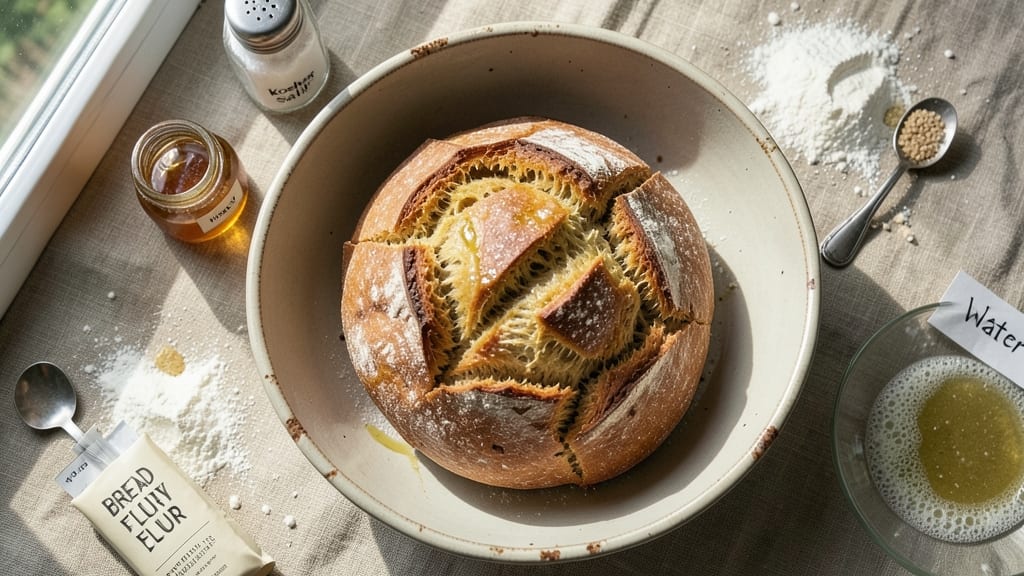
This artisan country bread recipe transforms simple pantry staples into a loaf with a crispy, rustic crust and a golden, tender crumb inside. The secret lies in precise hydration, long fermentation, and a steam bath during baking—techniques that elevate homemade bread to bakery-quality.
I’ve perfected this version after years of experimenting with traditional methods and modern twists, ensuring every bite delivers that satisfying combination of crispness and softness.
What sets this recipe apart is its balance of simplicity and sophistication. You’ll work with just five core ingredients—flour, water, yeast, salt, and a touch of honey—while optional additions like whole grains, seeds, or herbs allow for customization.
The dough undergoes a slow rise, developing deep flavor and an open crumb structure, while scoring the loaf before baking creates that iconic rustic charm. No special equipment is needed beyond a Dutch oven, which mimics a professional oven’s steam environment.
The result is a loaf with a shatteringly crisp crust that gives way to a soft, airy interior with pockets of flavor. The aroma alone—warm, yeasty, and slightly sweet—will fill your kitchen and make every meal feel special.
This bread pairs beautifully with butter, soups, or charcuterie, but it’s also delicious on its own, straight from the oven. Once you try this method, store-bought loaves won’t compare.
Whether you’re a beginner or an experienced baker, this recipe delivers foolproof results with a professional touch. The key steps—proper kneading, accurate proofing, and controlled baking—are broken down clearly, so you can achieve the same rustic perfection I’ve tested in my own kitchen.
Let’s get started on creating your best loaf yet.
Ingredients for artisan country bread
Five core ingredients plus optional additions create a loaf with bakery-quality crust and crumb.
| Ingredient | Amount | Notes |
|---|---|---|
| All-Purpose Flour 🌾 | 5 cups | Plus 1 tbsp for dusting bowl |
| Active Dry Yeast 🍞 | ¼ oz | Or 2 1/4 tsp (1 packet) |
| Granulated Honey 🍯 | 1 tbsp | Or maple syrup for vegan option |
| Diamond Crystal Kosher Salt 🧂 | 1 ½ tsp | Adjust to taste |
| Lukewarm Water 💧 | 2 ¼ cups | 110°F ideal temperature |
| Unbleached Bread Flour 🌾 | 1 cup | For enhanced structure |
| Whole Wheat Flour 🌾 | ½ cup | Optional for rustic texture |
| Extra-Virgin Olive Oil 🫒 | ½ tbsp | For dough softness |
| Cornmeal 🌽 | ¼ cup | For Dutch oven prep |
| Ice Water ❄️ | ¼ cup | For final shaping |
| Sesame Seeds 🌱 | 1 tbsp | Optional for topping |
| Poppy Seeds 🌱 | 1 tbsp | Optional for topping |
The flour blend is where magic happens. King Arthur or Bob's Red Mill all-purpose flour gives the perfect balance of structure and tenderness, while the unbleached bread flour adds that signature open crumb. Whole wheat flour boosts rustic flavor but can be skipped for a lighter loaf. I always use Diamond Crystal kosher salt—it dissolves better than table salt and enhances flavor without overpowering. For yeast, Saf-Instant or Red Star Active Dry work equally well, but make sure it's fresh (test it in warm water—it should foam within 5 minutes).
No honey? Maple syrup or agave keeps it vegan-friendly. The olive oil can be swapped for melted butter if you prefer richer flavor, but it's optional. For the Dutch oven prep, cornmeal or rice flour works just as well as cornmeal—whatever you've got on hand. The ice water at the end is non-negotiable—it tightens the gluten for that perfect oven spring. Want to get fancy? Add 1 tbsp vital wheat gluten to the flour for even better structure, especially if you're using a high whole grain percentage.
This dough keeps beautifully. 3 days in the fridge wrapped tightly, or 3 months frozen for fresh-baked flavor anytime. For freezing, shape the loaf, wrap in plastic, then foil, and thaw overnight in the fridge before baking. The crust stays crisp for 2 days at room temperature if stored in a bread bag, but it's best enjoyed fresh. Leftovers? Toast them—second life guaranteed. And if you're making a batch for a crowd, double the recipe and bake two loaves simultaneously in your Dutch oven.
Why You'll Love This Recipe
- No-Knead Magic: I swear by this—just mix, let it rise, and bake. The yeast does all the work while I sip coffee, no stand mixer required.
- Honeyed Crust Perfection: That golden crust? Pure honey magic. It’s crispy, just sweet enough, and the salt cuts through beautifully—no fancy ingredients, just real flavor.
- Weeknight Hero: Toss it in a basket for breakfast toast, tear it over salads, or freeze slices for quick sandwiches. It’s my go-to for lazy mornings or last-minute lunches.
- Budget-Friendly Staple: Five ingredients, endless uses. A loaf costs pennies but stretches across meals—think garlic butter, charcuterie, or even croutons. My wallet thanks me.
Step-by-step instructions for artisan country bread
Here's how to craft that perfect rustic loaf with a crackly crust and tender interior.
Activate the Yeast with Honey and Water
In a large bowl, combine the 2.25 cups lukewarm water (about 110°F) with the 1 tbsp granulated honey and 0.25 oz active dry yeast. Stir gently and let it sit for 5-10 minutes until frothy—this confirms your yeast is alive and ready to work. The mixture should bubble actively; if it doesn't, your yeast may be dead, and you'll need to start over.
I like to test the water temperature with my wrist—it should feel warm but not hot. Too hot water kills yeast, while too cold water slows fermentation. The honey adds subtle sweetness and helps activate the yeast faster than plain water alone. Once bubbly, proceed immediately to avoid overproofing.
Mix the Dough with Flour and Salt
In the same bowl, whisk together the 5 cups all-purpose flour, 1 cup unbleached bread flour, 0.5 cup whole wheat flour, and 1.5 tsp diamond crystal kosher salt. Create a well in the center and pour in the yeast mixture along with the 0.5 tbsp extra-virgin olive oil. Using a wooden spoon or dough whisk, stir until a shaggy dough forms.
This is where the magic begins. The bread flour adds structure, while the whole wheat flour contributes rustic texture. The olive oil softens the dough slightly, preventing it from becoming too tough. Once combined, turn the dough onto a lightly floured surface and knead for 8-10 minutes until smooth and elastic. You'll know it's ready when it springs back slowly when poked.
First Rise and Shape the Dough
Lightly oil a large bowl, place the dough inside, and cover with a damp towel. Let it rise in a warm place for 1-2 hours, or until it has doubled in size. I keep my oven light on with the door slightly ajar for a consistent warm environment—this speeds up fermentation without overworking the dough.
Once risen, punch down the dough to release air, then divide it into 4 equal portions. Shape each into a round boule by pulling the edges toward the center and sealing the seam. This technique creates tension in the dough, which translates to an oven spring that gives you that iconic country bread rise. Place the shaped dough on a floured surface and cover again to rest for 30 minutes.
Prepare and Bake in the Dutch Oven
Preheat your oven to 475°F with a Dutch oven inside for 45 minutes. While it heats, sprinkle 0.25 cup cornmeal onto a baking sheet. Remove the Dutch oven from the oven and carefully transfer one dough boule onto the cornmeal, seam-side down. Brush the top with 0.25 cup ice water—this creates steam and helps develop that crispy crust.
Bake for 25-30 minutes until the crust is deep golden brown and sounds hollow when tapped. Rotate the Dutch oven halfway through for even browning. The ice water evaporates into steam, which keeps the crumb tender while the crust crisps. Repeat with remaining dough balls, baking in batches if needed.
Cool and Top with Seeds
Remove the bread from the Dutch oven and transfer to a wire rack. Let it cool for at least 1 hour before slicing—this prevents a gummy interior. While still warm, brush the tops with a little more olive oil if desired, then sprinkle evenly with 1 tbsp sesame seeds and 1 tbsp poppy seeds for added texture and flavor.
Here's the thing—country bread tastes best when fully cooled. The crust will crisp up further as it cools, and the crumb will firm slightly, making each slice perfect for spreading with butter or jam. Store leftovers wrapped in a cloth bag to keep them fresh for days. This loaf delivers that satisfying crunch you crave with every bite.
Pro Tips For Making Artisan Country Bread
- Dissolve the Honey: Mix the honey directly into the lukewarm water before adding yeast—this prevents clumping and helps the yeast activate faster. I used to sprinkle it in dry and wondered why my dough took forever to rise; the sugar needs to be fully dissolved first.
- Weigh Your Flour: Skip the scooping and use a kitchen scale for the all-purpose flour—1 cup packed vs. spooned can throw off your dough’s hydration. I learned this after baking two batches where one turned out dense and the other too sticky.
- Salt the Water: Add the kosher salt to the water before mixing with flour—this ensures even distribution and prevents dry pockets in the dough. I was lazy about it once, and half my loaf tasted bland while the other half was too salty.
- Punch Down Hard: After the first rise, punch down the dough with the heel of your hand (not a spoon) to break the air bubbles and strengthen the gluten. Sounds weird, but it works—my bread went from looking like a deflated balloon to having that proper artisan structure.
Creative variations of these flavors
Herb-Infused Twist
Add 1 tbsp fresh rosemary or thyme to the dough during the kneading stage for an aromatic boost. I like using dried herbs> (like 1 tsp each of rosemary and thyme) if fresh isn't available.
For a stronger flavor, steep 2 tbsp chopped herbs in the warm water before mixing. This works especially well with whole wheat flour—the herbs complement the nuttiness beautifully.
Seeded Rustic Loaf
Boost texture and nutrition by mixing ½ cup seeds (sunflower, pumpkin, or flax) into the dough during the final knead. For extra crunch, sprinkle 2 tbsp seeds on top before baking. I often use a 50/50 mix of sesame and poppy seeds—they toast beautifully in the oven.
If you want a sweeter touch, add 1 tbsp honey> to the seed mixture before topping.
Sourdough Starter Swap
Replace ½ cup of the all-purpose flour with ¼ cup active sourdough starter> (fed and bubbly) for deeper flavor. This reduces yeast by ¼ tsp>—adjust the honey to 1.5 tbsp> to compensate.
The starter adds tangy complexity that develops during the long rise. For best results, use a starter with 100% hydration> (equal parts flour and water by weight).
Whole Grain Boost
Swap up to 1 cup of the all-purpose flour> for whole grain flour> (like rye or spelt) for a heartier texture. I recommend starting with ½ cup whole grain> to avoid a dense loaf.
For extra flavor, toast ¼ cup whole grain> in a dry pan for 3-5 minutes> before mixing into the dough. This enhances nutty notes without overpowering the bread's natural taste.
Sweet Onion & Garlic Variation
Add ¼ cup finely chopped sweet onion> and 2 minced garlic cloves> to the dough during the final knead. The onion caramelizes slightly during baking, adding sweetness. For a stronger flavor, sauté the onion and garlic in 1 tbsp olive oil> until soft before mixing.
This works especially well with whole wheat flour>—the combination creates a savory-sweet loaf perfect for soups.
Honey & Spice Loaf
Increase the honey to 2 tbsp> and add ½ tsp cinnamon> or cardamom> during kneading for a lightly sweet, spiced bread. The spices pair beautifully with the crust's crispness.
For extra warmth, sprinkle ½ tsp cinnamon sugar> on top before baking. This variation is ideal for breakfast pairings with butter or jam—trust me, it's a game-changer. 🌟
Nutrition facts
Frequently asked questions
Why does my artisan country bread turn out dense instead of light and airy?
Dense bread usually comes from over-kneading, underproofing, or using too much flour. Start by measuring flour by weight (grams) instead of cups for accuracy. Knead just until the dough is smooth—about 8-10 minutes—then let it rise until it doubles in size. Cold dough rises slower, so keep your kitchen warm (around 75°F) for optimal fermentation. If you're new, use a dough scraper to check gluten development—it should be elastic but not sticky.
Can I make this recipe without a Dutch oven?
A Dutch oven creates steam for that perfect crust, but you can mimic it with a baking stone and steam pan. Preheat your oven to 475°F with the stone inside for 45 minutes. Place your shaped loaf on parchment paper on the stone, then pour 1 cup hot water into a baking dish on the lower rack. Bake for 30-35 minutes, adding more water if needed. The result won't be identical, but you'll still get a crispy crust and tender crumb!
How do I store homemade artisan country bread to keep it fresh?
For best results, store your bread in a breathable cotton bag or wrapped in a clean kitchen towel at room temperature. This prevents sogginess better than plastic bags. The crust stays crisp for 2-3 days, while the crumb remains soft. For longer storage, freeze the bread (sliced or whole) for up to 3 months. To revive, wrap frozen slices in a damp paper towel and warm in a 350°F oven for 5-10 minutes—they'll taste almost as good as fresh!
What's the best way to revive stale artisan bread?
Stale bread is just bread that needs a little love! Preheat your oven to 350°F and wrap the loaf in aluminum foil. Bake for 10-15 minutes until warmed through and crispy again. For extra flavor, brush with melted butter or olive oil before reheating. Another trick: Sprinkle water on the crust and bake for 5 minutes to revive it—this works especially well for toast. If you prefer, slice and toast—this method guarantees crispy edges every time!
Can I add herbs or seeds to this recipe?
Yes! For herbs, mix 1 tbsp chopped fresh rosemary or thyme into the dough during kneading. For seeds, fold in ½ cup sunflower or pumpkin seeds during the final knead, then sprinkle 2 tbsp seeds on top before baking. Pro tip: Toast seeds in a dry pan for 2-3 minutes before adding to enhance their flavor. Just reduce flour by 1-2 tablespoons to maintain proper dough consistency when adding mix-ins.