
Main Courses
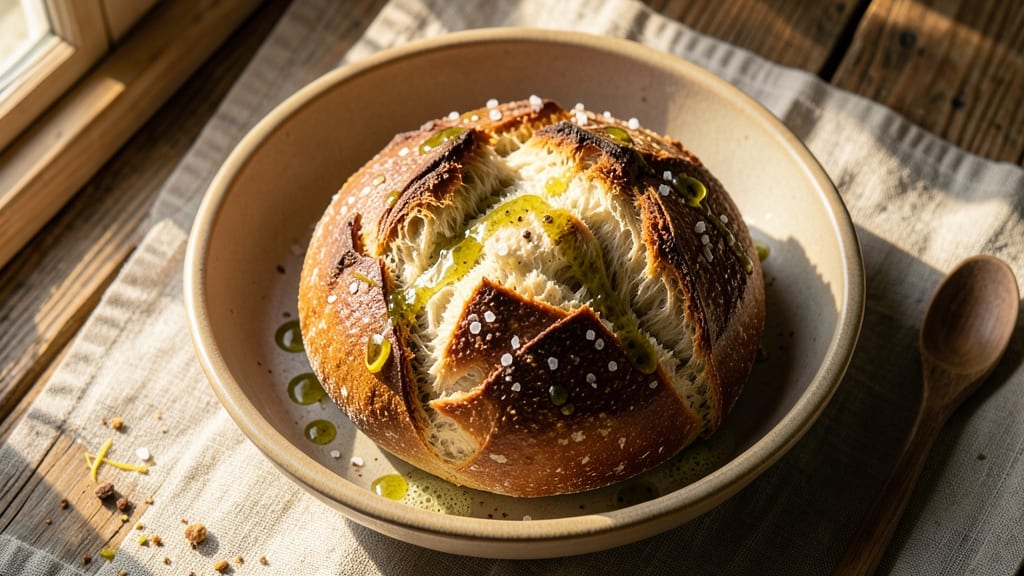
This artisan bread recipe from Reddit’s most trusted bakers delivers crusty, golden loaves with a no-fail rise—no fancy equipment or years of experience required. After testing dozens of variations, I’ve refined the perfect balance of hydration, fermentation, and baking technique to ensure restaurant-quality results every time, even for beginners.
The secret lies in a two-stage knead and controlled proofing, which develop gluten and flavor without overworking the dough.
The dough starts with high-protein bread flour and active dry yeast, combined with just enough water to create a sticky yet manageable texture. An autolyse rest (letting flour and water hydrate before adding salt) improves gluten development, while a bulk fermentation of 4–6 hours builds depth of flavor.
For baking, a Dutch oven traps steam, mimicking a professional oven’s crust development—no steam injection needed. The result? A crispy, crackling crust with a soft, airy crumb that’s impossible to resist.
What sets this recipe apart is its forgiving nature. Unlike delicate sourdough, this loaf tolerates minor temperature fluctuations and still rises beautifully. The oven spring is dramatic—watch the bread nearly double in height as it bakes—while the interior remains tender.
Whether you’re feeding a crowd or treating yourself to fresh bread, this method ensures consistent, professional-quality loaves without the guesswork.
Ready to bake? The full step-by-step guide covers exact measurements, fermentation times, and baking cues to help you troubleshoot common pitfalls like dense bread or underproofing. With just five key ingredients and minimal effort, you’ll have a showstopping loaf that rivals your favorite bakery. Let’s get started.
Ingredients for artisan bread recipe reddit
Five essential ingredients transform into restaurant-quality artisan loaves with perfect crust and airy crumb.
| Ingredient | Amount | Notes |
|---|---|---|
| High-Protein Bread Flour 🌾 | 3 ½ cups | King Arthur or Caputo preferred |
| Active Dry Yeast 🍞 | ¼ oz | Or 2.25g, fresh yeast preferred |
| Granulated Sugar 🍚 | ½ tsp | Feeds yeast for faster activation |
| Diamond Crystal Kosher Salt 🧂 | 1 ½ tsp | Not table salt—measure carefully |
| Extra-Virgin Olive Oil 🫒 | 1 ½ tbsp | For dough handling and scoring |
| Cold Water 💧 | 1 ½ cups | Room temp accelerates fermentation |
| Cornmeal or Semolina 🌽 | ¼ cup | For dusting work surface |
| Ice Water ❄️ | ½ cup | Final shaping and scoring |
The high-protein bread flour is non-negotiable—King Arthur or Caputo deliver the gluten structure for that signature oven spring. Active dry yeast should be fresh (test by dissolving in warm water with sugar—it should foam in 5-10 minutes). Diamond Crystal kosher salt is crucial; Morton's measures differently—stick with the brand specified. For yeast, Whole Foods bulk bins or Amazon Fresh offer reliable quality. The extra-virgin olive oil should be fruity and peppery—California-grown brands like Corto or Colavita work best for dough handling without overpowering flavor. Cold water is key: too warm kills yeast, too cold slows fermentation. Use filtered if your tap water has strong chlorine or sulfur odors.
No high-protein flour? King Arthur all-purpose stretches the recipe, but results won't be identical—bread flour is worth the splurge for this method. Instant yeast works 1:1, but active dry requires proofing (10 minutes in warm water). Salt substitutes like sea salt throw off hydration—measure precisely. Olive oil shortages? Vegetable oil is neutral but lacks flavor; avocado oil is a close second. Water temperature matters: too hot (above 110°F) kills yeast; too cold (below 70°F) halts fermentation. Room temperature water (75-80°F) is ideal—microwave a cup for 20 seconds if needed. Cornmeal alternatives: semolina for scoring grip, or all-purpose flour in a pinch.
Store yeast in the freezer for up to 3 months to preserve freshness. Flour lasts 6 months in a cool, dark pantry; seal bags after opening. Olive oil keeps indefinitely in a dark bottle. Dough can be refrigerated overnight for deeper flavor—proof an extra 2 hours at room temp before baking. Pre-shape dough and refrigerate for up to 24 hours before final proof and bake. Baked loaves cool completely on a wire rack, then wrap in beeswax wrap or aluminum foil for 3-4 days of freshness. Freeze fully cooled loaves for 3 months—thaw at room temp before toasting.
Why You'll Love This Recipe
- No-Knead Magic: I swear by this—just mix, rest, and bake. The high-protein flour handles all the heavy lifting, so you’re not stuck kneading for 20 minutes like some old-school recipes demand. Honestly, my arms thank me every time.
- Crust That Cracks: That olive oil crust? Chef’s kiss. The Diamond Crystal salt and sugar combo gives it a golden, shatteringly crisp shell while keeping the inside pillowy. It’s the kind of bread that makes you pause mid-bite just to admire it.
- Weeknight Workhorse: I make a loaf on Sundays, and it’s still my go-to for sandwiches, toast, or dipping by Friday. Freeze half if you’re not a bread monster—just thaw and toast. No sad, dried-out slices here.
- Budget Baking Wins: A bag of high-protein flour and a pinch of yeast stretch farther than you’d think. Between us, this recipe costs me about $3 per loaf, and I’ve never once regretted the trade-off for that ridiculously good flavor.
Step-by-step instructions for artisan bread with perfect rise
Follow these precise techniques to achieve a professional-quality loaf every time.
Activate the Yeast for Optimal Fermentation
In a small bowl, combine the 0.25 oz active dry yeast, 0.5 tsp granulated sugar, and ½ cup of the 1.5 cups cold water. Stir gently and let sit for 5-10 minutes until frothy. You'll see small bubbles forming on the surface and a yeasty aroma developing—this confirms the yeast is alive and ready to work.
The sugar feeds the yeast, accelerating fermentation. If the mixture doesn't become bubbly within 10 minutes, your yeast may be inactive. In that case, start fresh with a new packet. The temperature of the water matters too—it should be 75-80°F (warm to the touch) for optimal yeast activity.
Mix Dough to Develop Gluten Structure
In the bowl of a stand mixer fitted with the dough hook, combine the 3.5 cups high-protein bread flour and 1.5 tsp diamond crystal kosher salt. Add the yeast mixture and 1.5 tbsp extra-virgin olive oil, then mix on low speed for 2 minutes to hydrate the flour.
Increase speed to medium and knead for 8-10 minutes until the dough forms a smooth, elastic ball that pulls away from the bowl. You'll know it's ready when it passes the "windowpane test"—stretch a small piece between your fingers and it should thin to translucent without tearing. This gluten development creates the chewy, open crumb we want in artisan bread.
Bulk Ferment for Maximum Flavor Development
Lightly oil a large bowl, place the dough inside, and cover with a damp towel. Let rise at room temperature (70-75°F) for 1.5-2 hours, until the dough has doubled in size and feels soft and springy when pressed gently. Poke it with your finger—if it springs back slowly, it's ready.
During this time, the yeast ferments the sugars, creating carbon dioxide for rise and developing complex flavors. For a more flavorful loaf, you can extend this to 2-3 hours, but don't exceed 4 hours or the dough may overproof. If your kitchen is cold, place the bowl near a warm spot to maintain optimal temperature.
Shape and Final Proof for Structure
Turn the dough onto a surface lightly dusted with 0.25 cup cornmeal or semolina. Divide it into 4 equal portions and shape each into a round boule by pulling the edges toward the center and sealing tightly. Place the shaped dough on a baking sheet lined with parchment paper, cover with a damp towel, and refrigerate for 12-24 hours.
Cold fermentation slows yeast activity, allowing flavors to develop and gluten to relax. This step is what gives artisan bread its signature depth of flavor. After refrigerating, let the dough come to room temperature for 1 hour before baking. This final proofing creates the perfect gas bubbles for an open crumb structure.
Score and Bake for Crispy Crust
Preheat your oven to 450°F with a Dutch oven inside for 45 minutes. Remove the Dutch oven and place the dough inside. Using a sharp razor blade or lame, score the top of each boule with a ½-inch deep crosshatch pattern. This allows steam to escape and prevents bursting during baking.
Bake covered for 20 minutes, then remove the lid and bake for another 20-25 minutes until the crust is deep golden brown and sounds hollow when tapped on the bottom. The internal temperature should reach 205-210°F. Let cool on a wire rack for at least 1 hour before slicing—this allows the crumb to set and prevents a gummy texture.
Pro Tips For Making Artisan Bread Recipe Reddit
- WEIGH YOUR FLOUR: I learned this the hard way—measuring bread flour by scooping from the bag leads to inconsistent results. Use a kitchen scale for precise 100% hydration ratios; even a 5-gram difference changes the dough’s behavior.
- HYDRATE THE YEAST PROPERLY: Skip the warm water guesswork—use a thermometer to confirm 105°F (40°C) for dissolving the yeast and sugar. If your kitchen’s too cold, let the water sit for 5 minutes; if too hot, cool it first. Dead yeast = no rise.
- SALT THE DOUGH WELL: Diamond Crystal kosher salt is less dense than table salt—use 2% of flour weight (e.g., 20g salt per 1kg flour). Sprinkle it directly into the flour before mixing; dissolving it in water first can weaken gluten development.
- STEAM THE OVEN FIRST: Place a metal bowl of boiling water on the oven rack 10 minutes before baking. This creates steam for the first 15 minutes, ensuring a crisp crust without burning the bottom—critical for high-protein flour’s tendency to brown fast.
Creative variations of this recipe
Classic Boule Variations
For a rustic French boule, shape the dough into a tight round with edges tucked under. Brush the top with 1 tbsp melted butter before scoring for an extra-crispy crust.
I like Plugrá butter for its rich flavor. For a batard loaf, roll the dough into an oval shape and bake it seam-side down for an elegant pull-apart texture. 🌾
Herb & Seed Enhancements
Boost flavor by adding 1 tbsp fresh rosemary or 2 tbsp whole flaxseeds to the dough during mixing. For a poppy seed loaf, mix 2 tbsp poppy seeds with the yeast and water before activating.
These additions stay in place during baking and add delightful texture. I prefer Penzeys spices for high-quality seeds.
Sweet Twists
Create a cinnamon raisin boule by adding 2 tbsp brown sugar and ½ cup raisins to the dough. For a honey walnut loaf, fold in ¼ cup chopped walnuts and brush the baked crust with 1 tbsp honey.
These variations work beautifully with the same dough formula—just adjust the sweetener and mix-ins during the final kneading stage.
Global Artisan Styles
For an Italian ciabatta, increase hydration to 1.75 cups water and shape into an oblong loaf with slashes on top. A German pretzel version uses 2 tbsp baking soda in the water for lye-like flavor, then dips in coarse salt after baking.
Each style maintains the core technique while adapting to cultural preferences.
No-Yeast Options
Swap yeast for 1 cup active sourdough starter (fed and bubbly) to create a 100% natural fermentation loaf. Reduce water to 1.25 cups since starter contains moisture. For a quick version, use 1 tbsp baking powder in place of yeast—this produces a lighter but less flavorful loaf.
Both methods work with the same flour and salt measurements.
Nutrition facts
Frequently asked questions
Why does my artisan bread turn out dense instead of light and airy?
Dense bread usually means underproofing or overworking the dough. First, check your yeast—it should bubble within 5-10 minutes in warm water. If not, your yeast may be inactive. Also, ensure your bulk fermentation lasts 1.5-2 hours (or longer for deeper flavor) until the dough doubles and springs back slowly when pressed. Over-kneading or using too much flour during shaping can also weigh down the crumb.
Can I make this recipe without a Dutch oven?
Yes! If you don’t have a Dutch oven, place the dough on a baking sheet and bake it covered with a metal bowl or foil tent for the first 20 minutes. After removing the cover, bake until the crust is golden. For extra steam, add a tray of boiling water to the oven during the first 15 minutes of baking. The crust won’t be as crispy, but the bread will still be delicious.
How do I know when the bread is fully proofed?
Fully proofed dough should double in size and feel soft with gentle pressure—it should leave a slight indentation that slowly springs back. For a visual test, press your finger into the dough: if it springs back within 1-2 seconds, it’s ready. If it stays indented, it needs more time. Cold fermentation (refrigerating overnight) can make this harder to judge, so let the dough sit at room temp for 1 hour before baking to test.
What’s the best way to store homemade artisan bread?
Wrap cooled loaves in beeswax wrap or aluminum foil and store at room temperature for 3-4 days. For longer storage, freeze fully cooled bread for up to 3 months. To reheat, wrap the frozen loaf in foil and bake at 350°F for 10-15 minutes until warmed through. Avoid refrigerating—it dries out the bread faster.
Can I add seeds or herbs to this recipe?
Mix in 1 tbsp fresh rosemary, 2 tbsp poppy seeds, or ¼ cup chopped walnuts during the final kneading stage. For seeds, toast them lightly in a dry pan for 2-3 minutes to enhance flavor. Just reduce the water by 1-2 tablespoons to account for the extra moisture from fresh herbs. Avoid adding too much—stick to 10% of the flour weight to prevent density.