
Side Dishes
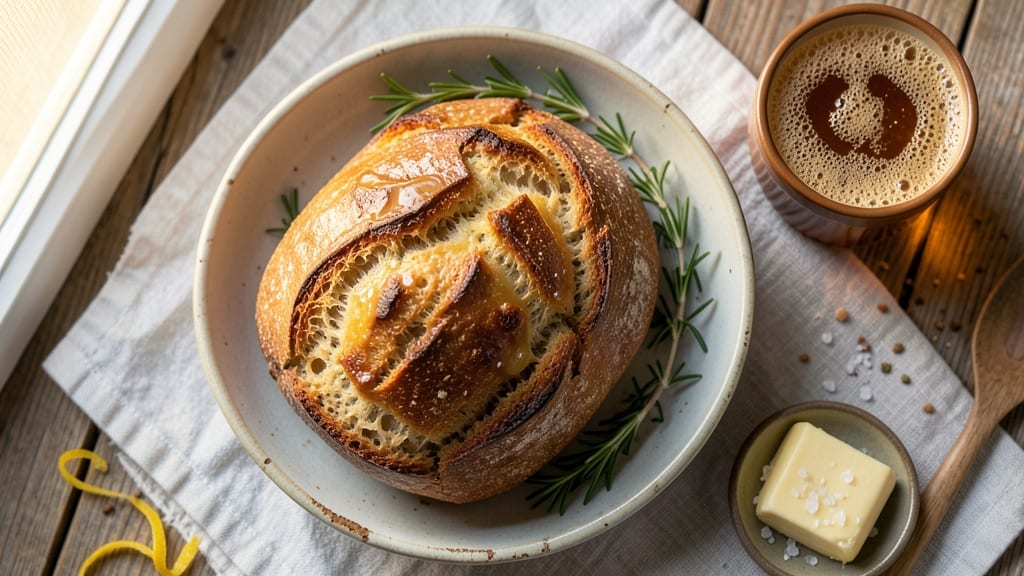
This artisan beer bread recipe transforms a simple loaf into a crusty, golden-brown masterpiece with a chewy interior that's impossible to resist. The secret lies in the beer—its maltiness enhances the dough's flavor while creating that signature tender crumb.
After perfecting this recipe through countless batches, I've cracked the code for achieving restaurant-quality texture at home, every time.
The process begins with a foolproof dough that combines flour, yeast, and beer for depth, then proofing until just before it peaks. Baking at 375°F for 25-30 minutes ensures a crisp exterior while keeping the inside soft and airy.
The butter swirled into the dough adds richness that makes each slice irresistible. This isn't just bread—it's a flavor experience that elevates any meal.
What sets this recipe apart is the balance of techniques: proper kneading for structure, precise proofing for rise, and the beer's role in both flavor and texture. The result is a loaf with a shatteringly crisp crust that gives way to a moist, chewy interior.
Whether served warm with butter or as a side for soups and stews, this bread becomes the star of the table.
For customization, try adding savory herbs like rosemary or thyme, or sweet raisins for a dessert-style variation. The beauty of this recipe is its adaptability—once you master the base, the possibilities are endless. Let's get started on creating your perfect loaf.
Ingredients for artisan beer bread
Eight essential ingredients transform ordinary flour into restaurant-quality artisan beer bread.
| Ingredient | Amount | Notes |
|---|---|---|
| All-Purpose Flour 🌾 | 4 cups | Spooned and leveled, not packed |
| Active Dry Yeast 🍞 | 2 ¼ tsp | Freshly opened for best results |
| Granulated Sugar 🍚 | 1 tbsp | For yeast activation |
| Salt 🧂 | 1 tsp | Diamond Crystal preferred |
| Unsalted Butter 🧈 | ½ cup | Cold, cubed for swirling |
| Light Lager Beer 🍺 | 1 ½ cups | Room temperature, malt-forward |
| Milk 🥛 | ¼ cup | Warm for yeast activation |
| Large Egg 🥚 | 1 whole | Room temperature for mixing |
| Cornmeal 🌽 | ¼ cup | For bread pan coating |
| Coarse Sea Salt 🧂 | 1 tsp | For sprinkling on top |
| Fresh Rosemary 🌿 | 1 tbsp | Chopped, optional variation |
The beer is non-negotiable—its maltiness is what creates that signature tender crumb. Local craft breweries often have perfect options, but any light lager (like Bud Light or Coors) works in a pinch. Look for something with about 4-5% ABV—too strong and it overpowers. The flour matters too: King Arthur or Gold Medal brands yield the best texture. Keep your yeast in the fridge until use—it stays fresher longer. For the butter, Plugrá or Land O'Lakes work perfectly, just make sure it's cold when you cube it for swirling.
No beer on hand? Substitute with warm water plus 1 tbsp malt extract—it mimics the malt flavor. Fresh yeast? Instant yeast at half the amount works too, but dissolve it in the warm milk first. The rosemary is optional but adds a lovely herbal note—dried works at one-third the amount if you're not using fresh. For a sweeter variation, add 1 tbsp honey to the dough. The egg can be omitted if you prefer a vegan version, but the texture will be slightly denser. Always use room-temperature ingredients—they mix better and create a more even rise.
This dough is best made fresh, but you can prep it up to 12 hours ahead and let it rise in the fridge overnight for deeper flavor. Once baked, the bread stays fresh for 2-3 days at room temperature, wrapped in a clean kitchen towel. For longer storage, slice and freeze portions—up to 3 months. The crust gets crispier the longer it sits, so it actually improves overnight. If you're making it ahead for a party, bake it just before serving and warm it in a 200°F oven for 10 minutes to restore that fresh-from-the-oven appeal.
Why You'll Love This Recipe
- No Yeast Struggle: I swear by the simplicity of this dough—just flour, yeast, sugar, and beer. No kneading, no waiting for hours; the yeast works its magic while you sip your own beer and watch a movie. (Yes, even on a Tuesday night.)
- Buttery Beer Magic: That warm, caramelized crust with a soft, pillowy center? The butter and beer create a flavor that’s ridiculously good—like a hug for your sandwiches. Honestly, I’ve been known to eat it plain just because.
- Game for Any Meal: Pack it for lunch, serve it with dinner, or tear it apart at a picnic. It’s my go-to for feeding a crowd without stressing—no fancy plating, just pure, satisfying bread that disappears fast.
- Budget-Friendly Stretch: A loaf costs me pennies but feels like a treat. The leftovers? Even better the next day, toasted with a little more butter. Between us, this is how I make grocery money last longer.
Step-by-step instructions for artisan beer bread
Here's how to craft a loaf with a crackling crust and moist, chewy heart using precise techniques.
Activate the Yeast with Beer and Milk
In a small bowl, combine the 1.5 cups light lager beer, 0.25 cup warm milk, 1 tbsp granulated sugar, and 2.25 tsp active dry yeast. Stir gently and let sit for 5-10 minutes until frothy. You'll see bubbles form and the mixture double in volume—this confirms the yeast is alive and ready to work.
I always use room-temperature beer and milk for this step. Cold liquids slow yeast activation, while warm liquids (not hot) create the perfect environment. If the mixture doesn't bubble after 10 minutes, your yeast may be dead—start fresh with new yeast.
Mix the Dough with Butter and Rosemary
In a large mixing bowl, whisk together the 4 cups all-purpose flour and 1 tsp salt. Make a well in the center and pour in the yeast mixture, 1 whole large egg, and 0.5 cup cold cubed unsalted butter. Using a wooden spoon, mix until a shaggy dough forms.
Add the 1 tbsp chopped fresh rosemary (if using) and knead by hand for 5-7 minutes until smooth and elastic. The dough should be slightly tacky but not sticky. If it's too dry, add 1 tsp milk; if too sticky, add 1 tbsp flour. This step develops gluten, which gives the bread its chewy interior and crisp crust.
Let the Dough Rise Until Nearly Doubled
Lightly grease a large bowl with butter, place the dough inside, and cover with a damp towel. Let rise in a warm place for 1-1.5 hours until it has nearly doubled in size. You'll see the dough puff up and feel noticeably lighter when pressed gently.
I like to place my oven light on for this step—it creates a warm, consistent environment. Poke the dough with your finger; if it springs back slowly, it's ready. Overproofing leads to dense bread, while underproofing results in a flat loaf. This is where patience pays off for that perfect texture.
Shape, Swirl, and Bake for Crusty Perfection
Preheat your oven to 375°F. Generously butter a 9x5-inch loaf pan and sprinkle with 0.25 cup cornmeal. Shape the dough into a rectangle, then cut 1-inch strips down the center. Gently swirl the butter cubes into the strips for that iconic beer bread pattern.
Transfer the dough to the prepared pan, swirling the butter into the cuts one last time. Sprinkle the top with 1 tsp coarse sea salt. Bake for 45-50 minutes until the top is deep golden brown and sounds hollow when tapped. The internal temperature should reach 190°F for perfect doneness.
Pro Tips For Making Artisan Beer Bread
- Warm the Yeast First: Skip the lukewarm water guesswork—dissolve the yeast in warm beer (about 90°F) instead of water, then let it sit for 5 minutes until frothy. This cuts fermentation time and guarantees the yeast wakes up properly (yes, even if your beer’s a little chilly straight from the fridge).
- Salt the Butter Early: Mix the salt into softened butter before adding it to the dough—this distributes flavor evenly and prevents salty pockets. I learned this the hard way after biting into a buttery slice with one corner tasting like the ocean.
- Don’t Over-Knead the Dough: Artisan beer bread isn’t sourdough—stop mixing once the flour just comes together into a shaggy mass. Overworking it develops gluten, making the bread dense instead of tender. Two minutes past the "pull-away-from-the-bowl" test is plenty.
- Use a Loaf Pan with a Lid: If you don’t have one, cover the pan tightly with foil during baking to trap steam. This creates a crisp crust without drying out the crumb—my grandmother’s trick, and it’s the reason my first attempts always tasted gummy. (Pro tip: Poke a few holes in the foil for the last 10 minutes.)
Make-ahead tips for artisan beer bread
Dough Prep Ahead
Mix your dough up to 12 hours ahead and let it rise in the fridge overnight for deeper, more complex flavors. I cover the bowl tightly with plastic wrap and store it in the fridge—this slow rise enhances the beer's maltiness while preventing overproofing.
When ready to bake, let the dough sit at room temperature for 1 hour before shaping to bring it to the right consistency. 🌱
Baked Loaf Storage
Once baked, let your beer bread cool completely on a wire rack before storing. Wrap it tightly in a clean kitchen towel to maintain moisture, then place in an airtight container. It stays fresh for 2-3 days at room temperature—perfect for meal prep.
For longer storage, slice the bread and freeze portions in quart-sized freezer bags for up to 3 months. 🧊
Reheating for Freshness
Revive stale slices by warming them in a 350°F oven for 5-7 minutes until crispy again. I also love reheating thick slices in a skillet over medium heat with a pat of butter for that golden-brown crust.
For microwave reheating, cover slices with a damp paper towel and heat for 20-30 seconds—just watch closely to avoid rubberiness. 🔥
Freezer-Friendly Variations
Make double batches and freeze unbaked dough in airtight containers for up to 1 month. When ready to bake, thaw overnight in the fridge, then proceed with shaping and baking as directed. This is my go-to strategy for holiday gatherings—just pull out what I need when guests arrive. 🎄
Make-Ahead Serving Tips
For parties, bake your beer bread just before serving to maintain that fresh-from-the-oven appeal. If you must prep ahead, bake the loaf 1 day in advance, wrap it in foil, and reheat in a 200°F oven for 10 minutes before slicing.
Serve with extra butter and a sprinkle of flaky sea salt for maximum impact. ✨
Beer Substitution Prep
If you're prepping ahead without beer, substitute 1.5 cups warm water plus 1 tbsp malt extract in the yeast mixture. This mimics the malt flavor while keeping the dough's structure intact.
Store the prepared dough in the fridge as usual, but add the beer (or malt substitute) just before the final rise for optimal flavor infusion. 🍺
Nutrition facts
Frequently asked questions
Why does beer bread have that signature buttery swirl pattern?
The swirl creates two magic things: visual appeal and flavor pockets. The butter melts during baking, infusing the bread with rich flavor while the cuts help distribute heat evenly for that perfect crispy crust and chewy interior. The pattern also makes each slice more interesting to eat!
Can I use any type of beer in this recipe?
Light lagers work best—they're mild enough to let the bread's flavor shine while adding just enough maltiness. Dark beers like stouts can overpower the dough, while very dry beers might make the bread too dense. For a 4-5% ABV option, try a pale ale or pilsner if you're experimenting.
How do I know when the dough is properly proofed?
Look for two key signs: the dough should nearly double in size and feel noticeably lighter when pressed gently. If it springs back quickly when poked, it needs more time. If it leaves a deep indent that doesn't spring back, it's overproofed. The proofing time varies with temperature—1-1.5 hours is ideal in a warm 75-80°F environment.
What's the secret to getting that perfect crust?
The crust comes from three things: 375°F oven temperature, cornmeal coating for steam, and coarse sea salt on top. Brush the baked loaf with melted butter right after removing from the oven for extra crispiness. For even better results, bake on the middle rack where heat circulates evenly.
Can I make this bread without an egg?
Yes! Replace the egg with 1 tbsp ground flaxseed mixed with 3 tbsp water (let it sit for 5 minutes to thicken). The texture will be slightly denser but still delicious. For extra richness, add an extra 1 tbsp butter to the dough. The egg mainly helps bind ingredients and adds tenderness.