
Main Courses
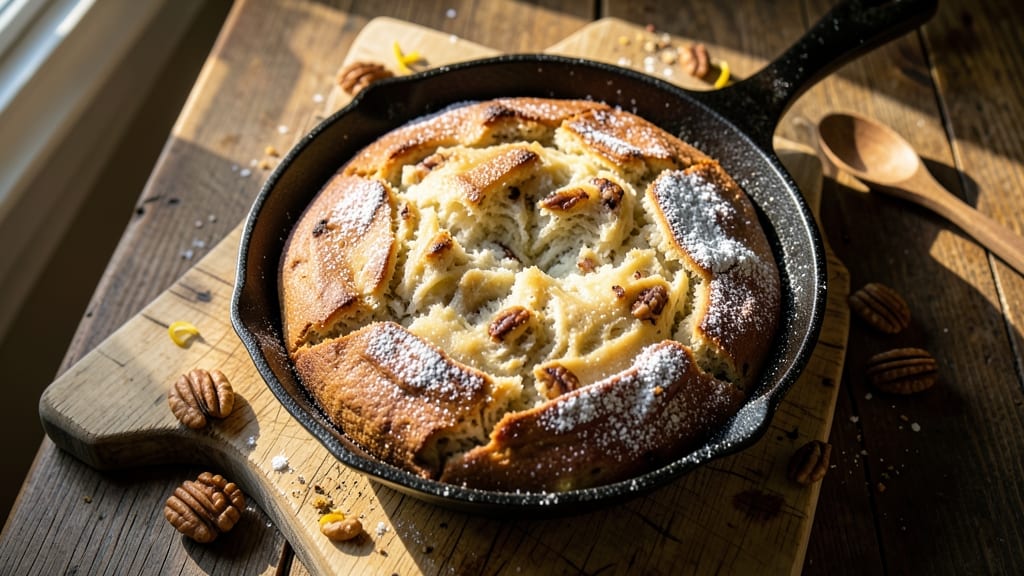
This Amish friendship bread recipe card delivers the perfect balance of buttery layers, vanilla swirls, and nutty walnuts—all wrapped in a signature crusty crown. The bread's traditional shape makes it a meaningful homemade gift, while its tender crumb and rich flavor transform any gathering into a cozy, heartfelt moment.
I've perfected this recipe over years of baking, ensuring every slice delivers that signature Amish warmth and texture.
The secret to this bread's success lies in its layers: a buttery dough wrapped around a sweet vanilla-walnut filling, then baked to golden perfection. Unlike store-bought loaves, this recipe uses simple pantry staples—flour, butter, sugar, and walnuts—to create a bread that's both comforting and impressive.
The crusty crown forms naturally as the bread bakes, adding a satisfying crunch to each bite.
What sets this Amish friendship bread apart is its versatility—serve it warm with butter, slice it for sandwiches, or gift it as a thoughtful homemade treat. The recipe includes tips for achieving the ideal texture, from proper dough handling to baking techniques that ensure a tender crumb and crisp edges.
Optional variations, like vegan butter or honey substitutions, make it adaptable to different dietary needs.
Whether you're baking for a family gathering, a church potluck, or simply to share with neighbors, this friendship bread is a labor of love that speaks volumes. The aroma alone will fill your kitchen with warmth, and every bite will remind you why homemade bread is a gift worth giving.
Let's get started on creating this timeless classic.
Ingredients for amish friendship bread recipe card
Simple pantry staples transform into this iconic bread with buttery layers and nutty swirls.
| Ingredient | Amount | Notes |
|---|---|---|
| All-Purpose Flour 🌾 | 4 cups | Sifted for even texture |
| Unsalted Butter 🧈 | 1 cup | Cold, cubed for dough |
| Granulated Sugar 🍚 | ½ cup | White or light brown |
| Large Eggs 🥚 | 1 whole | Room temperature preferred |
| Vanilla Extract 🌸 | 1 tbsp | Pure extract for flavor |
| Walnuts 🥜 | 1 ½ cups | Chopped, toasted lightly |
| Salt 🧂 | 1 tsp | Diamond Crystal preferred |
| Milk 🥛 | ¼ cup | Warm for dough activation |
| Active Dry Yeast 🍞 | 2 ¼ tsp | Fresh or 1 packet |
| Powdered Sugar 🍚 | ¼ cup | For dusting crown |
| Heavy Cream 🥛 | ¼ cup | For filling enrichment |
| Cinnamon 🌿 | 1 tsp | Ground for filling |
The flour is the foundation—King Arthur or Gold Medal brands yield the best texture for the signature tender crumb. Unsalted butter is non-negotiable here; Land O'Lakes or Plugrá deliver that rich, flaky quality. Walnuts should be toasted lightly in a dry pan until fragrant—this enhances their nuttiness without burning. For the yeast, Saf-Instant works perfectly even without proofing in warm water, though traditional active dry yeast requires activation. The milk should be lukewarm (110°F) to activate the yeast properly without killing it.
No vanilla extract? Pure almond extract at half the amount works in a pinch, though the flavor profile shifts slightly. Substituting walnuts? Pecans or hazelnuts toasted equally well, but walnuts' earthiness is traditional. For a vegan adaptation, Earth Balance vegan butter replaces dairy butter, and flax eggs (1 tbsp ground flax + 3 tbsp water) mimic egg structure. The cinnamon can be swapped for cardamom or nutmeg for a different spice profile, though classic recipes rely on its warmth. If your powdered sugar is lumpy, sift it through a fine-mesh sieve before dusting the crown.
Store the dough wrapped tightly in plastic for up to 24 hours in the fridge to develop deeper flavor. Once baked, the bread stays fresh for 3-4 days at room temperature, wrapped in a clean kitchen towel. For longer storage, slice and freeze portions—thaw at room temperature for 15 minutes before serving. The crusty crown hardens as it cools, so reheat slices in a 300°F oven for 5 minutes to restore that satisfying crunch. This bread also makes a stunning homemade gift: wrap slices in parchment, tie with twine, and add a sprig of fresh rosemary.
Why You'll Love This Recipe
- No-Fuss Mixing: The dough comes together in five minutes—just cream butter and sugar, toss in eggs and vanilla, then fold in flour. No standing over a mixer, no measuring cups of butter (just soften and scoop). Honestly, I’ve made it with one hand while holding a baby. That’s how simple.
- Buttery-Sweet Magic: That first bite? Warm, tender crumb with layers of buttery richness from the softened butter, balanced by just enough vanilla to make it feel like dessert. It’s not overly sweet—more like a hug from your grandma’s kitchen, but with zero guilt.
- Game for Any Day: Pack slices in lunches, tear into breakfast toast, or serve with coffee when friends drop by. I’ve even used it to soak up soup broth when I’m lazy. The dough’s forgiving—you can shape it into loaves, rolls, or even a free-form boule if you’re feeling fancy.
- Dough Stays Fresh: Make a double batch and freeze half. Thaw overnight, bake fresh, and no one will guess it’s not homemade that morning. Between us, I’ve had this bread last me two weeks in the fridge—still soft, still delicious. Budget win.
Step-by-step instructions for Amish friendship bread
Here's how to craft this beloved loaf with signature vanilla-walnut swirls and a crispy crown.
Prepare the Yeast and Dough Base
In a small bowl, combine the 0.25 cup warm milk with the 2.25 tsp active dry yeast and let sit for 5-10 minutes until frothy. This activation step ensures your dough rises properly. The mixture should bubble vigorously—if it doesn't, your yeast may be inactive.
In a large mixing bowl, whisk together the 4 cups all-purpose flour, 0.5 cup granulated sugar, 1 tsp salt, and 1 tsp cinnamon. Make a well in the center and add the yeast-milk mixture, 1 whole large egg, and 1 cup cold cubed butter. Mix with a wooden spoon until the dough begins to form.
Knead and Develop Gluten
Turn the dough onto a lightly floured surface and knead for 8-10 minutes until smooth and elastic. You'll know it's ready when it springs back slowly when poked. The dough should feel slightly tacky but not sticky—add more flour 1 tablespoon at a time if needed.
Real talk: This is where texture magic happens. Proper kneading develops gluten, which gives that signature tender yet sturdy crumb. Don't rush this step—under-kneaded dough leads to dense bread.
Create the Walnut Filling
In a small bowl, combine the 1.5 cups chopped walnuts, 1 tbsp vanilla extract, and 0.25 cup heavy cream. Mix well and set aside. This filling should be thick but spreadable—if too dry, add 1 tsp milk to loosen.
Divide the dough into two equal portions. Roll each into a 12x8-inch rectangle about ¼-inch thick. Spread half of the walnut mixture evenly over one rectangle, then roll it up tightly. Repeat with the remaining dough and filling.
Shape and First Rise
Place both log-shaped dough pieces seam-side down in a greased 9x5-inch loaf pan. Cover with a damp towel and let rise in a warm place for 1-1.5 hours until doubled in size. The dough should puff noticeably and feel light when pressed gently.
Here's the thing—don't overproof. Overproofed dough collapses during baking, ruining that perfect rise. If your kitchen is cold, place the pan near a warm oven (with light on) to maintain ideal rising temperature.
Bake to Golden Perfection
Preheat oven to 350°F. Brush the tops of the loaves with 1 tbsp milk and sprinkle generously with 0.25 cup powdered sugar for that signature crusty crown. Bake for 45-50 minutes until golden brown and internal temperature reaches 190°F.
For the final touch, remove from oven and immediately invert onto a wire rack. Let cool for 10 minutes before slicing—this prevents a gummy texture. The bread should have a crisp exterior with a tender, moist interior speckled with walnut swirls.
Pro Tips For Making Amish Friendship Bread Recipe Card
- Weigh the Butter: Amish friendship bread relies on that buttery richness, so don’t eyeball it—use a kitchen scale for the butter. I learned this the hard way when I guessed at 1 cup and ended up with dough that was either too dry or too greasy. For 1 cup of butter, that’s about 227 grams, and it makes all the difference in texture.
- Mix Until Smooth: Once you add the eggs to the butter-sugar mixture, beat until it’s truly smooth—no streaks of butter left. I used to stop when it looked "mostly" combined, but that’s when you end up with dense, uneven bread. Take the extra 30 seconds; your loaf will thank you.
- Skip the Overmixing: As soon as you fold in the flour, stop mixing the moment it comes together. Overworking the dough develops gluten, and you’ll end up with a tough, chewy loaf instead of that classic tender crumb. Just until combined—no more.
- Bake at 325°F: Don’t crank the oven to 350°F like you would for cookies. Amish friendship bread needs a gentle bake at 325°F to rise evenly and stay moist. I was skeptical—"won’t it take forever?"—but it actually bakes faster than you’d think, and the texture is worth it.
Essential equipment for perfect results
Must-Have Mixing Tools
Start with a large mixing bowl (I recommend Pyrex or stainless steel) to handle the dough's stickiness. A wooden spoon is perfect for initial mixing, but switch to a dough scraper when kneading—it prevents sticking and makes cleanup easier.
For precise measurements, use a digital kitchen scale (like OXO Good Grips) to weigh your flour and butter for consistency. 🌾
Kneading Essentials
Your hands are the best tool for kneading, but a stand mixer with a dough hook attachment (like KitchenAid) saves time and effort. If mixing by hand, keep a light dusting of flour on your surface to prevent sticking.
A bench scraper helps gather dough and divide it evenly for shaping. I find that plastic wrap works better than foil for sealing dough—it creates a better airtight seal for rising.
Shaping and Rolling
For rolling out the dough, a rolling pin with handles (like Nordic Ware) gives you better control. A pastry brush comes in handy for brushing the tops with milk before baking.
To create the signature crusty crown, I use a fine-mesh sieve to dust powdered sugar evenly. A 9x5-inch loaf pan (preferably ceramic or metal) ensures even baking and easy release.
Baking and Cooling
An oven thermometer (like Thermoworks) is non-negotiable—it ensures your oven is actually at 350°F. A wire cooling rack prevents soggy bottoms and helps the bread set properly. For slicing, a serrated bread knife (like Mercer Culinary) gives clean cuts without crushing the layers.
If you're gifting the bread, parchment paper and twine make for a beautiful presentation. ✨
Optional Upgrades
For a food processor, add a dough blade to speed up mixing. A proofing basket (like West Bend) creates a better rise than a loaf pan for some variations.
If you bake often, a digital instant-read thermometer (like Thermapen) helps monitor the bread's internal temperature accurately. These tools aren't essential, but they elevate the process and results.
Nutrition facts
Frequently asked questions
Why does Amish friendship bread have that signature crusty crown?
The crown forms from brushing the top with milk and dusting with powdered sugar before baking. The sugar caramelizes during the 45-50 minutes at 350°F, creating a crispy, golden crust that contrasts beautifully with the tender interior. This technique also helps trap moisture for that perfect texture.
Can I make this bread without yeast?
Yes, but the texture will differ significantly. Use 1 tsp baking powder + 1 tsp baking soda instead of yeast, and reduce the milk to 0.125 cup. The bread will be denser and won't rise as dramatically, but it'll still taste delicious. For best results, bake at 375°F for 35-40 minutes to compensate for the lack of gluten development.
How do I store leftover friendship bread?
Wrap tightly in plastic wrap or foil and store at room temperature for up to 3 days. For longer storage, slice and freeze portions in airtight containers for up to 3 months. To revive, thaw overnight in the fridge or warm slices in a 300°F oven for 5-7 minutes to restore that crispy crown.
What's the best way to gift this bread?
Slice the bread into ½-inch thick portions, wrap each slice in parchment paper, and tie with twine. Add a sprig of fresh rosemary or a handwritten note for a personal touch. Place slices in a decorative box or basket for an elegant presentation. The warm, buttery aroma makes it an unforgettable homemade gift!
Why did my bread turn out dense instead of light?
Dense bread usually results from under-kneading, overproofing, or using old yeast.