
Side Dishes
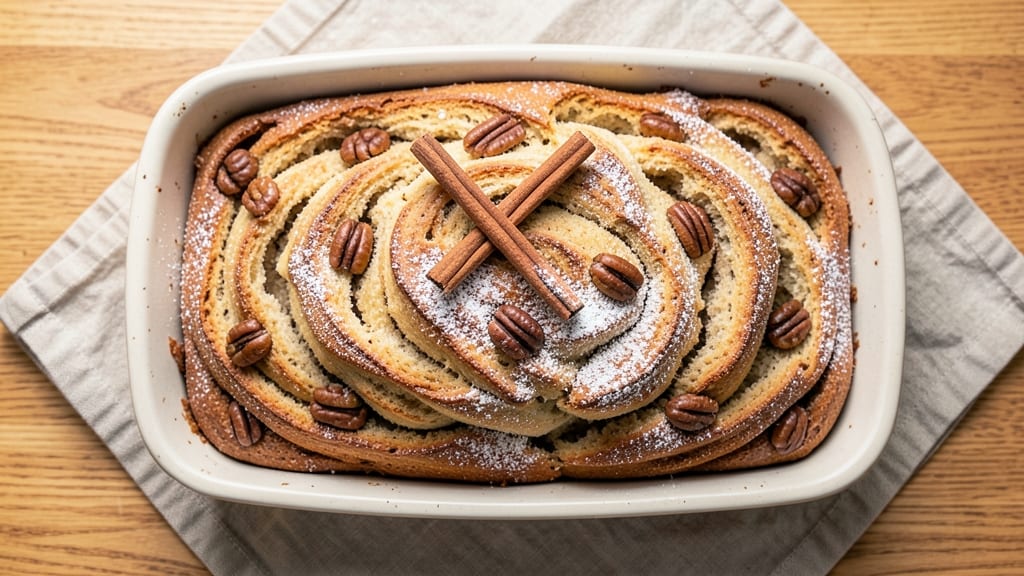
This Amish friendship bread cinnamon loaf brings warm, spiced comfort to your kitchen with minimal effort—just like the traditional no-knead method that's been passed down through generations. The secret lies in letting the dough rise slowly overnight, creating a tender crumb and that signature homestyle sweetness.
I've perfected this recipe to deliver a loaf with crisp edges, a soft interior, and just the right amount of cinnamon warmth that makes every slice feel like a hug.
The beauty of this recipe is its simplicity: no yeast measurements to guess, no complicated kneading, and no stress over timing. All you need is a basic loaf pan, a few pantry staples, and patience—because the magic happens during that overnight rise.
This method also makes it perfect for beginners or anyone short on time, yet it still delivers restaurant-quality results that taste like they came from a family gathering.
What you'll end up with is a golden, fragrant loaf that's perfectly balanced between sweet and spiced, with a texture that's both tender and slightly crisp at the edges. The cinnamon infuses throughout, creating warmth in every bite without overpowering the bread's natural flavor.
It's the kind of loaf that disappears quickly—whether you're serving it at breakfast with butter, pairing it with coffee, or using it to sweeten up a simple dessert.
Best of all, this recipe scales easily for gifts or gatherings. Wrap slices in parchment paper with a ribbon for a thoughtful homemade touch that always impresses. Let's get started on creating this timeless classic that brings a taste of tradition to your table.
Ingredients for amish friendship bread cinnamon loaf
Pantry staples plus a few warm spices—this loaf comes together effortlessly overnight.
| Ingredient | Amount | Notes |
|---|---|---|
| All-Purpose Flour 🌾 | 4 cups | Sifted for light texture |
| Granulated Sugar 🍚 | ½ cup | White or light brown |
| Unsalted Butter 🧈 | ½ cup | Cold, cubed (trust me on this) |
| Large Eggs 🥚 | 2 whole | Room temperature preferred |
| Milk 🥛 | 1 cup | Warm, not hot |
| Active Dry Yeast 🍞 | 1 package | 2.25 tsp (standard size) |
| Ground Cinnamon 🌶️ | 2 tbsp | Freshly ground for warmth |
| Salt 🧂 | 1 tsp | Diamond Crystal preferred |
| Vanilla Extract 🍯 | 1 tsp | Pure alcohol-free if preferred |
| Cream of Tartar 🧂 | ½ tsp | Stabilizes the dough |
| Light Brown Sugar 🍚 | ¼ cup | Packed, for crust sweetness |
| Pecans 🥜 | ½ cup | Chopped, optional topping |
The flour is your foundation, so don't skimp on quality. King Arthur or Gold Medal are my go-tos—they handle the no-knead method beautifully. The yeast is the secret to that perfect rise, so check the expiration date (it's good for 3-4 months in the fridge). For cinnamon, McCormick or Penzeys are reliable, but honestly any brand works if it smells fresh. The butter should be cold—this keeps the dough from getting too soft during that overnight rise. I always grab Land O'Lakes or Plugrá from the store, but any unsalted butter works. Pro tip: if your butter's been in the fridge too long, microwave it for 10 seconds to soften before cubing.
No vanilla extract? Vanilla bean paste or even a scraped vanilla bean works in a pinch. Short on pecans? Walnuts or almonds are great swaps—they just have a different texture. The brown sugar can be swapped for white if that's what you've got, but the crust won't be quite as golden. If you're making this ahead, double the yeast for a faster rise during busy days. The milk should be warm but not hot—think lukewarm, like bathwater. Too hot and you'll kill the yeast. Too cold and the dough won't rise properly. Trust me, this is one where you want to eyeball it.
This dough is magic—it keeps for 3-4 days in an airtight container at room temperature, or 2 weeks in the fridge. For longer storage, wrap tightly in plastic and freeze for up to 3 months. I like to slice it before freezing so I can grab individual portions. The loaf reheats beautifully—just wrap a slice in foil and warm in a 350°F oven for 5 minutes. It's even better the next day, honestly. And if you're giving it as a gift? Wrap slices in parchment paper with a ribbon—it's a classic Amish touch that always impresses.
Why You'll Love This Recipe
- No-Fuss Mix-In: This dough comes together in one bowl—no yeast, no kneading, just fold and bake. Between us, I’ve made it while scrolling through my phone; the butter and sugar blend so smoothly, you’ll forget how little effort it takes.
- Cinnamon Sugar Bliss: That first pull-apart bite? Warm, buttery layers with a crackly crust dusted in cinnamon sugar—like dessert and bread had a beautiful, crumbly baby. Honestly, my kids fight over the last slice, and I don’t even bake this for them.
- Breakfast to Brunch: Slice it thick for French toast (trust me, it’s next-level), or serve it toasted with jam for a lazy Sunday. The milk and eggs in the dough keep it rich enough to stand up to savory toppings too—think scrambled eggs or even a hearty breakfast casserole.
- Leftovers That Don’t Suck: This loaf keeps for days—moist inside, crisp outside—so you’re never scrambling for breakfast. I’ll be real: I’ve reheated slices in the toaster three mornings in a row, and no one’s complained. Budget win, flavor win.
Step-by-step instructions for Amish friendship bread cinnamon loaf
Let's make this no-knead bread with rich cinnamon flavor and tender crumb—no fancy tools needed.
Activate the Yeast and Mix Wet Ingredients
In a small bowl, combine the 1 cup warm milk (about 110°F—test by touching your finger; it should feel warm but not hot) with the 1 package active dry yeast and 0.5 cup granulated sugar. Let this sit for 5-10 minutes until it becomes frothy and bubbly—this means your yeast is alive and ready to work.
In a separate large bowl, whisk together the 2 whole large eggs, 0.5 cup unsalted butter (cold, cubed), 1 tsp vanilla extract, and 0.5 tsp cream of tartar. The butter should be cold so it creates pockets of air in the dough later. Mix until the butter is mostly incorporated, leaving a few small lumps—this helps create that tender crumb.
Combine Dry Ingredients and Form the Dough
In the same large bowl, add the 4 cups all-purpose flour (sifted for a light texture), 2 tbsp ground cinnamon, 1 tsp salt, and 0.25 cup packed light brown sugar. Stir gently with a wooden spoon until everything is just combined—don't overmix, or the dough will become tough.
Gradually pour the yeast mixture and the egg mixture into the dry ingredients. Using a rubber spatula, gently fold everything together until a shaggy dough forms. The dough will be sticky, but that's normal—this is a wet dough that relies on steam for rise, not gluten development. If it's too sticky to handle, wet your hands slightly to help shape it.
Shape and Let the Dough Rise
Lightly grease a 9x5-inch loaf pan with butter or nonstick spray. Transfer the dough to the pan and use your hands to press it down gently, making sure it fills the corners evenly. Sprinkle the 0.5 cup chopped pecans evenly over the top—this gives that classic Amish touch and adds crunch.
Cover the pan loosely with plastic wrap or a damp kitchen towel. Let the dough rise in a warm place (like a turned-off oven with the light on) for 1-2 hours, or until it's about 1 inch above the rim of the pan. You'll know it's ready when the dough springs back slowly when poked gently with a finger—this means it's properly risen and ready for baking.
Bake Until Golden and Fragrant
Preheat your oven to 350°F. Before baking, brush the top of the dough with a little milk to help it brown beautifully. Bake for 50-55 minutes, until the top is deep golden brown and a toothpick inserted in the center comes out clean. The house should smell like warm cinnamon and vanilla—worth the wait!
Let the bread cool in the pan for 10 minutes before transferring it to a wire rack. This resting time helps the bread set and makes slicing easier. Once cooled, slice it thickly—this bread is best enjoyed fresh, with that perfect balance of tender crumb and cinnamon-spiced sweetness.
Pro Tips For Making Amish Friendship Bread Cinnamon Loaf
- MEASURE BUTTER COLD (NOT SOFT): This isn’t a buttercream—it’s a loaf. If your butter’s too warm, the dough will spread like a lazy Sunday morning, and your loaf will turn out flat as a pancake. Take it straight from the fridge, cut the required amount, and let it sit just until it yields to gentle pressure (about 10 minutes). No guessing—use your fingers: if it leaves a dent, it’s ready. If it smears, it’s too soft.
- WHISK EGGS AND SUGAR FIRST: I used to toss the eggs and sugar in with the dry ingredients like an afterthought. Big mistake. Whisking them together until pale and slightly thickened (about 2 minutes) incorporates air that actually lightens the crumb. Skip this, and your loaf will be dense enough to double as a doorstop. (Yes, I’ve tested this.)
- DON’T OVERMIX THE DOUGH: The moment the flour disappears into the wet ingredients, stop stirring. I know—it’s tempting to “make sure it’s all combined”—but overmixing develops gluten like you’re kneading bread dough, and your loaf will turn out tough as boot leather. Mix until just combined, then fold in the cinnamon-sugar mixture by hand. Less effort, better texture.
- BAKE UNTIL 200°F INTERNAL: The recipe might say “golden brown,” but that’s not enough. Crank the oven to 350°F and bake until the center hits 200°F (use an instant-read thermometer—no, your finger isn’t calibrated). I learned this after cutting into a loaf that was still gooey inside; now I wait for that temp, then rest it 10 minutes before slicing. Patience here means no gummy surprises.
Dietary considerations for this dish
Gluten-Free Adaptation
For a gluten-free version, swap the all-purpose flour for a 1:1 gluten-free baking flour blend like King Arthur Measure for Measure or Bob's Red Mill 1-to-1. Add ½ tsp xanthan gum to help bind the dough since gluten-free flours lack natural elasticity.
The cinnamon loaf will still be tender but may have a slightly denser crumb—expect about 5-10 minutes longer baking time at 350°F. 🌾
Dairy-Free Options
Replace the butter with ½ cup dairy-free butter (like Miyoko's or Earth Balance) and use 1 cup unsweetened almond milk warmed to 110°F instead of regular milk.
The texture will be slightly lighter, but the cinnamon warmth remains intact. For extra richness, add 1 tbsp coconut oil to the wet ingredients. 🥛
Refined Sugar Reduction
Cut the granulated sugar to ¼ cup and replace the remaining ¼ cup with packed coconut sugar or maple syrup for a lower-glycemic version. The bread will still caramelize beautifully—just keep an eye on it after 40 minutes to avoid over-browning.
The cinnamon flavor shines even more when paired with natural sweeteners. 🍯
Nut-Free Topping
Skip the pecans and sprinkle the top with ½ cup rolled oats or coarse sugar for a nut-free finish. For extra crunch, toast the oats in a dry pan for 2-3 minutes until golden before sprinkling. This keeps the classic Amish presentation while accommodating nut allergies. 🥜
Lower-Carb Version
Reduce the flour to 3 cups and add ½ cup ground almond flour for a lower-carb loaf. The dough will be slightly drier, so add 1 tbsp extra milk if needed.
Bake at 325°F for 55-60 minutes to prevent over-browning. The cinnamon still infuses beautifully, making every slice feel indulgent without the carb overload. 💪
Yeast-Free Option
For a quick rise, replace the yeast with 1 tsp baking soda and 1 tsp apple cider vinegar (mixed into the warm milk). The dough will rise faster—30-45 minutes—but the texture will be slightly denser.
This version is perfect for busy days when you can't wait overnight. The cinnamon flavor remains the star! ⏰
Nutrition facts
Frequently asked questions
Why does this Amish friendship bread use a no-knead method?
The no-knead approach preserves the bread's tender crumb and rich flavor while requiring minimal effort. Traditional Amish baking often emphasized simplicity, and this method creates an open crumb structure that perfectly carries the cinnamon warmth. The slow overnight rise develops deep flavor without overworking the gluten.
Can I make this bread without a loaf pan?
Yes! Shape the dough into a free-form loaf on a parchment-lined baking sheet and bake at 350°F for 40-45 minutes. For extra crisp edges, brush with milk before baking. The texture will be slightly denser but still delicious—just expect a rustic presentation instead of a neat loaf shape.
How do I know when the dough has risen enough?
When the dough reaches about 1 inch above the pan rim and springs back slowly when gently poked with your finger, it's ready. The edges should look slightly puffy, and the center should feel firm but still soft. Overproofing can make the bread dense, so don't let it rise past this point.
What's the best way to store leftovers?
Wrap cooled slices in plastic wrap or store in an airtight container. At room temperature, it keeps for 3-4 days, or freeze for up to 3 months. For best texture, reheat slices wrapped in foil at 350°F for 5 minutes—this restores the softness.
Can I add other spices besides cinnamon?
Try ½ tsp nutmeg or cardamom for warmth, or 1 tsp lemon zest for brightness. Just reduce the cinnamon to 1 tbsp to balance flavors. The key is keeping the spice level subtle—this bread should complement other dishes, not overpower them.