
Side Dishes
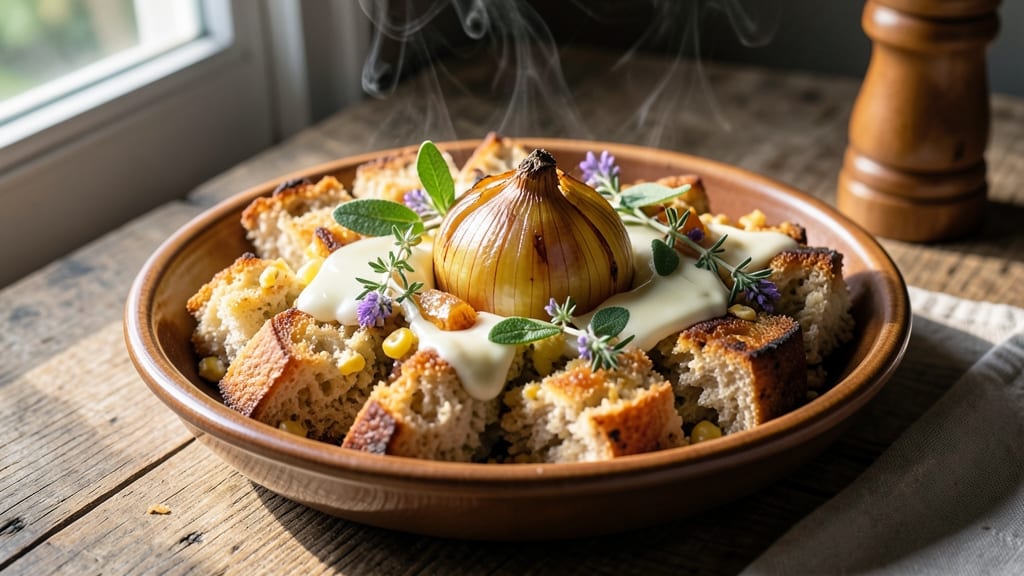
This Amish bread stuffing recipe brings rustic tradition to your holiday table with its signature golden crust and savory herb crunch. 🌟 The secret lies in using day-old homemade bread or cornbread, cut into perfect cubes and toasted just enough to create that irresistible crispy exterior while keeping the interior tender.
I've perfected this recipe over years of family gatherings, where it becomes the star of the Thanksgiving spread alongside roasted turkey.
What sets this stuffing apart is the layered flavor profile—sage and thyme infuse the bread with earthy warmth, while onions and celery add sweet depth. The stuffing develops its signature magic when baked until the top transforms into a golden, crispy crust that shatters at every bite.
This isn't just a side dish; it's the centerpiece that brings people together, with every forkful telling a story of tradition and care.
The beauty of this recipe lies in its versatility—it works equally well as a standalone side or baked directly in the turkey cavity for extra flavor infusion. Whether you're preparing for a large family gathering or a cozy holiday meal, this stuffing delivers restaurant-quality results with simple pantry staples.
The aroma alone will have everyone anticipating dinner, and the texture—crispy outside, moist inside—is what makes it unforgettable.
Ready in about 45 minutes, this recipe requires minimal effort but yields maximum impact. The key is patience in toasting the bread cubes and letting the stuffing bake until the crust reaches that perfect golden-brown hue.
Serve warm with gravy for dipping, and prepare to be asked for seconds. Here's how to make it happen in your kitchen.
Ingredients for amish bread stuffing
Pantry staples and fresh herbs transform simple bread cubes into golden, crispy Amish stuffing magic.
| Ingredient | Amount | Notes |
|---|---|---|
| Day-Old Homemade Bread 🍞 | 12 cups | Cubed, crust removed |
| Cornbread 🍞 | 4 cups | Day-old, cut into cubes |
| Unsalted Butter 🧈 | ½ cup | Cold, cubed for toasting |
| Fresh Sage Leaves 🌿 | ⅓ cup | Chopped, stems removed |
| Fresh Thyme Leaves 🌿 | ¼ cup | Chopped, stems removed |
| Yellow Onion 🧅 | 2 medium | Diced, about 1.5 cups |
| Celery Stalks 🥬 | 4 whole | Diced, about 1 cup |
| Garlic Cloves 🧄 | 4 cloves | Minced, peeled |
| Chicken Broth 💧 | 2 ½ cups | Low-sodium preferred |
| Eggs 🥚 | 2 large | Lightly beaten |
| Salt 🧂 | 1 ½ tsp | Kosher or sea salt |
| Black Pepper 🌶️ | 1 tsp | Freshly ground |
| Poultry Seasoning 🌶️ | 1 tsp | Optional for extra flavor |
The bread is non-negotiable—day-old works best for that perfect texture. Homemade loaves give the most authentic flavor, but store-bought sourdough or Italian bread in a pinch will do. Skip the crust unless you want extra crunch. For the cornbread, look for a dry, slightly crumbly texture—Jiffy mix works if you're short on time. Toast the bread cubes in butter until golden, but don't overdo it—you want them crispy but still tender inside. Fresh herbs make all the difference: Penzeys or your grocery store's fresh section for the best quality. Sage and thyme should smell vibrant, not dried out.
No fresh sage? Dried works at half the amount, but it lacks that earthy depth. Swap thyme for rosemary at one-third the quantity if needed. Onions and celery can be subbed with leeks or fennel for a different twist. Short on broth? Vegetable broth with a splash of chicken broth keeps it flavorful. The eggs bind everything together—don't skip them, but don't overbeat. For extra richness, stir in 1/4 cup melted butter at the end. Poultry seasoning is optional but adds that classic Amish touch—McCormick or Badia are reliable brands.
This stuffing keeps beautifully for 3 days in the fridge, covered tightly. Reheat in the oven at 350°F for 15 minutes until crispy again. For make-ahead magic, assemble the stuffing in a baking dish the night before, cover, and refrigerate. Bake straight from the fridge—no need to thaw. The golden crust develops best when baked at 375°F for 30-40 minutes. Leftovers? Toss with gravy and reheat for crispy perfection. Portion into individual containers for easy reheating—everyone will ask for seconds.
Why You'll Love This Recipe
- I’ll be real: this stuffing works for Thanksgiving and a lazy Sunday brunch. Serve it with roast chicken or turkey, or even alongside a hearty stew. It’s the kind of dish that disappears fast, no matter who’s eating it.
- No Waste, All Flavor: Honestly, I love that this recipe turns yesterday’s bread into something magical—no sad ends tossed, just golden cubes soaking up every bit of butter and herb. That cornbread? It’s the secret weapon, adding just enough texture to keep it interesting.
- Herb-Packed Magic: Between us, the sage and thyme here aren’t just garnish—they’re the stars. Fresh leaves wilted into warm butter? That’s the move. The aroma alone makes my kitchen feel like a holiday table, and the taste? Ridiculously good.
- Budget-Friendly Luxury: Here’s what sold me—this costs next to nothing to make but tastes like you spent hours. Day-old bread, a few herbs, and butter? That’s it. And leftovers? Reheat them in the oven until crispy again, and no one will guess it’s not fresh-baked.
Step-by-step instructions for Amish bread stuffing
Here's the method for that perfect golden crust and herby crunch—tried-and-true every Thanksgiving.
👨🍳 Step 1: Toast the Bread and Cornbread for Crunch
Preheat your oven to 350°F. Spread the 12 cups day-old homemade bread and 4 cups cornbread cubes evenly on two rimmed baking sheets. This ensures even toasting without overcrowding.
Toast for 10-12 minutes until the bread edges turn golden brown and the cornbread cubes are crisp around the edges. Stir halfway through for even browning. The goal is to create that satisfying crunch while keeping the centers tender. Remove from oven and let cool completely—this step prevents a gummy stuffing later.
🥘 Step 2: Sauté the Vegetable Base
In a large skillet over medium heat, melt the 0.5 cup cold unsalted butter until it foams. Add the 2 medium diced yellow onion and 4 whole diced celery stalks, cooking for 5-6 minutes until softened and the onion becomes translucent.
Add the 4 minced garlic cloves and cook for 30 seconds until fragrant—don't let it brown or it'll turn bitter. Stir in the 0.33 cup chopped fresh sage leaves and 0.25 cup chopped fresh thyme leaves, cooking for another 1 minute until the herbs release their aromatic oils. Remove from heat and set aside to cool slightly.
🍳 Step 3: Combine All Ingredients
In a large mixing bowl, combine the toasted bread and cornbread cubes with the sautéed vegetable mixture. Pour in the 2.5 cups chicken broth and gently stir to moisten all the bread pieces. The mixture should look damp but not soupy—if it's too dry, add 1-2 tablespoons more broth.
In a separate bowl, whisk together the 2 lightly beaten eggs, 1.5 tsp salt, 1 tsp black pepper, and 1 tsp poultry seasoning. Pour this mixture over the bread and stir gently but thoroughly. The eggs will bind everything together while adding richness. Taste and adjust seasoning if needed—this is your last chance before baking.
🔥 Step 4: Bake to Golden Perfection
Transfer the stuffing mixture to a greased 9x13-inch baking dish. Press down gently but evenly to create a smooth top surface. This helps develop that coveted golden crust. Bake uncovered at 350°F for 30-35 minutes until the top is deep golden brown and the center reaches 165°F on an instant-read thermometer.
Here's the secret: If the top starts browning too quickly, tent loosely with foil for the last 10 minutes to prevent burning while still allowing moisture to escape. The stuffing should be hot and crispy on the outside with a moist, herby interior. Let it rest for 5 minutes before serving—this helps the flavors meld and prevents a runny texture.
Pro Tips For Making Amish Bread Stuffing
- Dry the Bread Right: Skip the microwave—it kills the texture. Instead, tear the day-old homemade bread and cornbread into 1-inch chunks, then spread them on a baking sheet in a single layer. Let them sit at room temperature for 2–3 hours (or overnight in the fridge) until they’re completely dry but not crumbly. This makes all the difference when baking, especially with cornbread’s natural moisture.
- Butter in Layers, Not Just on Top: After mixing the bread, herbs, and broth, don’t just dot butter on the surface—fold it in like you’re making a grilled cheese. Cut cold unsalted butter into small cubes (about 1 tablespoon per cup of bread) and distribute them evenly throughout. This keeps the stuffing juicy in the middle and crispy on the edges, not just a soggy mess.
- Don’t Overmix the Herbs: Tear the fresh sage and thyme leaves by hand (no need to chop them fine) and distribute them evenly, but resist the urge to stir them into oblivion. Overmixing bruises the herbs and releases bitterness, especially with sage. Just fold them in lightly—you want pockets of flavor, not a uniform green sludge.
- Bake Covered First, Then Uncovered: Start the stuffing in a 350°F oven covered with foil for the first 20 minutes. This traps steam and lets the cornbread and homemade bread absorb moisture without drying out. After that, uncover and bake another 15–20 minutes until the top is golden and crisp. Skipping this step guarantees a dry, dense center—no one wants that.
Essential equipment for amish bread stuffing
Baking Dish Essentials
Your 9x13-inch baking dish is the unsung hero of this recipe—I recommend a heavy-duty Ceramic CorningWare dish for even heat distribution. If you don’t have one, a glass Pyrex dish works perfectly too.
Grease it thoroughly with butter or olive oil to prevent sticking, especially if you're baking directly in the turkey cavity. For extra insurance, I line mine with parchment paper cut to fit, then remove it before serving for a clean presentation. 🔥
Skillet for Sautéing
A 12-inch cast iron skillet is ideal for sautéing onions, celery, and herbs because it retains heat beautifully and develops that rich, caramelized flavor. If you don’t have cast iron, a heavy stainless steel skillet works well.
Avoid non-stick—it can’t handle the high heat needed to properly toast the butter and vegetables. I use my Lodge cast iron skillet for this step every time, and it’s still in perfect condition after years of use. 💛
Mixing Bowls
Use a large mixing bowl (at least 8-quart capacity) to combine your ingredients without overcrowding. I prefer stainless steel because it’s durable and easy to clean, but glass bowls work too. For the egg mixture, a smaller bowl (around 2-quart) ensures you can whisk efficiently without spills.
Pro tip: Chill your mixing bowls in the freezer for 10 minutes before combining cold ingredients—they’ll stay cooler longer and prevent the butter from melting too quickly. ✨
Bread Cube Tools
For even bread cubes, use a sharp chef’s knife or a bread cube cutter (like the OXO Good Grips model). If you’re cutting by hand, measure your bread slices to ½-inch thickness first for consistency.
For cornbread, I find a serrated knife works best to avoid crumbling. If you’re short on time, buy pre-cubed bread from the bakery section—just make sure it’s day-old for the best texture. 🍞
Thermometer for Precision
An instant-read thermometer (like the Thermoworks ThermoPop) is a game-changer for this recipe. It ensures your stuffing reaches the perfect 165°F internal temperature without over-browning. Insert it into the center of the stuffing—if it reads lower than 165°F, bake for another 5-10 minutes.
Overcooking can dry out the bread, so this tool keeps everything just right. Trust me, it’s worth the $20 investment. 🌡️
Nutrition facts
Frequently asked questions
Can I use store-bought bread for this Amish stuffing?
While homemade bread gives the most authentic flavor, store-bought sourdough, Italian bread, or even French bread work perfectly. Just make sure it's day-old to avoid a gummy texture. For extra richness, look for artisanal loaves with a good crust—it adds that satisfying crunch.
How do I prevent my stuffing from being dry or crumbly?
The key is proper toasting and moisture balance. Toast bread cubes until golden but not burnt, and use 2.5 cups chicken broth for perfect dampness. If the mixture seems too dry after adding broth, stir in 1-2 tablespoons more before baking. Also, don't overbake—remove it when the center reaches 165°F.
Can I make this stuffing ahead of time?
This is one of its best features! Assemble the stuffing in your baking dish the night before, cover tightly, and refrigerate. Bake straight from the fridge at 350°F for 40-45 minutes—no thawing needed. The flavors actually develop better overnight, and you'll save time on cooking day.
What's the secret to that perfect golden crust?
Press the stuffing down firmly in the baking dish before baking, then bake uncovered at 350°F until deeply golden. For extra color, broil for 2-3 minutes at the end. The eggs in the recipe also help create that beautiful crust while binding the bread. If it browns too quickly, tent loosely with foil for the last 10 minutes.
Can I bake this stuffing inside the turkey?
Yes! For maximum flavor infusion, place the stuffing directly in the turkey cavity after removing the turkey from the oven. Cover loosely with foil and bake at 350°F for 30-40 minutes, then return the turkey to the oven uncovered. This creates a delicious stuffing-turkey flavor connection. Just be sure to check the stuffing temperature reaches 165°F.