
Side Dishes
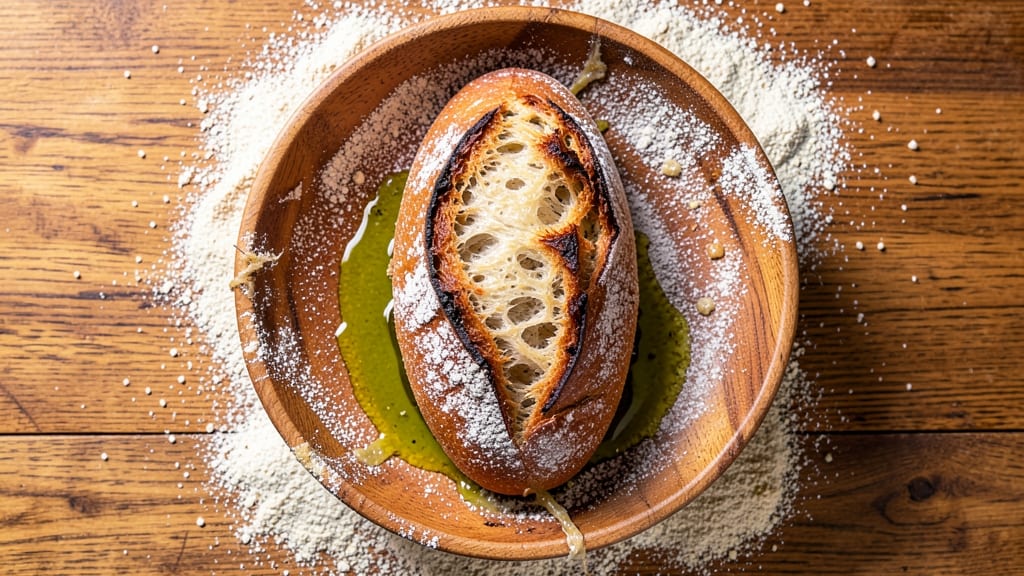
Altamura sourdough bread delivers the crispest crust and open, airy crumb of authentic Italian tradition—now you can bake it at home with this DOP-certified method. The secret lies in durum wheat semolina flour and a slow fermentation that develops unmatched flavor complexity.
This isn't just bread; it's a protected culinary heritage that transforms any kitchen into a Puglia bakery.
The process begins with a natural sourdough starter that captures wild yeast and lactic acid bacteria, creating that signature tang and depth. We'll shape the dough into its iconic round loaf with a thick, crackly crust, then bake it at precise temperatures to achieve that legendary open crumb structure.
Every step—from starter maintenance to final proofing—follows traditional techniques that earned Altamura its protected designation.
What you'll end up with is bread that slices effortlessly with a shatteringly crisp exterior and a soft, airy interior filled with those characteristic large holes. The flavor is complex—slightly tangy, nutty from the semolina, with a subtle sweetness that develops during the long fermentation.
This is the kind of bread that makes simple meals feel like an Italian feast.
Perfect for serving with olive oil and balsamic, using as a base for bruschetta, or simply enjoying with cheese and cured meats. The method may require patience, but the results are worth every minute of waiting. Let's begin with the starter—this is where the magic truly begins.
Ingredients for altamura sourdough bread
Durum wheat semolina and slow fermentation create Altamura's legendary open crumb and crisp crust—just like Puglia's DOP tradition.
| Ingredient | Amount | Notes |
|---|---|---|
| Durum Wheat Semolina Flour 🌾 | 3 ½ cups | DOP-certified for authentic texture |
| Type 00 Flour 🌾 | 1 ½ cups | For lighter crumb structure |
| Active Sourdough Starter 🍞 | 1 cup | 100% hydration, bubbly |
| Extra-Virgin Olive Oil 🫒 | ¼ cup | Italian, fruity variety |
| Water 💧 | 1 ½ cups | Filtered, room temperature |
| Kosher Salt 🧂 | 1 ½ tsp | Diamond Crystal preferred |
| Cornmeal 🌽 | ¼ cup | For dusting and scoring |
| Bread Flour 🌾 | ½ cup | For final dough strength |
| Balsamic Vinegar 🍷 | 1 tbsp | For scoring enhancement |
The semolina is non-negotiable—Altamura's DOP certification guarantees the durum wheat's high protein content, which gives that signature open crumb. Whole Foods or Italian specialty markets carry the best quality, but any high-protein semolina (like Barilla) works in a pinch. The starter needs to be active and bubbly—if it's sluggish, feed it 12 hours ahead. Type 00 flour is key for that tender crumb, but all-purpose in a bind (though texture may differ slightly). The olive oil should be Italian extra-virgin—look for brands like Filippo Berio at Trader Joe's or Whole Foods.
No DOP semolina? High-gluten bread flour mixed with half the amount of all-purpose mimics the protein structure. The starter can be store-bought (like Bobs Red Mill) if you're impatient, but it won't have that wild fermentation depth. For scoring, balsamic vinegar brushed on the dough adds a subtle tang and helps crust formation—skip it if you're short on time. The cornmeal dusting prevents sticking, but rice flour works too if you've got it. Pro tip: Toast your semolina lightly before mixing to enhance nutty flavor (just 3 minutes in a dry pan).
Starter keeps in the fridge for up to 2 weeks—feed it weekly. The finished dough can proof 8-12 hours at room temp or overnight in the fridge for deeper flavor. For scoring, use a sharp razor or lame—a dull knife crushes the crust. Baked loaves stay fresh 3-4 days at room temp, but freeze slices wrapped in parchment for up to 3 months. Toasting revives stale bread—350°F for 5-7 minutes brings back that crispy magic.
Why You'll Love This Recipe
- No-Knead Magic: Honestly, this bread takes zero effort after the starter is ready. Just mix the semolina and Type 00 flour with your active starter, a splash of olive oil, and water—no punching, no rolling, no stress. The semolina gives it that signature crunch without extra work.
- Weeknight Superhero: Between us, this is my go-to for busy nights. Toss a loaf in the oven while you prep dinner—it bakes while you eat. Plus, the leftovers? Still delicious toasted three days later.
- Budget-Friendly Staple: Semolina and Type 00 are cheap, and a single batch feeds the family for days. No fancy ingredients, just pure, satisfying bread that won’t break the bank. (Yes, even on a Tuesday night.)
Step-by-step instructions for Altamura sourdough bread
Here's how to craft that signature DOP-certified crust with an open, airy crumb—just like the Puglia masters.
Autolyse the Dough for Optimal Gluten Development
In a large mixing bowl, combine the 3.5 cups Durum Wheat Semolina Flour and the 1.5 cups Type 00 Flour. Add the 1 cup Active Sourdough Starter and the 1.5 cups Water—no salt yet. Using a dough whisk or your hands, mix just until no dry spots remain. The dough will look shaggy and sticky at this stage, which is perfect.
Cover the bowl with a damp towel and let it rest for 30 minutes. This autolyse phase allows the gluten to begin relaxing and hydrating properly. You'll notice the dough gradually soften and become more cohesive—this is your signal that the gluten network is forming correctly. Don't skip this step; it's what gives Altamura bread its signature open crumb structure.
Incorporate Fat, Salt, and Final Flour for Structure
After the autolyse, add the 0.25 cup Extra-Virgin Olive Oil and the 1.5 tsp Kosher Salt to the bowl. Using your hands or a dough scraper, gently work these into the dough until fully incorporated. Now sprinkle in the 0.5 cup Bread Flour—this final addition helps strengthen the gluten structure for that perfect oven spring.
Begin kneading the dough by hand or with a stand mixer fitted with a dough hook. Knead for 8-10 minutes until the dough becomes smooth and elastic, with a slightly tacky but not sticky surface. You'll know it's ready when it passes the "windowpane test"—stretch a small piece and it should thin out to nearly translucent without tearing. The semolina flour gives this dough its characteristic firm yet tender texture, so handle it gently to avoid overworking.
Bulk Ferment at Controlled Temperature
Shape the dough into a loose round and place it back in the bowl. Cover with the damp towel and let it bulk ferment at 75-78°F for 4-5 hours. During this time, the dough should roughly double in size. I like to do this in my proofing box to maintain consistent temperature—Altamura bread benefits from slow, controlled fermentation for maximum flavor development.
After 2 hours, perform the first fold: wet your hands, grab one side of the dough, stretch it upward, and fold it over itself. Rotate the bowl and repeat this process on all four sides. This helps strengthen the gluten structure and encourages an even rise. Repeat this fold every 30 minutes for a total of 3-4 folds during the bulk fermentation. The dough should feel slightly resistant but still soft to the touch when properly developed.
Shape and Final Proof for Crust Development
After the bulk fermentation, turn the dough out onto a lightly floured surface dusted with 0.25 cup Cornmeal. Shape it into a round boule by pulling the dough toward you in a circular motion, creating surface tension. The semolina flour gives this dough just enough grip to handle without sticking too much.
Place the shaped dough seam-side up in a well-floured banneton or proofing basket. Cover with a damp towel and let it proof at 75-78°F for 12-16 hours. The dough should rise until it's about 30-50% larger than its original size. For the perfect Altamura crust, I recommend doing a long, cold proof in the refrigerator overnight—this slow fermentation develops maximum flavor and creates that signature crisp crust.
Score and Bake for Crisp Crust and Open Crumb
Preheat your oven to 450°F with a Dutch oven inside for 45 minutes. This high heat is crucial for developing that characteristic Altamura crust. When ready, invert the dough onto parchment paper and carefully transfer it to the hot Dutch oven.
Score the dough with a razor blade in a simple crosshatch pattern, using the 1 tbsp Balsamic Vinegar to wet your finger for easier scoring. This helps control the oven spring and creates that beautiful open crumb structure. Bake covered for 20 minutes, then remove the lid and bake for another 20-25 minutes until the crust reaches a deep golden brown.
Let the bread cool on a wire rack for at least 1 hour before slicing. The interior should have an open, airy crumb with visible holes, while the exterior should be crisp and golden. The balsamic vinegar scoring not only enhances the crust but also adds a subtle tangy note that complements the bread's rich, nutty flavor from the semolina flour.
Pro Tips For Making Altamura Sourdough Bread
- STIR SEMINOLA FIRST: Mix the semolina with olive oil and water before adding the type 00 flour—this prevents clumping and ensures the dough gets that signature toothsome texture. I used to add it dry and ended up with gritty pockets; now I pre-hydrate it like a paste.
- WEIGH YOUR STARTER: Use a scale for the sourdough starter—100g of active starter (with 25-30% hydration) makes all the difference. Eyeballing leads to overproofing or underproofing; I learned this after my first batch collapsed like a sad soufflé.
- SKIP THE KNEADING: This dough is sticky and dense—resist the urge to knead it. A gentle stretch-and-fold every 30 minutes for 2 hours builds structure without overworking. I tried kneading like a normal bread, and the crumb turned gummy.
- BAKE IN STAGES: Start at 240°C (465°F) for 10 minutes to blast the oven, then drop to 200°C (390°F) for the remaining 30-35 minutes. The high heat sets the crust, while the lower temp ensures even baking—my first loaf burned on top before the center was done.
Creative variations of altamura sourdough bread
Semolina Variations
For a lighter crumb, replace 1 cup of the semolina with all-purpose flour, though the texture will be slightly less open. If you can't find durum wheat semolina, mix 2 cups high-gluten bread flour with 1 cup all-purpose—this mimics the protein structure.
For extra nutty depth, toast ½ cup semolina in a dry pan for 3 minutes before mixing into the dough. 🌾
Flavor Infusions
Add 1 tsp fennel seeds to the dough for an Italian-inspired twist—crush them lightly before mixing. For a rosemary variation, finely chop 1 tbsp fresh rosemary and fold it into the dough during the final kneading. Both additions complement the semolina's earthy notes beautifully.
Gluten-Free Adaptation
Swap 2 cups semolina for a 1:1 gluten-free flour blend (like Bob's Red Mill) plus 1 tbsp xanthan gum to mimic structure. Expect a denser crumb, but the crust will still develop well. Proof times may extend—monitor closely for 30-50% rise before baking.
Regional Twists
For a Puglian-style touch, brush the baked loaf with 1 tbsp olive oil and sprinkle with flaky sea salt while still warm. In Sicilian versions, add ½ tsp dried oregano to the dough. Both variations honor Southern Italian traditions while keeping the signature semolina base.
Sweet Variations
Create a honey-sourdough version by adding 2 tbsp honey to the dough during autolyse. For a cinnamon-raisin twist, fold in ¼ cup raisins and 1 tsp cinnamon after bulk fermentation. These sweeteners balance the bread's natural tang perfectly.
Storage Hacks
Freeze sliced bread in parchment-lined bags for up to 3 months. To revive, toast at 350°F for 5-7 minutes—the semolina keeps it crisp even after freezing. For short-term storage, wrap cooled loaves in a clean kitchen towel to maintain moisture for 3-4 days. ✨
Nutrition facts
Frequently asked questions
Why does Altamura bread use semolina flour instead of regular flour?
Semolina flour gives Altamura bread its signature open crumb structure and crisp crust. The high protein content in durum wheat semolina creates that characteristic airy texture with large holes, while the coarse texture helps develop a shatteringly crisp exterior. This is why it's protected under Italy's DOP certification—no other flour can replicate its unique texture.
Can I make this bread without a Dutch oven?
Yes, but you'll need to create steam another way. Place a baking tray on the oven rack below your bread and pour 1 cup hot water into it when baking. For best results, bake on a preheated pizza stone or steel at 450°F with the steam method. The crust won't be quite as crisp, but you'll still get that open crumb.
How do I know when my sourdough starter is ready for this recipe?
Your starter should be active and bubbly with a 100% hydration ratio (equal parts flour and water). It should float in water when tested (drop a spoonful—if it floats, it's ready). Feed it 12 hours before use with equal parts flour and water. For best results, use a starter that's 2-5 days old and has a mild tang, not a strong vinegar smell.
Why does my Altamura bread turn out dense instead of airy?
Dense bread usually means one of three things: underproofed dough (needs 12-16 hours final proof), over-kneading (stop at 8-10 minutes max), or wrong flour ratio. Double-check your semolina-to-flour ratio (3.5:1.5) and ensure your starter is active. Also, make sure your proofing environment stays at 75-78°F—colder temps slow fermentation.