
Side Dishes
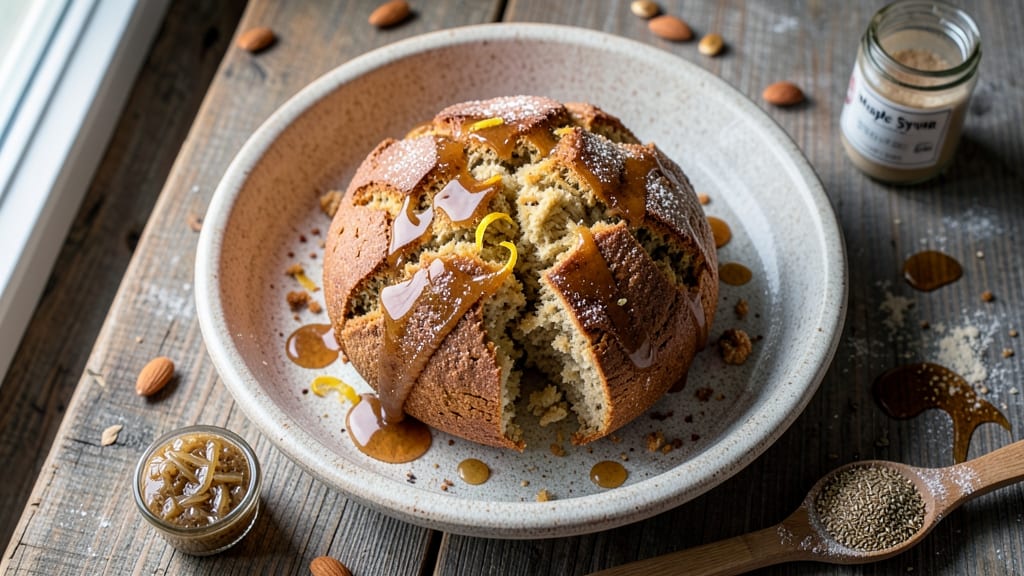
This almond flour soda bread recipe delivers the perfect balance of crispy exterior and tender crumb, all while being naturally grain-free and vegan-friendly. The key lies in the right blend of almond flour and baking soda, which creates that signature texture without gluten.
I developed this version after years of perfecting a version that holds up to traditional soda bread—just with nutty depth instead of wheat's mild flavor.
The beauty of this recipe is its simplicity: no yeast, no kneading, and just five core ingredients. The almond flour gives it a delicate sweetness and moist crumb, while the baking soda ensures that classic soda bread rise.
For extra richness, I recommend using a flax egg and plant-based milk, which bind everything together beautifully. The result is a loaf that's light yet substantial, with a slightly sweet aroma that fills your kitchen.
What makes this bread truly special is how it compares to classic soda bread—it's lighter on the palate but still hearty enough to stand up to soups or stews. The crust develops a satisfying crunch when baked, while the interior remains soft and slightly sweet.
It's perfect for breakfast toast, sandwiches, or even served warm with butter straight from the oven. The texture is what makes it unforgettable.
For those who love customization, this recipe works beautifully with add-ins like cinnamon, sunflower seeds, or even a touch of maple syrup for extra sweetness. The possibilities are endless while keeping the core texture intact. Let's get baking!
Ingredients for almond flour soda bread
Five core ingredients create this vegan-friendly almond flour bread with signature crispy crust and tender crumb.
| Ingredient | Amount | Notes |
|---|---|---|
| Almond Flour 🌰 | 3 cups | Finely ground, blanched preferred |
| Baking Soda 🧂 | 1 ½ tsp | Freshly opened for best rise |
| Flaxseed Meal 🌾 | 3 tbsp | Ground flaxseed for flax egg |
| Unsweetened Almond Milk 🥛 | 1 cup | Plain, unsweetened variety |
| Maple Syrup 🍯 | ¼ cup | Pure, grade B preferred |
| Ground Flaxseed 🌾 | 1 tbsp | For additional binding |
| Vanilla Extract 🌸 | 1 tsp | Pure vanilla for flavor |
| Salt 🧂 | ½ tsp | Fine sea salt preferred |
| Cinnamon 🌿 | 1 tsp | Ground for subtle warmth |
| Sunflower Seeds 🌻 | ½ cup | Optional for texture |
| Water 💧 | ½ cup | Room temperature |
The almond flour is the foundation—Bob's Red Mill or Anthony's Goods are my go-tos for consistent texture. Look for finely ground, blanched almond flour; it yields a smoother crumb. Sunflower seeds add crunch but aren't essential—omit if you prefer a finer texture. The baking soda must be fresh; if your stash is older than six months, toast it briefly in a dry pan to reactivate. For the flax egg, mix the flaxseed meal with water and let it sit for five minutes to thicken properly—this step is non-negotiable for binding.
No maple syrup? Agave nectar or date syrup works in a pinch, though maple adds that signature depth. Swap sunflower seeds for pumpkin seeds or chopped walnuts if you prefer. The vanilla extract can be omitted if you're avoiding extra flavor, but I recommend keeping it for that subtle warmth. For a sweeter loaf, add 1-2 tbsp more maple syrup. If you're using store-bought almond milk, shake the carton first—oil separates and can affect texture. The water should be room temperature; cold water can make the batter too dense.
This bread keeps beautifully—3 days wrapped at room temperature or 1 week refrigerated. For longer storage, slice and freeze portions; they toast perfectly straight from the freezer. The crust stays crisp for about 24 hours after baking, so enjoy it fresh or reheat slices in a toaster. Double the recipe and freeze half for future baking days—it thaws overnight on the counter. Leftovers make excellent toast or French toast with a drizzle of almond butter.
Why You'll Love This Recipe
- No Mixer Needed: I swear by this—just stir, pour, bake. The almond flour and flaxseed meal blend into a thick batter that behaves itself, no kneading or fussing required. Honestly, I’ve made it while waiting for coffee to brew.
- Maple-Kissed Warmth: That touch of maple syrup isn’t just sweet—it’s rich, cutting through the nutty depth of the almond flour like a perfect balance. The baking soda gives it a subtle lift, so it’s light enough to eat for breakfast but hearty enough to satisfy a snack craving.
- Weeknight & Picnic Hero: Slice it fresh for toast with butter, or pack it for lunches—it stays firm for days without getting soggy. Between us, I’ve fed it to my picky teenager (who usually rejects anything "healthy") and my gluten-sensitive aunt, and both devoured it.
- Pantry Stash Magic: No eggs, no yeast, no dairy—just what’s probably already in your cupboards. The almond milk and flaxseed meal make it budget-friendly, and a single batch lasts my family five days. (Yes, even on a Tuesday night.)
Step-by-step instructions for almond flour soda bread
This method delivers a perfectly textured loaf with a crisp crust and tender crumb every time.
Prepare the Flax Egg Mixture
In a small bowl, combine the 3 tablespoons flaxseed meal with the 0.5 cup water and stir vigorously. Let it sit for 5 minutes while you prepare the other ingredients—this creates a gel-like binder that replaces eggs in traditional soda bread. You'll know it's ready when the mixture thickens noticeably and resembles raw egg whites.
The flax egg is crucial here. If you skip the waiting time, the bread won't bind properly and may crumble during baking. I always use room-temperature water for best results—it activates the flax more evenly than cold water.
Mix Wet and Dry Ingredients Separately
In a large mixing bowl, whisk together the 1 cup unsweetened almond milk, 0.25 cup maple syrup, 1 tablespoon ground flaxseed, 1 teaspoon vanilla extract, 0.5 teaspoon salt, and 1 teaspoon cinnamon. In a separate bowl, combine the 3 cups almond flour and 1.5 teaspoons baking soda. The baking soda will fizz slightly when mixed with the almond flour—this is normal and indicates freshness.
Keeping these mixtures separate prevents overdevelopment of gluten in the almond flour, which could make the bread dense. The cinnamon and vanilla in the wet mixture add warmth and depth, while the baking soda ensures a proper rise despite the lack of gluten.
Combine and Fold in Seeds
Add the wet mixture to the dry ingredients and stir gently with a spatula until just combined. Avoid overmixing—you should still see small pockets of flour. Fold in the 0.5 cup sunflower seeds by hand, distributing them evenly throughout the batter. The seeds add texture and a subtle nutty contrast to the sweet crumb.
At this stage, the batter will be thick and slightly sticky. If it appears too dry, add 1 tablespoon of water at a time until it reaches a spreadable consistency. The goal is a cohesive batter that holds together when shaped but doesn't require excessive handling.
Shape and Preheat for Baking
Preheat your oven to 350°F and line a baking sheet with parchment paper. Transfer the batter to the prepared baking sheet and shape it into a 10-inch round loaf by gently patting and smoothing the top with damp hands. The edges should be slightly thicker than the center to ensure even baking.
For a rustic finish, use a sharp knife to score the top in a crosshatch pattern. This allows steam to escape during baking, preventing the loaf from cracking. Place the shaped loaf in the preheated oven and bake for 30-35 minutes until the top is deep golden brown and the internal temperature reaches 205°F.
Cool and Serve
Remove the loaf from the oven and let it cool on a wire rack for at least 20 minutes before slicing. The bread will continue to set as it cools, making it easier to handle and slice cleanly. For best texture, serve the bread at room temperature—this allows the crumb to fully develop its tender quality.
The finished loaf should have a crisp exterior that gives way to a lightly sweet, tender crumb. Each slice should hold its shape without falling apart, with the sunflower seeds adding subtle crunch. Store any leftovers in an airtight container for up to 3 days or freeze for longer storage.
Pro Tips For Making Almond Flour Soda Bread
- Measure Baking Soda Precisely: Almond flour soda bread relies on that baking soda for lift, but too much makes it bitter. Use a scale for ½ teaspoon—no eyeballing. I learned this the hard way after a batch tasted like a science experiment gone wrong.
- Mix Dry Ingredients First: Whisk almond flour, flaxseed meal, and baking soda together before adding wet ingredients. This prevents clumping and ensures even distribution—especially important with almond flour, which loves to stick. Skip this, and your bread might rise unevenly.
- Let the Batter Rest: Give the batter 10 minutes after mixing before baking. The almond milk and flaxseed meal need time to hydrate properly, and this makes the crumb lighter. I know, I know—you’re eager to bake it—but trust the process.
- Use Warm Almond Milk: Warm the unsweetened almond milk to about 100°F before mixing. It dissolves the maple syrup better and helps activate the baking soda faster. Cold milk? Your bread might not rise as much. Sounds weird, but it works.
Make-ahead tips for almond flour soda bread
Prep Ahead Strategy
Mix the batter up to 24 hours ahead and store it in an airtight container in the fridge. The flavors deepen overnight, and the almond flour absorbs moisture better when chilled.
When ready to bake, let the batter sit at room temperature for 30 minutes before shaping—this prevents cracking during baking. I always do this when I'm short on time in the morning. 💫
Freezer-Friendly Loaf
Bake the bread fully, then slice it into ½-inch thick pieces and freeze on a baking sheet for 1 hour before transferring to a freezer bag. This prevents slices from sticking. To toast, bake frozen slices at 350°F for 8-10 minutes—they'll be just as crispy as fresh-baked.
I keep a stash of these in my freezer for quick breakfasts all week. ❄️
Make-Ahead Toppings
Prep your toppings the night before for a stress-free morning. Mix 1 tbsp melted butter with 1 tsp cinnamon and 1 tbsp maple syrup in a small jar—shake before using.
Or, toast ½ cup chopped walnuts with a pinch of salt and store in an airtight container. These ready-made toppings transform simple toast into something special. 🌟
Batch and Store
Double the recipe and bake two loaves at once—they bake perfectly side by side. Wrap cooled loaves in plastic wrap and store at room temperature for 3 days or refrigerate for 1 week.
For longer storage, freeze whole loaves (unwrapped) on a tray for 1 hour, then wrap tightly in foil. Thaw overnight on the counter for fresh bread the next day. 💡
Quick Assembly Tips
If you're really pressed for time, assemble the batter the night before and refrigerate it. In the morning, simply shape the chilled batter, score the top, and bake as directed.
The cold batter bakes slightly slower, giving you more time to enjoy your morning coffee while it crisps up in the oven. Trust me, this is a game-changer for busy mornings. ⏰
Reheating Leftovers
Slice the bread and reheat individual portions in a toaster for 2-3 minutes—this restores the crispy crust perfectly. For a softer texture, wrap slices in a damp paper towel and microwave on 50% power for 20 seconds.
I also love toasting stale slices with a thin layer of almond butter for a nutty twist. 🔥
Nutrition facts
Frequently asked questions
Can I substitute almond flour with another nut or seed flour?
Yes, but texture and flavor will change. For a similar result, try sunflower seed flour (1:1 ratio) or cashew flour—both work well for a grain-free loaf. Hazelnut flour adds richness but may make the bread denser. Avoid coconut flour unless you add extra moisture (like 2 tbsp extra almond milk), as it absorbs liquid differently.
Why did my almond flour bread turn out dense instead of light?
Overmixing the batter or skipping the 5-minute flax egg rest are the most common causes. Also check: did you use fresh baking soda? Old baking soda loses potency. If the batter seemed too dry, add 1 tbsp water at a time until it holds together when shaped. For extra lift, try adding ½ tsp apple cider vinegar to the wet ingredients.
How do I make this bread sweeter or more flavorful?
For extra sweetness, add 1-2 tbsp more maple syrup or ¼ cup dried fruit (like raisins or chopped dates). For deeper flavor, boost the spices: double the cinnamon and add ½ tsp cardamom or nutmeg. A pinch of sea salt (already in the recipe) enhances all flavors—don't skip it!
Can I make this recipe gluten-free and nut-free?
Yes! Replace almond flour with a 1:1 gluten-free oat flour blend (certified GF) and use sunflower seed flour instead. For nut-free, omit almond milk and use coconut milk (full-fat for best texture). The flax egg remains the same—it's naturally nut-free. Just note the texture may be slightly denser without almond flour's fat content.
What's the best way to serve this bread?
Warm slices make perfect toast with almond butter or jam, or use it for sandwiches with avocado and smoked salmon. For breakfast, try it with Greek yogurt and honey. The crispy crust also pairs well with soups or stews—just tear off chunks! Store-bought versions often lack the tender crumb, so homemade is always better.