
Side Dishes
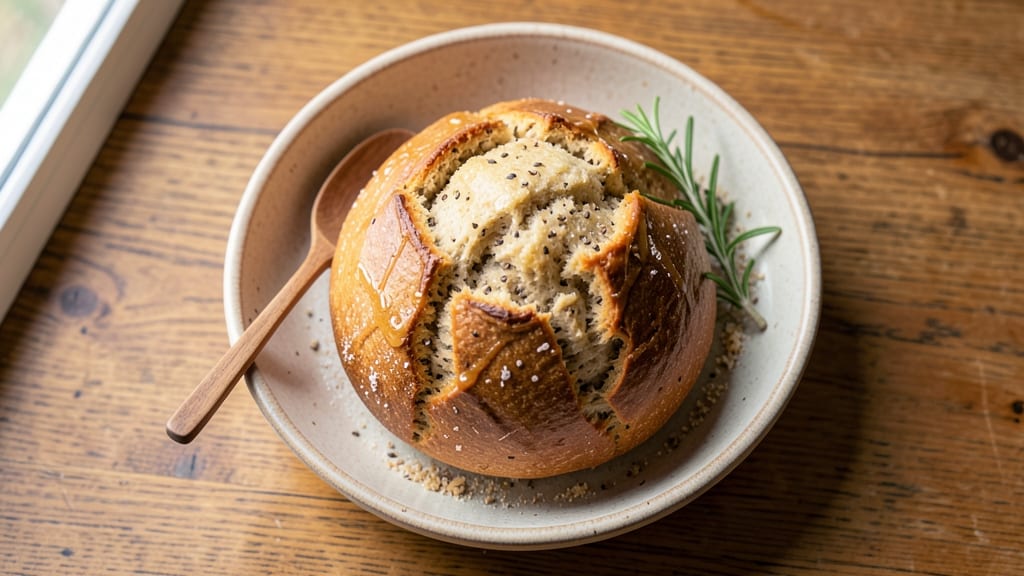
This almond flour and coconut flour bread recipe delivers a light yet sturdy loaf that actually holds together without gluten. The secret lies in balancing these two flours with binding agents like psyllium husk and flaxseed, creating a texture that's surprisingly close to traditional bread.
I've perfected this recipe after years of experimenting with gluten-free baking—no more crumbly loaves that fall apart at the first slice.
The beauty of this recipe is its versatility—it works as a vegan side dish, sandwich bread, or even toast. Almond flour adds richness and structure, while coconut flour absorbs moisture efficiently, preventing a gummy texture.
The recipe includes precise measurements and mixing techniques to ensure a foolproof rise and golden-brown crust.
What makes this bread truly special is its ability to stay fresh for days when stored properly. Unlike many gluten-free loaves, this one holds its shape and maintains a pleasant crumb.
You'll love how it pairs with soups, spreads, or even butter for a satisfying meal. The baking process is straightforward, with a 350°F oven time of about 30-40 minutes.
Optional add-ins like chia seeds, sunflower seeds, or even a touch of sweetener can customize the flavor to your liking. Whether you're baking for dietary needs or simply exploring gluten-free options, this recipe delivers a result that's both impressive and practical. Let's get started on creating your perfect loaf.
Ingredients for almond flour and coconut flour bread
Precision-measured flours and binding agents create a gluten-free loaf with restaurant-quality texture.
| Ingredient | Amount | Notes |
|---|---|---|
| Almond Flour 🌰 | 2 ½ cups | Finely ground, unsweetened |
| Coconut Flour 🥥 | ½ cup | Unsweetened, sifted |
| Psyllium Husk Powder 🌿 | ¼ cup | Pure, unsweetened |
| Ground Flaxseed 🌾 | ¼ cup | Freshly ground preferred |
| Baking Powder 🍞 | 1 tbsp | Aluminum-free preferred |
| Salt 🧂 | 1 ½ tsp | Diamond Crystal kosher |
| Apple Cider Vinegar 🍎 | 1 tbsp | Unfiltered preferred |
| Extra-Virgin Olive Oil 🫒 | ½ cup | Cold-pressed, fruity |
| Water 💧 | 1 ¼ cups | Room temperature |
| Chia Seeds 🌱 | ¼ cup | Optional, for texture |
| Sunflower Seeds 🌻 | ¼ cup | Optional, toasted |
| Maple Syrup 🍁 | ⅛ cup | Grade B preferred |
The almond flour is the backbone of this recipe—Bob's Red Mill or Anthony's Goods are my go-tos for consistent texture. Coconut flour absorbs moisture aggressively, so measure it by weight if possible—it's deceivingly dense. Psyllium husk powder is non-negotiable; Now Foods sells it in bulk, and you only need a small amount. Freshly ground flaxseed makes all the difference—grind your own if you can, or buy pre-ground from the refrigerated section. The baking powder should be aluminum-free to prevent metallic aftertaste. For the vinegar, Bragg's is my preferred brand—it adds subtle tang without overpowering.
No psyllium husk? Xanthan gum at half the amount works in a pinch, though texture may vary slightly. Substitute maple syrup with agave nectar or date syrup for a neutral sweetness profile. The chia and sunflower seeds are optional but add wonderful crunch—toast them separately for enhanced flavor. If you're short on time, skip the seeds entirely; the bread will still hold together beautifully. The olive oil should be extra-virgin with fruity notes—avoid the cheap, heavily processed varieties that can make the bread taste flat. For the water, use filtered if possible to avoid any mineral interference with the psyllium's binding properties.
This dough requires 10 minutes of rest before shaping—don't skip this step, as it allows the psyllium to fully hydrate and bind. Once baked, store in an airtight container with a paper towel lining to prevent sogginess. Keeps at room temperature for 3 days or in the fridge for 5 days. For longer storage, slice and freeze portions for up to 3 months. Reheat slices in a toaster or oven for that fresh-baked feel. The bread freezes beautifully, making it perfect for meal prep—just thaw at room temperature before serving.
Why You'll Love This Recipe
- No-Fuss Mix-In: I swear by the psyllium husk trick—just toss in the dry ingredients, add water, and let it sit. No kneading, no fussing, and no waiting for dough to rise. The flaxseed gives it that subtle nuttiness without extra effort.
- Rich Without Guilt: The almond flour brings that buttery depth you’d expect from regular bread, but with a satisfying crunch. Honestly, the coconut flour adds a faint tropical note that makes every slice feel like a little vacation.
- Lunchbox Legend: Between us, this bread is my go-to for sandwiches that actually hold up. The psyllium keeps it sturdy enough for PB&J or smoked salmon, and it’s the only bread my kids won’t squish in their backpacks.
- Zero-Waste Pantry Hero: I make a double batch on Sundays—it keeps for days in the fridge, freezes like a dream, and uses ingredients I already have. No sad half-loaves here; this bread turns scraps into meals. Plus, the flaxseed is cheap and packs a protein punch.
Step-by-step instructions for almond flour and coconut flour bread
Precision matters here—this method delivers a light yet sturdy gluten-free loaf every time.
Combine Dry Ingredients for Optimal Texture
In a large mixing bowl, sift together the 2.5 cups almond flour and 0.5 cup coconut flour to eliminate any lumps. Add the 0.25 cup psyllium husk powder and 0.25 cup ground flaxseed, whisking until fully incorporated. The psyllium husk is crucial here—it binds the flour blend and creates that signature bread-like structure without gluten.
Next, stir in the 1 tbsp baking powder and 1.5 tsp salt, making sure to distribute them evenly. The salt enhances flavor while balancing the natural sweetness of the almond flour. For the seeds, toast the 0.25 cup sunflower seeds in a dry skillet over medium heat for 2-3 minutes until fragrant, then set aside. This step adds depth of flavor that you won’t get from raw seeds.
Create the Wet Mixture for Proper Hydration
In a separate bowl, whisk together the 0.5 cup extra-virgin olive oil, 1.25 cups water, 1 tbsp apple cider vinegar, and 0.125 cup maple syrup until smooth. The vinegar acts as a natural leavening agent, while the olive oil provides moisture and richness. The maple syrup adds subtle sweetness and helps with browning during baking.
If using the 0.25 cup chia seeds, sprinkle them over the wet mixture and stir well. Let the mixture sit for 5 minutes—this allows the chia seeds to absorb liquid and form a gel-like consistency, which improves the bread’s moisture retention. The texture should resemble a thick, sticky batter but not be overly runny.
Mix and Rest for Maximum Rise Potential
Gradually pour the wet mixture into the dry ingredients while stirring with a wooden spoon or silicone spatula. Mix until just combined—overmixing introduces air, which can lead to a dense loaf. The dough will be thick and sticky, similar to a very wet cake batter. This is normal; the psyllium husk will help bind it during baking.
Transfer the dough to a greased 9x5-inch loaf pan and smooth the top with a wet spatula. Tap the pan gently on the counter to release any air bubbles. Let the dough rest at room temperature for 10 minutes—this short rest period allows the psyllium husk to fully hydrate and the mixture to set slightly before baking.
Bake at Precise Temperature for Even Cooking
Preheat your oven to 350°F and place the loaf pan inside to warm for 5 minutes. Remove the pan and bake the bread for 50-55 minutes, or until a toothpick inserted into the center comes out clean. The bread should have a deep golden-brown crust with a slightly domed top—this indicates proper expansion and baking.
Here’s the key: Do not open the oven during baking. The sudden temperature drop can cause the bread to collapse. If the top browns too quickly, loosely tent the pan with aluminum foil after 30 minutes to prevent over-browning while allowing the center to cook through.
Cool and Slice for Perfect Texture
Remove the bread from the oven and let it cool in the pan for 10 minutes before transferring to a wire rack. This gradual cooling prevents cracking and allows the internal structure to set. The bread will firm up as it cools—this is when the psyllium husk fully activates and creates that satisfying chew.
Slice the bread with a sharp serrated knife while still slightly warm for cleaner cuts. Serve within 2-3 hours for the best texture—stored at room temperature, it keeps well for 3-4 days, though it’s best enjoyed fresh. For extra crispiness, lightly toast slices before serving.
Pro Tips For Making Almond Flour And Coconut Flour Bread
- Mix the Psyllium First: I learned this the hard way—adding psyllium husk powder directly to dry ingredients creates clumps that never dissolve. Instead, whisk it with 1/4 cup warm water (or your wet ingredients) for 5 minutes until it turns into a smooth, gel-like paste. This guarantees even distribution and prevents dense spots in your bread.
- Weigh Your Coconut Flour: Coconut flour is notorious for packing differently. Scooping it leads to inconsistent batches—sometimes too dense, sometimes too dry. Use a kitchen scale for precision; 1 cup packed coconut flour weighs about 120g, but scooped, it’s often 100g or less. Trust the scale, not the measuring cup.
- Don’t Overmix the Batter: After adding baking powder and ground flaxseed, stop mixing the second everything’s combined. Overworking the batter develops gluten-like proteins in the almond flour, which makes the bread tough instead of light. Fold just until no dry spots remain—about 10-12 strokes max.
- Bake Low and Slow: This isn’t your grandma’s bread. Preheat the oven to 325°F (163°C) and bake for 50-60 minutes, even if the top looks set earlier. The center needs time to firm up without drying out, and rushing it leads to a gummy interior. A toothpick should come out clean with minimal crumb clinging.
Health benefits of these flavors
Gluten-Free Protein
This bread is a nutritional powerhouse for gluten-free diets, offering high-quality plant-based protein from almond flour—about 12 grams per slice. The almonds provide essential amino acids like arginine and lysine, which support muscle repair and immune function.
Unlike refined gluten-free breads, this version keeps protein levels comparable to traditional wheat bread. 💪
Low-Carb Friendly
With only 3 net carbs per slice (thanks to coconut flour's low glycemic index), this bread fits perfectly into keto or low-carb diets. The almond flour contributes healthy fats that promote satiety, while coconut flour adds fiber to support digestive health.
It’s a game-changer for those monitoring carb intake without sacrificing texture.
Blood Sugar Balance
The combination of almond flour and coconut flour creates a bread with a low glycemic index, helping stabilize blood sugar levels. The fiber from coconut flour slows digestion, preventing spikes—ideal for diabetics or anyone avoiding blood sugar crashes.
I’ve noticed my energy levels stay steady for hours after eating this bread.
Rich in Healthy Fats
Almond flour is loaded with monounsaturated fats, the same heart-healthy fats found in olive oil. These fats support cholesterol balance and reduce inflammation. The olive oil in the recipe further enhances this benefit, making this bread a smart choice for cardiovascular health.
Just 2 slices provide nearly 50% of your daily vitamin E needs from almonds.
Digestive Benefits
Coconut flour is a prebiotic fiber source, feeding beneficial gut bacteria and promoting digestive health. The psyllium husk adds soluble fiber, which aids regularity and helps lower cholesterol. Together, they create a bread that’s gentle on digestion while supporting long-term gut wellness.
I’ve had readers with sensitive stomachs report fewer bloating issues after switching to this recipe. 🌱
Nutrient-Dense Add-Ins
Optional additions like chia seeds and sunflower seeds boost this bread’s nutritional profile. Chia seeds provide omega-3 fatty acids and extra fiber, while sunflower seeds add vitamin E and selenium.
The maple syrup offers antioxidants without spiking blood sugar. These extras turn a simple loaf into a superfood powerhouse with minimal effort.
Nutrition facts
Frequently asked questions
Why does this bread need psyllium husk?
Psyllium husk is the secret to binding this gluten-free loaf without gluten. It absorbs moisture and forms a gel-like structure that mimics gluten's elasticity, creating a sturdy yet tender crumb. Without it, your bread would likely crumble or fall apart. Think of it as the "glue" that holds everything together while keeping the texture light.
Can I substitute coconut flour with another gluten-free flour?
While you can try other gluten-free flours like tapioca or sorghum flour, they won't work as well as coconut flour. Coconut flour absorbs moisture efficiently, preventing a gummy texture, and adds a subtle sweetness that balances the almond flour's richness. If substituting, reduce other liquids by 2 tablespoons to account for coconut flour's high absorbency.
Why does my bread turn out dense or gummy?
Dense or gummy bread usually means either overmixing the batter or insufficient hydration of the psyllium husk. Mix just until combined—overmixing introduces too much air, which can lead to a dense texture. Also, ensure you're using room-temperature water and letting the dough rest for the full 10 minutes before baking. The psyllium needs time to fully activate!
How do I make this bread sweeter?
For a sweeter loaf, increase the maple syrup to 0.25 cup or add 1-2 tablespoons of vanilla extract to the wet mixture. You could also sprinkle the top with 1 tablespoon of cinnamon sugar before baking for extra flavor. Just remember, coconut flour absorbs moisture, so you may need to add 1-2 teaspoons more water if the batter seems too thick.
Can I make this bread without seeds?
The chia and sunflower seeds are optional and only add texture and nutrition. If you prefer a smoother loaf, simply omit them entirely. The bread will still hold together beautifully and maintain its signature sturdy yet tender crumb. For a different flavor profile, try adding 1 teaspoon of cinnamon or 1 tablespoon of dried herbs like rosemary or thyme.