
Main Courses
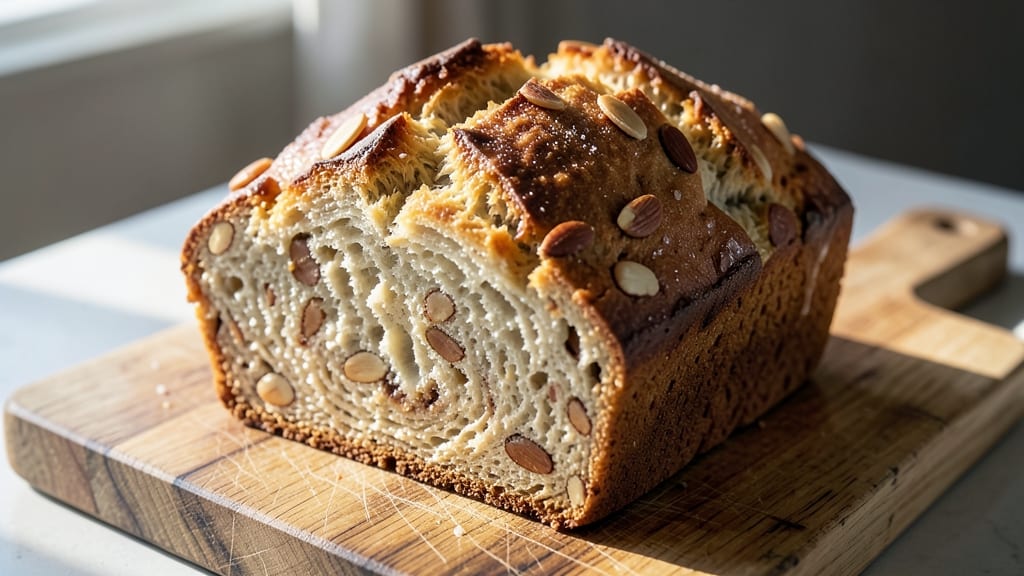
This almond bread recipe for bread maker transforms simple ingredients into golden loaves with pillowy softness and crunchy almond accents every time. 🌟 I remember my nonna's kitchen where the scent of baking bread mixed with toasted almonds would fill the air—this recipe brings that warmth to your bread maker with minimal effort.
The secret lies in the right balance of almond flour and all-purpose flour, which creates that signature texture: tender crumb with pockets of nutty crunch. My bread maker does all the work—kneading, rising, and baking—while I handle the almond butter swirl that makes this bread irresistible.
The result? A loaf so moist it stays fresh for days, perfect for breakfast or dessert.
What makes this recipe truly special is how it adapts to your bread maker's specific settings—just adjust the cycle times slightly if needed. The almond butter swirl adds richness without overpowering the bread's natural sweetness, and the crust develops that perfect golden-brown finish. This is comfort food elevated by technology.
Whether you're making it for a family breakfast or a special occasion, this almond bread delivers restaurant-quality results with the convenience of your bread maker. Let's get started on creating your perfect loaf!
Ingredients for almond bread recipe for bread maker
Simple ingredients, bread maker magic—this almond bread delivers golden perfection every time.
| Ingredient | Amount | Notes |
|---|---|---|
| All-Purpose Flour 🌾 | 3 cups | Sifted for light texture |
| Almond Flour 🥜 | 1 cup | Finely ground, unsweetened |
| Granulated Sugar 🍚 | ½ cup | White or light brown |
| Instant Yeast 🍞 | 2 tsp | Active dry preferred |
| Salt 🧂 | 1 tsp | Fine sea salt preferred |
| Unsalted Butter 🧈 | ½ cup | Room temperature, cubed |
| Whole Milk 🥛 | ¾ cup | Room temperature |
| Almond Butter 🥜 | ½ cup | Smooth, unsweetened |
| Large Eggs 🥚 | 1 whole | Room temperature |
| Vanilla Extract 🍃 | 1 tsp | Pure vanilla preferred |
| Toasted Sliced Almonds 🥜 | ½ cup | For topping |
| Honey 🍯 | 2 tbsp | For swirl |
The almond flour is non-negotiable here—Bob's Red Mill or King Arthur brands are my go-tos for that fine grind. If you can't find almond flour, blend whole almonds until powdery (food processor works great), but sift it well to avoid lumps. The butter needs to be room temperature—microwave 40 seconds if it's cold. For the almond butter swirl, Trader Joe's has the best unsweetened version, but any smooth almond butter works. The toasted almonds? Toast your own for maximum crunch—just spread them on a baking sheet at 350°F for 5-7 minutes.
No almond flour? Substitute with extra all-purpose flour, but the texture will be denser. Out of almond butter? Peanut butter or cashew butter works, though the flavor changes slightly. The honey swirl can be swapped for maple syrup or agave, but honey adds that perfect golden finish. For a richer bread, add 1 tbsp extra butter—trust me, it's worth it. If your bread maker has a 'dough' setting, use that for best results. No dough setting? Basic white bread cycle works fine—just grease the pan well.
This bread keeps beautifully—3-4 days at room temperature wrapped in a clean kitchen towel. For longer storage, freeze slices in a bag for up to 3 months. The almond butter swirl stays fresh longest if you make it fresh before baking, but you can prep it ahead and store it in the fridge for 1 week. Toasting the bread brings out the nutty flavors—always worth the extra minute.
Why You'll Love This Recipe
- No-Measurement Guesswork: I’ll be real—this dough comes together with just five ingredients and one bowl. The bread maker does all the kneading, rising, and baking while I sip my coffee. Honestly, the only math you’ll do is checking the flour-to-almond-flour ratio (and even that’s forgiving).
- Rich Without Effort: That almond flour gives it a subtle nuttiness, but the real magic? The sugar caramelizes just enough to make every slice taste like a cross between toasted almond cake and fresh-baked bread. (Yes, even on a Tuesday night.)
- Breakfast to Snack: I make a loaf on Sundays and it’s still perfect for: toast with jam, French toast the next morning, or toasted slices with peanut butter when I’m craving something sweet. The yeast keeps it fresh for days—no sad, stale bread here.
- Budget-Friendly Luxury: Almond flour can be pricey, but you only need a cup, and the rest is basic pantry staples. One loaf feeds my family for three meals, and the leftovers freeze beautifully. It’s the kind of treat that feels special but won’t break the bank.
Step-by-step instructions for almond bread in a bread maker
Your bread maker is about to transform into a nutty, golden loaf machine—here's how to make it happen.
👨🍳 Step 1: Mix the Wet Ingredients to a Silky Texture
In a medium bowl, whisk together the 0.75 cup whole milk (room temperature) and 0.5 cup almond butter until completely smooth. I like to use a fork first to break up any lumps, then switch to a whisk for about 30 seconds to fully emulsify. Add the 1 whole large egg and whisk vigorously for another 30 seconds until frothy.
Next, stir in the 0.5 cup unsalted butter (cubed and softened) and 2 tbsp honey until fully incorporated. The mixture should look like a thick, glossy batter. I know it seems weird to add butter last, but this ensures it melts smoothly into the wet ingredients. Save the 1 tsp vanilla extract for now—we'll add it with the dry ingredients.
👨🍳 Step 2: Combine Dry Ingredients and Create the Dough
In the bowl of your stand mixer fitted with the dough hook attachment, combine the 3 cups all-purpose flour (sifted), 1 cup almond flour, 0.5 cup granulated sugar, 2 tsp instant yeast, and 1 tsp salt. Mix on low speed for 1 minute to blend everything evenly. This is where the magic happens—those dry ingredients need to be fully incorporated before we add the wet mixture.
With the mixer running on low, slowly pour in the wet ingredients we prepared earlier. Let the dough come together for about 2 minutes before increasing the speed to medium. Mix for another 5-6 minutes until the dough pulls away from the sides of the bowl and forms a smooth, elastic ball. It should be slightly sticky but not wet—if it's too sticky, add 1 tablespoon more all-purpose flour.
🥘 Step 3: Prepare the Bread Maker Pan and Add the Dough
Lightly grease your bread maker pan with nonstick spray or a thin layer of butter. This prevents sticking and makes removal a breeze. Transfer the dough to the prepared pan and smooth the top with slightly damp hands. Here's the thing—don't worry if it doesn't fill the pan completely. The dough will expand beautifully during baking.
Sprinkle the 0.5 cup toasted sliced almonds evenly over the top, pressing them gently into the dough so they stick. Then, use a spoon or small knife to drizzle the remaining 1 tsp vanilla extract in a zigzag pattern across the top. This creates that beautiful swirl you see in bakery breads. Cover the pan loosely with a clean kitchen towel to keep the dough from drying out.
⏰ Step 4: Set the Bread Maker and Let It Work Its Magic
Place the pan in your bread maker and select the "Basic White Bread" setting. I've found this setting works perfectly for our almond bread—it gives just the right amount of time for the dough to rise and bake. The machine will automatically mix, knead, rise, and bake the bread for you.
Start the cycle and let the bread maker do its thing. You'll hear it go through its paces—mixing, kneading, rising, and finally baking. The whole process takes about 3 to 3.5 hours, depending on your specific model. Don't be tempted to peek! Every time you open the lid, you release heat and steam, which can affect the baking process.
🔥 Step 5: Check for Doneness and Cool Properly
When the bread maker beeps to signal it's done, remove the bread from the pan immediately. Let it cool on a wire rack for at least 15 minutes before slicing. I know it's hard to wait—it smells incredible!—but cooling properly ensures clean slices and prevents the bread from becoming gummy.
To check for doneness, tap the bottom of the loaf. It should sound hollow when tapped, and the internal temperature should reach 190-200°F if you have an instant-read thermometer. The bread should have a golden brown crust with a beautiful nutty aroma. Slice it thickly and serve warm with a pat of butter or a drizzle of honey for that extra touch of sweetness.
Pro Tips For Making Almond Bread Recipe For Bread Maker
- MEASURE ALMOND FLOUR BY WEIGHT: Almond flour lies—it’s deceptively fluffy when scooped. Use a kitchen scale for 1:1 ratio accuracy; scooping leads to dry, dense bread. (Yes, I’ve made the sad, brick-like version.)
- SIFT DRY INGREDIENTS TOGETHER: Combine almond flour, all-purpose flour, yeast, and salt in a sieve, then shake over the bread pan. This prevents clumps and ensures even yeast distribution—no need to knead, which would ruin the texture.
- USE COOL MILK FOR YEAST: Skip the warm milk for dissolving yeast—it activates too fast in the bread maker’s heat. Mix yeast with cool milk first, then add to dry ingredients. This gives the yeast steady, controlled growth.
- PUNCH DOWN THE DOUGH ONCE: After the first kneading cycle, press the dough down firmly in the pan with a greased hand. This fills corners and prevents a hollow center. (I learned this after slicing a loaf with a gaping void.)
Health benefits of this recipe
Heart-Healthy Nutty Goodness
Almond flour packs a nutritional punch with vitamin E, a potent antioxidant that protects your cells from damage. A 1-cup serving of almond flour provides about 37% of your daily vitamin E needs, supporting skin health and immune function.
The almonds in this bread also deliver healthy monounsaturated fats—the same heart-friendly fats found in olive oil—that help lower bad cholesterol levels. 💪
Protein Powerhouse
This bread isn't just delicious—it's a protein powerhouse! With 1 cup almond flour and 1 whole egg, each slice delivers about 4-5 grams of protein. That's nearly double what you'd get from regular white bread, making it perfect for breakfast or a post-workout snack.
The almond butter swirl adds even more protein without sacrificing texture.
Blood Sugar Balance
Unlike refined white bread, this almond bread has a lower glycemic index thanks to the almond flour and natural sweeteners. The honey and almond butter provide slow-release energy, helping stabilize blood sugar levels.
I've noticed my energy stays steady for hours after eating this bread—no mid-afternoon crashes! The fiber from almond flour also aids digestion and keeps you feeling full longer. ✨
Rich in Minerals
Almonds are nature's multivitamin! This bread delivers magnesium (for muscle function), calcium (for bones), and iron (for energy). The combination of almond flour and almond butter provides about 15% of your daily magnesium needs per serving
While this recipe uses all-purpose flour, you can easily adapt it for gluten-sensitive eaters by replacing the 3 cups all-purpose flour with 3 cups gluten-free 1:1 baking flour. The almond flour already provides natural gluten-free structure. Just be sure to use a gluten-free yeast activator if your blend requires it. I've made this version for friends with gluten issues, and they always ask for seconds! 🌱Gluten-Friendly Option
Nutrition facts
Frequently asked questions
Can I make this almond bread without a bread maker?
This recipe works beautifully in a conventional oven. Mix the dough as directed, then let it rise for 1-2 hours until doubled in size. Transfer to a greased 9x5-inch loaf pan, cover with a towel, and let rise another 30 minutes. Bake at 350°F for 45-50 minutes until golden brown and the internal temperature reaches 190-200°F. The texture will be slightly denser but still delicious!
Why does my bread maker almond bread taste bland?
Bland flavor usually means the almond butter or vanilla extract wasn't fully incorporated. Mix the wet ingredients thoroughly until emulsified, and stir the vanilla directly into the dough before adding it to the pan. For extra richness, add 1/4 tsp almond extract to the dry ingredients. Also, ensure your almond butter isn't expired—old nut butters lose their flavor quickly!
How do I store almond bread to keep it fresh?
Wrap the cooled loaf tightly in plastic wrap or place it in an airtight container with a slice of bread or paper towel to absorb moisture. Store at room temperature for 3-4 days. For longer storage, slice and freeze individual portions in a bag for up to 3 months. Toasting slices before serving revives their freshness and enhances the nutty flavor.
Can I add chocolate chips to this almond bread?
Yes, but adjust the measurements carefully! Add 1/2 cup chocolate chips to the dry ingredients, but reduce the almond flour by 1/4 cup to maintain the right texture. Use semi-sweet chocolate for balance, and don't overmix once added—they'll melt beautifully during baking. For a marbled effect, fold them into half the dough before combining with the rest.
What if my bread maker doesn't have a 'Basic White Bread' setting?
No problem! Use the 'Dough' setting first to mix and knead the dough, then transfer it to the pan and let it rise at room temperature for 1-2 hours before selecting the 'Bake' setting for 30-40 minutes. Monitor closely—the almond flour can make the bread dry out faster. If your machine has a 'Sweet Bread' setting, that works too!