
Side Dishes
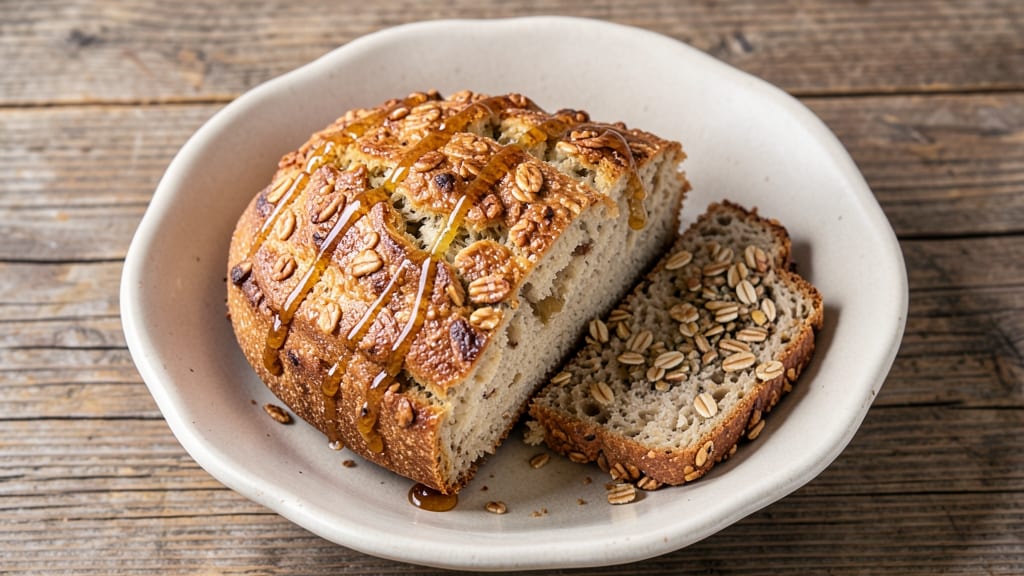
This 9-grain honey oat bread recipe delivers a rustic, hearty loaf with a perfect balance of whole-grain crunch and honey-sweetened warmth—ideal for breakfast or charcuterie boards.
The combination of nine grains and honey creates a tender yet textured crumb that stays fresh for days, while the golden crust adds irresistible appeal. I developed this recipe after years of perfecting artisanal bread at home, ensuring every bite is packed with nutty, slightly sweet flavor without sacrificing structure.
The secret lies in the honey, which adds natural sweetness while tenderizing the dough, and the oats, which provide chewy texture and fiber. This recipe uses a simple sourdough starter for depth (or instant yeast for convenience), and the grains are toasted lightly to enhance their nutty aroma.
With just one rise and a 45-minute bake, you'll achieve a loaf that rivals bakery favorites—crisp on the outside, soft and airy inside, with pockets of honey-infused goodness.
Once baked, this bread excels as toasted slices with butter, paired with jam or cheese, or served alongside soups and salads. The honey-oat flavor profile makes it versatile for both sweet and savory applications, while the whole-grain goodness ensures it's a nutritious addition to any meal.
Whether you're a seasoned baker or a beginner, this recipe delivers foolproof results with minimal effort.
For best results, use stone-ground oats and raw honey for authentic flavor, and let the dough rest overnight in the fridge for enhanced flavor development. The recipe scales easily, so double it for gifts or gatherings. Here's how to bake it to perfection.
Ingredients for 9 grain honey oat bread
Nine grains, honey-sweetened warmth, and artisanal texture—this bread combines rustic crunch with tender soul.
| Ingredient | Amount | Notes |
|---|---|---|
| Stone-Ground Rolled Oats 🌾 | 2 cups | Uncooked, for texture and fiber |
| Raw Honey 🍯 | ½ cup | Local preferred for authenticity |
| All-Purpose Flour 🌾 | 2 cups | Bread flour for better structure |
| Whole Wheat Flour 🌾 | 1 cup | For nutty depth and nutrition |
| Active Dry Yeast 🍞 | 2 ¼ tsp | Instant yeast for convenience |
| Warm Water 💧 | 1 ¼ cups | 110°F for optimal yeast activation |
| Unsalted Butter 🧈 | ¼ cup | Cold, cubed for flavor and richness |
| Granulated Sugar 🍚 | 1 tbsp | Balances honey sweetness |
| Salt 🧂 | 1 ½ tsp | Diamond Crystal preferred |
| Mixed Nine-Grain Blend 🌾 | ½ cup | Toasted for enhanced aroma |
| Sourdough Starter 🍞 | ½ cup | Active, bubbly starter |
| Milk 🥛 | ¼ cup | Warm, for dough elasticity |
| Egg 🥚 | 1 whole | For structure and richness |
The stone-ground oats and nine-grain blend are non-negotiable for authentic texture—Bob's Red Mill or King Arthur are reliable sources. Toast the grains lightly in a dry pan until fragrant to deepen their nutty aroma. For honey, local raw honey adds complexity, but any liquid honey works in a pinch. The sourdough starter should be active and bubbly; if you're new to sourdough, instant yeast delivers consistent results without the wait. The whole wheat flour provides structure, but don't substitute rye—it alters the crumb too dramatically.
No nine-grain blend? Mix equal parts wheat berries, farro, spelt, amaranth, quinoa, millet, buckwheat, flaxseeds, and sunflower seeds—toast them first for depth. Short on honey? Maple syrup works, but reduce by 1 tbsp to account for its stronger sweetness. The butter is crucial for richness—European-style melts beautifully, but any unsalted butter suffices. For a dairy-free version, coconut oil replaces butter at a 1:1 ratio, though the texture will be slightly denser. The egg binds the dough; for a vegan option, 1 tbsp flaxseed meal + 3 tbsp water works as a substitute.
This dough benefits from an overnight cold proof in the fridge, which enhances flavor and texture. Store the baked loaf in a bread box or paper bag to maintain crispness for up to 5 days. For longer storage, freeze slices wrapped in parchment—they toast just like fresh. The honey-infused crumb stays moist for days, making it perfect for toasting, French toast, or crostini. Double the recipe for gifts or gatherings; the dough scales perfectly without adjustments.
Why You'll Love This Recipe
- No-Knead Magic: I swear by this—just mix, wait, and bake. The rolled oats and honey do all the heavy lifting while you’re busy with other stuff. Honestly, my dough never sees a mixer.
- Sweet Crunch Perfection: That caramelized honey crust? Chef’s kiss. The stone-ground oats add a satisfying bite, while the whole wheat keeps it hearty—not too sweet, not too dense, just right.
- Breakfast to Brunch: Toss it in your lunchbox or serve it warm with butter at brunch. I’ve even used it for French toast—crispy edges, custardy middle, zero regrets.
- Budget-Friendly Staple: A single loaf feeds my family for days. The honey adds richness without breaking the bank, and the mix of flours stretches further than store-bought. (Yes, even on a Tuesday night.)
Step-by-step instructions for 9-Grain honey oat bread
This method delivers a rustic loaf with perfect crumb structure and nutty grain complexity.
Prepare the Grain Mixture and Hydrate the Yeast
Toast the 2 cups stone-ground rolled oats and 0.5 cup mixed nine-grain blend in a dry skillet over medium heat for 5-6 minutes, stirring constantly until fragrant and lightly golden. This enhances their nutty flavors and prevents grittiness in the final bread. Transfer to a large mixing bowl and let cool completely before proceeding.
In a separate small bowl, whisk together the 1.25 cups warm water (should feel like bathwater, 110°F), 2.25 tsp active dry yeast, 1 tbsp granulated sugar, and 0.5 cup sourdough starter. Let this mixture sit for 10-15 minutes until it becomes bubbly and frothy—this confirms the yeast is active and ready to work. If it doesn't bubble, your yeast may be dead or the water too hot.
Combine Wet Ingredients and Mix the Dough
To the toasted grain mixture, add the 0.5 cup raw honey, 0.25 cup cold cubed unsalted butter, 1 whole egg, 0.25 cup warm milk, and the bubbly yeast mixture. Mix with a wooden spoon until just combined, being careful not to overmix. The dough will be shaggy at this stage, which is normal.
Gradually add the 2 cups all-purpose flour and 1 cup whole wheat flour to the bowl, mixing gently until the dough begins to come together. Sprinkle in the 1.5 tsp salt and continue mixing until the dough pulls away from the sides of the bowl. If it's still too sticky, add 1 tablespoon flour at a time until it reaches a soft but manageable consistency that doesn't stick to your fingers.
Knead the Dough to Develop Gluten
Turn the dough onto a lightly floured surface and knead for 8-10 minutes using a stretch-and-fold technique. This method builds strength without overworking the dough, which is crucial for a tender yet structured loaf. To stretch-and-fold: wet your hands, grab one side of the dough, stretch it upward, then fold it over itself. Rotate the dough and repeat, working your way around the bowl.
After kneading, the dough should be smooth, elastic, and slightly tacky but not sticky. If it feels too firm, let it rest for 5 minutes and knead for another 2-3 minutes. Once satisfied, place the dough in a lightly oiled bowl, cover with a damp towel, and let it rise in a warm place (75-80°F) for 1.5-2 hours, or until it has doubled in size. The dough should feel light and springy when pressed gently.
Shape and Proof the Loaf
Turn the risen dough onto a lightly floured surface and gently deflate it by pressing down with your knuckles. Shape the dough into a 9-inch round loaf by pulling the edges toward the center and tucking them under. Place the loaf seam-side up in a greased pullman pan or round baking dish, cover with the damp towel, and let it proof for another 30-45 minutes until it has risen 1-2 inches above the rim of the pan.
Preheat your oven to 375°F with a baking stone or inverted baking sheet on the middle rack. This creates steam during baking, which is essential for a crisp crust and open crumb. Once the oven is ready, brush the loaf with a little milk and sprinkle with additional toasted grain mixture for extra crunch and visual appeal.
Bake to Golden Perfection
Bake the loaf for 35-40 minutes until it reaches an internal temperature of 190-195°F and the crust turns a deep golden brown. Tap the bottom of the loaf with your knuckles—it should sound hollow, indicating it's fully baked. If the top browns too quickly, tent the loaf with aluminum foil after 20 minutes to prevent over-browning while ensuring the interior cooks through.
Remove the loaf from the oven and transfer it to a wire rack to cool for at least 30 minutes before slicing. This resting period allows the crumb to set and prevents a gummy texture. For the best flavor and texture, serve the bread at room temperature, sliced into thick pieces to showcase the hearty grain and honey-infused crumb.
Pro Tips For Making 9 Grain Honey Oat Bread
- Soak the Oats: Toss the stone-ground rolled oats in warm water (about 1 cup per ½ cup oats) for 10 minutes before mixing—this softens their edges and prevents a dense, chewy bite. I used to skip this and wondered why my bread always felt heavy; the soak makes a real difference.
- Warm the Honey: Gently heat the raw honey to 110°F (just warm to the touch) before mixing it into the dough—this helps it dissolve faster and activates the yeast more evenly. Cold honey can slow fermentation, and you’ll end up waiting longer for that first rise.
- Don’t Overmix the Grains: Once you add the whole wheat and all-purpose flours, stop mixing as soon as the dough comes together—overworking it turns the bread gummy. My grandmother swore by this, and she was right: the grains need to stay intact for texture.
- Proof in a Warm Spot: Place the dough in a lightly oiled bowl, cover it with a damp towel, and let it rise in a spot where your oven’s light shines (or near the stove with the pilot light on)—consistent 75–80°F speeds up fermentation without risking a yeast kill. I learned this the hard way when my kitchen got chilly, and the dough took forever to double.
Regional styles of this 9 grain honey oat bread
Scandinavian Honey Rye
In Sweden, this bread takes on a denser, heartier form with the addition of 1 cup rye flour (replace half the all-purpose flour) and a touch of cardamom—about ½ teaspoon—for a warm, aromatic twist.
The honey becomes even more prominent here, balancing the rye's earthiness. Swedes often serve it with smoked salmon and dill cream cheese for a breakfast classic. 🌾
Southern U.S. Cornbread Twist
Down South, this bread transforms into a sweet, crumbly cornbread-loaf hybrid by adding 1 cup cornmeal to the grain mix and swapping ½ cup of the honey for molasses. The result is a loaf with a moist, slightly crumbly texture that pairs perfectly with fried chicken or chili.
I like to brush the baked loaf with extra honey and sprinkle crushed pecans on top for a Southern-inspired touch.
German Pumpernickel-Inspired
For a German-inspired version, replace the nine-grain blend with 1 cup crushed pumpernickel crumbs (store-bought or homemade) and reduce the honey to ¼ cup. The bread takes on a deeper, molasses-like flavor with a denser crumb.
Serve it with sharp cheddar cheese and apple slices> for a satisfying snack. The pumpernickel adds a smoky depth that complements the honey beautifully.
Italian Farro Bread
In Italy, farro replaces the nine-grain blend entirely—use ½ cup cooked farro> (about 1 cup uncooked) for a chewy, nutty texture.
The honey is reduced to ¼ cup> to let the farro shine, and a pinch of rosemary> (about ½ teaspoon) is added for an herbal note. This version pairs wonderfully with prosciutto and fig jam for an elegant appetizer.
French Fougasse Fusion
For a French-inspired take, shape the dough into a thick, oval fougasse> with slashes on top. Brush the loaf with garlic-infused olive oil> before baking and sprinkle with flaky sea salt> and coarse black pepper>.
The honey adds a subtle sweetness that balances the savory olive oil. Serve it warm with herb butter> or whipped goat cheese> for a rustic, flavorful loaf.
Nutrition facts
Frequently asked questions
Can I make this bread without a sourdough starter?
Simply replace the 0.5 cup sourdough starter with an extra 0.5 cup warm water and 1.5 tsp instant yeast. The dough will rise slightly faster, so monitor the proofing time closely—it may only need 45-60 minutes instead of 1.5-2 hours. For best flavor, let the dough rest in the fridge overnight if possible, even with yeast.
Why does my dough feel too sticky after kneading?
Sticky dough is normal with whole grains and honey, but you can adjust it by adding 1 tablespoon flour at a time until it becomes manageable. If the dough feels too dry after adding flour, let it rest for 5 minutes to relax the gluten before shaping. The ideal dough should be soft but not sticky—press your finger gently into it; if it springs back slowly, it's ready.
How do I store this bread to keep it fresh longer?
Store the baked loaf in a paper bag or bread box at room temperature for up to 5 days. For longer storage, slice the bread and freeze the slices wrapped in parchment paper—this prevents drying. To revive frozen slices, toast them directly from frozen for 2-3 extra minutes until crispy again.
Can I substitute any of the grains in the nine-grain blend?
Yes! If you can't find a pre-mixed nine-grain blend, combine equal parts of wheat berries, farro, spelt, amaranth, quinoa, millet, buckwheat, flaxseeds, and sunflower seeds. Toast them lightly before adding to deepen their nutty flavor. For a gluten-free option, replace the blend with certified gluten-free oats and quinoa, but expect a slightly denser texture.
What's the best way to reheat sliced bread?
For crispy toast, use a toaster or toaster oven for 2-3 minutes until golden. For softer slices, warm them in a 350°F oven for 5-7 minutes wrapped in foil. Avoid microwaving—it makes the bread gummy. For extra flavor, brush slices with melted butter or a thin layer of honey before reheating.