
Side Dishes
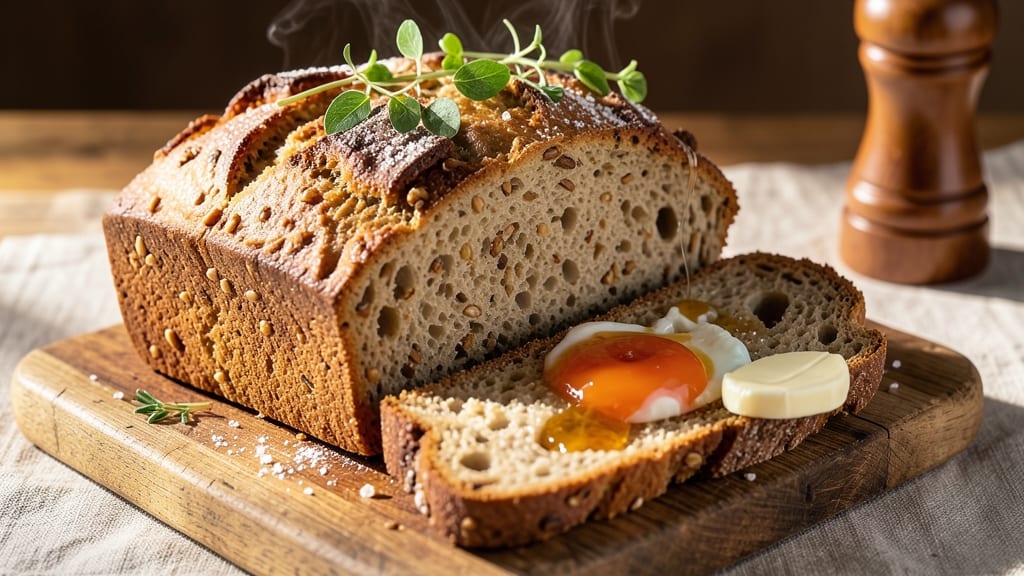
This 50/50 bread machine recipe delivers the ideal balance of whole wheat nutrition and familiar white flour texture—no kneading, no fuss, just hands-off perfection. 💛 The secret lies in the ratio: half whole wheat flour for heartiness, half all-purpose for that familiar bread machine magic.
My machine does all the heavy lifting while you focus on other parts of dinner, and the result? A loaf with a crispy crust and tender crumb that rivals artisanal bakery bread.
The beauty of this recipe is its simplicity: just toss the ingredients into your bread machine, select the basic white bread setting, and let it work its magic.
The whole wheat flour adds subtle earthiness without overpowering the familiar bread flavor, while the white flour ensures that signature pillowy texture we all love. I’ve tested this recipe in multiple machines, and it consistently delivers—no matter your brand.
What you’ll end up with is a loaf that’s perfect for toast, sandwiches, or serving alongside soups and stews. The crust develops a satisfying crunch, while the interior remains soft and airy, with just the right amount of chew from the whole wheat.
The best part? It’s ready in under 3 hours, with minimal effort on your part.
For even better results, lightly brush the cooled loaf with melted butter and sprinkle with flaky sea salt. This simple step elevates the flavor and gives it that bakery-fresh finish. Whether you’re a bread machine novice or a seasoned baker, this recipe is your go-to for consistently delicious, no-fail bread.
Ingredients for 50/50 bread machine
Here’s the simple lineup for your perfect 50/50 bread machine loaf—just toss and bake.
| Ingredient | Amount | Notes |
|---|---|---|
| All-Purpose Flour 🌾 | 2 cups | White flour for texture |
| Whole Wheat Flour 🌾 | 2 cups | Unbleached preferred |
| Active Dry Yeast 🍞 | ¼ tsp | Ensure it's fresh |
| Granulated Sugar 🍚 | 1 tbsp | White sugar preferred |
| Unsalted Butter 🧈 | ¼ cup | Softened, not melted |
| Large Eggs 🥚 | 1 whole | Room temperature |
| Milk 🥛 | ¾ cup | Whole milk for richness |
| Salt 🧂 | 1 tsp | Diamond Crystal preferred |
| Olive Oil 🫒 | 1 tbsp | Extra-virgin for flavor |
| Flaky Sea Salt 🧂 | 1 tsp | For crust finishing |
| Water 💧 | ½ cup | Room temperature |
The flours are the stars here. King Arthur all-purpose and Bob’s Red Mill whole wheat are my go-tos—they bake up consistently. If you’re using store-brand whole wheat, check the bag for a 100% whole wheat label to avoid fillers. The yeast? Fresh is key—if it’s past its expiration, toss it. I keep mine in the freezer and take out what I need. For the butter, don’t melt it—just soften it so it mixes smoothly. The milk adds richness, but oat milk works in a pinch if you’re avoiding dairy.
No whole wheat flour? Substitute spelt flour at the same amount—it’s lighter than rye. Running low on butter? Olive oil or coconut oil keeps the texture soft, though the flavor shifts slightly. The egg? Flax egg (1 tbsp ground flax + 3 tbsp water) works for vegan versions. For the salt, Diamond Crystal measures differently than Morton’s—use half the amount if you’re swapping. And if your bread machine needs a little extra moisture, add 1 tbsp more water—just don’t overdo it or the dough gets gummy.
Store your flours in airtight containers to keep them fresh—whole wheat lasts about 3 months, all-purpose up to 6 months. Yeast? Keep it in the fridge for up to 3 months or freeze it. The dough itself can be shaped and refrigerated for up to 12 hours before baking if you’re prepping ahead. Once baked, the loaf keeps well wrapped at room temp for 2 days or frozen for 3 months. That melted butter finish? Save it for when the bread is fully cooled—otherwise, it’ll steam and soften the crust.
Why You'll Love This Recipe
- Hands-Off Rise: I swear by the bread machine’s kneading—no elbow grease, just dump-and-go. The yeast and butter blend into a golden loaf while I’m making coffee or scrolling through my phone. Honestly, the machine does all the work for you.
- Rich, Rustic Crunch: That 50/50 flour mix (half all-purpose, half whole wheat) gives it a hearty bite without being dense. The sugar caramelizes just enough for a subtle sweetness, and the butter? Pure melt-in-your-mouth magic. It’s the kind of bread that makes toast taste like a treat.
- Weeknight Hero: I make this when I’m too tired to bake from scratch but still want fresh bread. It’s perfect for sandwiches, garlic bread, or even French toast—no one will guess it came from a machine. (Yes, even on a Tuesday night.)
- Budget-Friendly Staple: Whole wheat and all-purpose flour stretch my grocery budget, and a single loaf lasts me days. Freeze half for toast later, and the butter keeps it tender without breaking the bank. My wallet and my taste buds win.
Step-by-step instructions for 50/50 bread machine magic
Here's how to transform simple ingredients into a loaf with a crispy crust and soft, airy interior.
👨🍳 Step 1: Mix the Dough in Your Bread Machine
In your bread machine pan, combine the 2 cups all-purpose flour and 2 cups whole wheat flour. Add the 0.25 tsp active dry yeast, 1 tbsp granulated sugar, 1 tsp salt, and 1 tbsp olive oil. Make a well in the center and add the 0.25 cup softened unsalted butter, 1 whole large egg, and 0.75 cup milk. Pour in the 0.5 cup water.
Use a wooden spoon to mix everything together until just combined—you should see a shaggy dough forming. Don't overmix; the bread machine will handle the kneading. The dough should be slightly sticky but manageable. If it's too wet, add 1 tablespoon more flour.
🍳 Step 2: Set the Bread Machine to Dough Cycle
Place the lid on your bread machine and select the "dough" setting. Let the machine run through its full cycle—this usually takes about 3-5 minutes. You'll know it's done when the dough is smooth, elastic, and pulls away from the sides of the pan.
Here's the thing—this step is crucial for developing gluten properly. The machine's kneading action creates that perfect balance of structure and tenderness. Don't be tempted to skip it; this is what gives your bread its signature texture.
🥘 Step 3: Shape and Let Rise Before Baking
Remove the dough from the machine and place it on a lightly floured surface. Gently shape it into a round loaf, tucking the edges underneath. Place the shaped dough in a greased 9x5-inch loaf pan, seam-side up. Cover with a clean kitchen towel and let it rise at room temperature for 30-45 minutes.
You'll know it's ready when the dough has puffed up and feels springy when pressed gently. This second rise is what creates that beautiful pillowy interior. Don't rush this step—patience pays off with a lighter loaf.
🔥 Step 4: Bake to Golden Perfection
Preheat your oven to 375°F. Once preheated, bake the loaf for 30-35 minutes until it's golden brown on top and sounds hollow when tapped on the bottom. For extra crispiness, brush the top with a little water and sprinkle with 1 tsp flaky sea salt before the last 5 minutes of baking.
This is where the magic happens—the salt creates that beautiful crust while keeping the interior moist. If you see the top browning too quickly, tent it loosely with foil to prevent over-browning while it continues cooking.
⏰ Step 5: Cool and Enjoy Your Masterpiece
Remove the bread from the oven and let it cool in the pan for 10 minutes, then transfer to a wire rack to cool completely. This cooling time is essential—it allows the bread to set properly and prevents a gummy texture.
Once fully cooled, slice into thick pieces and serve warm. You'll be rewarded with a loaf that has a crispy crust on the outside and a soft, airy interior—exactly what makes this 50/50 bread so special. Store any leftovers wrapped in a clean towel to keep them fresh.
Pro Tips For Making 50/50 Bread Machine
- Weigh Your Flours: I learned this the hard way—measuring cups with whole wheat flour pack differently than all-purpose. Use a kitchen scale for the 50/50 mix to avoid dense, gummy bread. A 1:1 ratio by weight keeps the texture balanced.
- Soften Butter First: Cold butter creates pockets that slow fermentation. Microwave the unsalted butter for 10-15 seconds until pliable but not melted—this ensures even distribution and proper yeast activation.
- Skip the Over-Kneading: Whole wheat flour absorbs more liquid, so the dough feels sticky even when done. Let the machine handle it: 4-5 minutes of kneading is enough. Overworking it turns the crumb tough.
- Add Yeast Last: Mix the active dry yeast with the sugar and warm water separately, then let it foam for 5 minutes before adding to the flour mix. This guarantees the yeast is active when it hits the dough, not when it’s already combined with everything else.
Troubleshooting this dish
Dough Too Sticky?
If your dough feels too wet or sticks to the pan during kneading, add 1 tablespoon of all-purpose flour at a time until it pulls away cleanly. Whole wheat flour absorbs more liquid, so this is common.
I’ve found that King Arthur whole wheat flour handles moisture better than some store brands. Overmixing can also make dough sticky—let the bread machine do the work. 💡
Bread Machine Overmixing
Some machines knead more aggressively than others, leading to dense bread. If your dough looks tough after the dough cycle, try reducing the kneading time by 1-2 minutes or selecting a "light" dough setting if available.
I’ve had success with the Panasonic SD-YD250’s gentle cycle for whole wheat-heavy doughs. 🍞
Uneven Rise or Flat Top
An uneven rise often means the yeast wasn’t active or the environment was too cold.
Ensure your yeast is fresh (test it in 100°F water—it should foam in 10 minutes) and let the dough rise in a warm spot (like a turned-off oven with a bowl of hot water).
For a flat top, shape the dough slightly taller in the pan or brush with water before the final rise. 🌡️
Crust Too Pale
A pale crust usually means the oven wasn’t hot enough or the bread baked too long at a lower temp. Preheat your oven for 15 minutes and bake at 375°F (not 350°F).
For extra color, broil for 1-2 minutes at the end—but watch closely to avoid burning. A toothpick inserted into the center should come out clean. 🔥
Gummy Interior
Underbaking or not cooling properly causes gummy bread. Always bake until the internal temp reaches 190°F (use an instant-read thermometer). Let the bread cool completely on a wire rack—at least 1 hour. If it’s still gummy after cooling, it likely needed more time in the oven. 💫
Machine Error Codes
Modern bread machines often display error codes for issues like overfilled pans or lid malfunctions. Check your manual for specifics, but common fixes include reducing liquid by 2 tablespoons or ensuring the lid locks properly.
I’ve seen the Kitchenaid KM350 throw a "pan full" code when dough exceeded the pan’s capacity—simply reduce flour by ¼ cup to resolve it. ⚡
Nutrition facts
Frequently asked questions
Why use a 50/50 flour blend in bread machine recipes?
This ratio balances nutrition and texture—whole wheat flour adds fiber and heartiness, while all-purpose flour keeps the bread light and familiar. The whole wheat prevents a heavy, dense crumb while still delivering nutritional benefits. It's the perfect compromise for those who want healthier bread without sacrificing taste or texture!
Can I make this recipe without a bread machine?
Yes! Mix the ingredients by hand until a shaggy dough forms, then knead for 8-10 minutes until smooth. Let it rise for 1-2 hours (or until doubled), shape into a loaf, and bake at 375°F for 30-35 minutes. The texture will be slightly different but still delicious. The bread machine just saves time and ensures consistent kneading.
How do I know when my dough is ready for the second rise?
Press the dough gently—if it springs back slowly (not too fast), it's ready! Look for the dough to puff up noticeably and fill about 75% of the loaf pan. This usually takes 30-45 minutes at room temperature. A warm spot (like near the oven with the light on) helps speed up the process if your kitchen is cool.
What if my bread machine doesn't have a dough setting?
Use the basic white bread setting instead—just reduce the kneading time by 2-3 minutes if your machine tends to overwork the dough. Whole wheat flour can be tougher to handle, so gentler kneading prevents a dense texture. Monitor the dough through the glass window to check for smoothness.
Can I substitute whole wheat flour with something else?
For a lighter texture, try spelt flour or white whole wheat flour (1:1 ratio). If you're avoiding gluten, a 1:1 gluten-free all-purpose blend works, though you may need to add 1 tsp xanthan gum for structure. For extra moisture, reduce liquids by 2 tablespoons—whole wheat absorbs more water than all-purpose!